





Rowing vs Exercise Bikes: Why Rowing Often Wins for Full‑Body Fitness — A Practical Guide
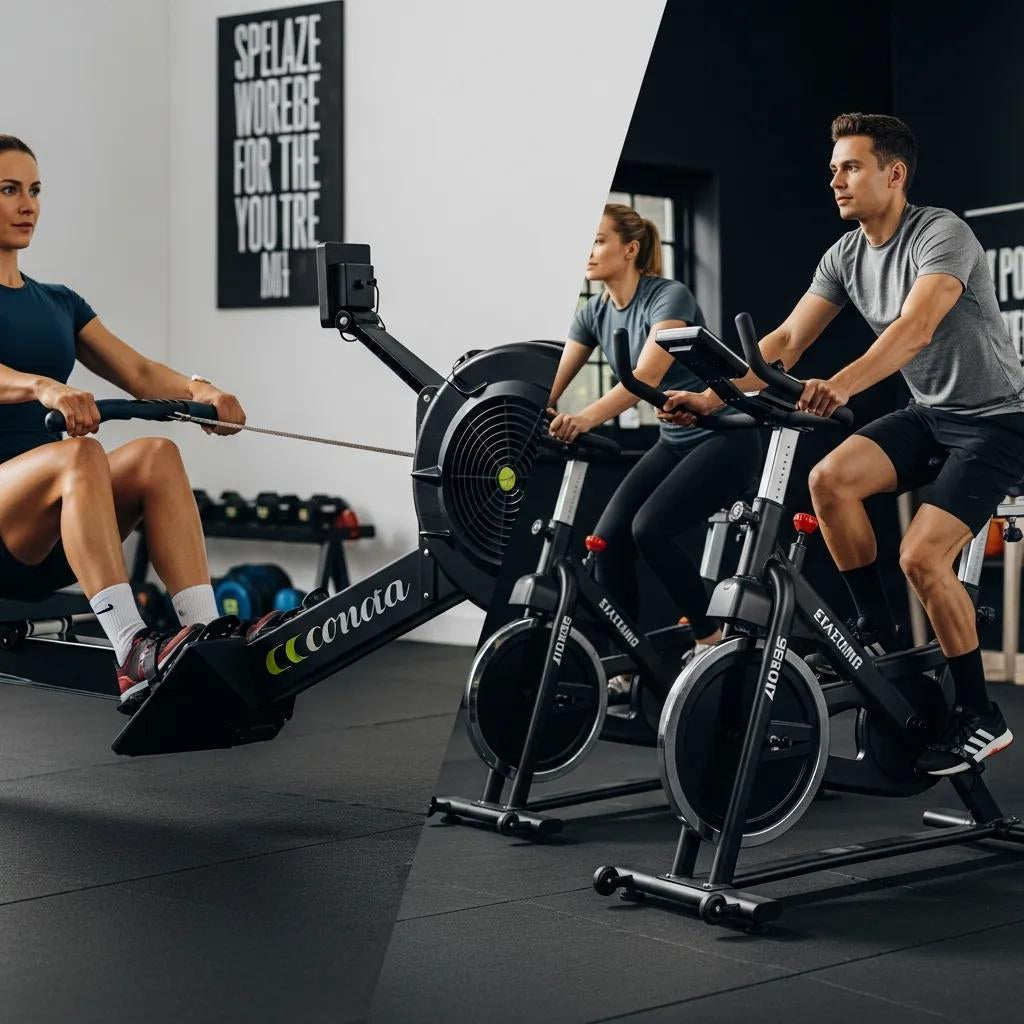
Rowing machines and exercise bikes are common staples in home gyms, but they produce different movement patterns and outcomes depending on your goals. Rowing combines a coordinated, multi‑phase pulling motion that brings the legs, posterior chain, core and upper body into play. An exercise bike centres on repeated lower‑body concentric work through pedalling. This guide walks through the biomechanics, calorie-burning comparisons, joint and cardiovascular implications, and practical buying points so you can choose the best machine for weight loss, rehab or general conditioning. You’ll also find helpful calorie ranges, comparative tables and actionable advice for steady‑state and interval training. Finally, we cover how cardio gear fits into a broader wellness approach — including recovery tools like grounding mats, home saunas and targeted supplements — all from Terra Wellness’s product perspective.
How Does a Rowing Machine Provide a Full-Body Workout Compared to an Exercise Bike?
Rowing delivers a true full‑body stimulus by sequencing leg drive, a hip hinge, core stabilisation and an arm pull within each stroke. The drive, finish and recovery phases produce both concentric and eccentric muscle actions that recruit quads, glutes, hamstrings, erector spinae, lats, biceps and the core in a coordinated pattern, offering strength and cardio benefits in the same movement. By contrast, an exercise bike concentrates work on the lower limbs, mainly loading quads and glutes with less direct posterior‑chain or upper‑body demand. Those mechanical differences explain why rowing is often described as “full body” while cycling is typically “lower‑body dominant,” which matters when you plan training for endurance, rehab or fat loss. The next section breaks down muscle involvement region by region to show how each machine distributes effort.
Which Muscle Groups Does a Rowing Machine Engage for Total Body Fitness?

Rowing activates both upper and lower body through a three‑phase stroke: a strong leg drive, controlled hip extension and a finishing arm pull. Key muscles involved include the quadriceps and glutes during the drive; hamstrings and erector spinae for hip control; lats and rhomboids during the pull; and the rectus abdominis and obliques to stabilise the torso throughout. This multi‑joint pattern builds posterior‑chain strength and core endurance, which supports posture and back health when technique is sound. Regular rowing combines muscular loading with cardiovascular stress, improving strength endurance and aerobic capacity and creating an efficient environment for total‑body calorie burn.
Here's a summary table showing relative muscle involvement for rowing and cycling.
| Muscle Group | Rowing Involvement | Cycling Involvement |
|---|---|---|
| Quadriceps | High — main driving muscle in leg extension | High — primary propulsive muscle during pedalling |
| Glutes & Hamstrings | High — hip extension and stabilisation during the drive | Moderate — more engaged during standing sprints and high resistance |
| Back & Lats | Moderate‑High — active in the pull and for posture control | Low — limited engagement in typical cycling posture |
| Core (Abs/Obliques) | High — transfers power and maintains posture | Moderate — stabilises torso with lower reactive demand |
| Arms & Shoulders | Moderate — finish the stroke and control recovery | Low — largely static, minimal force production |
This table highlights that rowing spreads force across more muscle groups than cycling, which helps explain its broader total‑body stimulus and more balanced strength adaptations.
How Does an Exercise Bike Target Lower Body Muscles Differently?
An exercise bike focuses mechanical work on cyclic leg extension and flexion with sustained concentric loading that primarily stresses the quadriceps, glutes and calves while providing lower eccentric demand. Upright bikes load more weight through the saddle and emphasise quads and hip flexors; recumbent bikes change contact points to reduce lumbar loading for users needing extra back support. Resistance, cadence and position shift, which muscles dominate — higher resistance at lower cadence increases torque on glutes and hamstrings, while higher cadence at lower resistance favours cardiovascular endurance. Those biomechanical differences make bikes ideal for targeted lower‑limb conditioning, steady‑state cardio and rehab‑style progressive loading.
Which Machine Is More Effective for Weight Loss and Calorie Burn?
Weight‑loss effectiveness depends on total energy expenditure, session intensity, the amount of muscle mass engaged and how consistently you train. Rowing often burns more calories per minute at a similar perceived effort because it uses more muscle groups and combines strength with aerobic work, while cycling can be easier to sustain for longer durations and so supports greater training volume for some users. HIIT on either machine raises afterburn (EPOC), but full‑body rowing intervals commonly produce larger acute metabolic responses because they recruit more muscle. Below are helpful calorie ranges, important considerations and practical tips for using either machine in a weight‑loss plan.
How Many Calories Can You Burn Using a Rowing Machine Versus an Exercise Bike?

Calorie estimates vary with body mass, intensity and fitness, but these ranges help set expectations. For a 70–80 kg person, steady moderate rowing typically burns about 500–700 kcal per hour, while vigorous rowing or interval work can exceed 700 kcal per hour depending on effort. For cycling, moderate stationary sessions commonly burn ~400–600 kcal per hour, with intense spin classes or short, maximal efforts reaching 600–900 kcal per hour. These ranges depend on intensity, resistance and how much upper body is engaged; tracking perceived exertion or power output will refine your individual numbers.
Here's a quick comparison of typical calorie burn and suitability for intensity.
| Metric | Rowing Machine | Exercise Bike |
|---|---|---|
| Typical Intensity | Moderate to vigorous | Moderate to vigorous |
| Typical kcal/hour (moderate) | 500–700 kcal | 400–600 kcal |
| Typical kcal/hour (vigorous/intervals) | 700+ kcal | 600–900 kcal |
| Afterburn / HIIT suitability | High — full‑body intervals boost EPOC | High — easier pacing for longer intervals |
Overall, rowing often delivers higher calorie density per minute when used as a full‑body effort, while cycling allows greater sustained volume and very high peak power in short efforts.
What Role Does Muscle Engagement Play in Weight Loss on Each Machine?
Recruiting more muscle increases energy expenditure during exercise and supports long‑term rises in resting metabolic rate through maintained or increased lean mass. Multi‑joint moves like rowing can help preserve or grow lean tissue and boost basal energy needs, while heavy, high‑resistance cycling mainly promotes lower‑limb hypertrophy. Rowing’s eccentric and isometric elements also support connective‑tissue resilience and posterior‑chain strength, improving movement economy for daily tasks. Combining resistance work with aerobic intervals on either machine accelerates fat loss by encouraging muscular adaptation and better insulin sensitivity — so program design matters as much as the machine choice.
On the product side, Terra Wellness supplies fitness accessories, including rowing machines and exercise bikes suited to home use, offering a range of resistance systems and solid build quality to match different training styles. We're committed to helping you find the right equipment for your goals, with customer support to ensure you're happy with your purchase. Picking a machine that suits your preferred intensity and durability needs improves adherence and supports consistent progress toward weight-loss goals.
What Are the Joint Health Benefits of Rowing Machines Compared to Exercise Bikes?
Both machines are low‑impact and reduce ground reaction forces compared with running, but they load joints in different ways. Rowing is non‑weight‑bearing, and shares load across hips, knees, shoulders and spine in a coordinated cycle; when performed correctly, it can be gentle, though poor form risks lower‑back strain from repeated flexion under load. Exercise bikes — especially recumbent models — limit compressive and shear forces on weight‑bearing joints and are commonly used in rehabilitation for controlled range‑of‑motion and graduated loading. Knowing how each machine stresses joints helps you pick the safer option for your body and adjust settings and technique to minimise risk.
How Do Rowing Machines Offer Low-Impact Exercise While Protecting Joints?
Rowing reduces impact forces by distributing effort across multiple joints in a coordinated stroke, which can lower per‑joint stress compared with single‑joint repetitive tasks. Safe technique — initiating power from the legs, keeping a neutral spine and sequencing hip extension before the arm pull — protects the lumbar region and reduces excessive shear at the pelvis and lower back. For rehab and long‑term joint health, use controlled resistance, manage stroke rate and gradually increase session length to build posterior‑chain strength that supports joint alignment. With good coaching and slow progressions, rowing becomes a joint‑friendly way to build muscular support and improve functional movement.
Why Are Exercise Bikes Recommended for Individuals with Joint Issues?
Exercise bikes are often recommended because they let you control load, cadence and joint angle precisely while avoiding impact and high compressive forces that worsen pain in weight‑bearing activities. Adjusting seat height, pedal position, and recumbent geometry reduces knee flexion and lumbar stress, making cycling useful for post‑op rehab, osteoarthritis management and graded cardiovascular reconditioning. The ability to sustain low‑intensity aerobic work for long periods supports joint mobility, heart health and calorie burn without repeated high impact. For many with knee or hip concerns, cycling provides a safe path to rebuild endurance and strength before advancing to higher‑demand tasks.
How Do Cardio Benefits Differ Between Rowing Machines and Exercise Bikes?
Cardiovascular adaptations depend on whole‑body oxygen demand and the muscle mass engaged during exercise. Rowing’s full‑body nature tends to create a larger systemic cardiovascular stimulus per minute, raising cardiac output demands and supporting improvements in VO2max efficiently. Cycling allows prolonged steady‑state efforts that build muscular aerobic capacity in the legs and excellent endurance economy. Training specificity matters: rowers generally improve both aerobic capacity and muscular endurance across the body, while cyclists develop efficient lower‑body economy and extended time‑to‑exhaustion for leg‑dominant tasks. Next, we outline when rowing is preferable and when cycling may be the better cardio tool for your goals.
Is Rowing Better for Cardiovascular Endurance and Full-Body Cardio?
Rowing is highly effective for cardiovascular conditioning because it activates upper and lower musculature simultaneously, increasing oxygen demand and prompting central adaptations like higher stroke volume. For people seeking systemic conditioning, rowing intervals and sustained pieces at moderate intensity elevate heart rate and breathing quickly and are an efficient way to improve VO2. Alongside central benefits, rowing’s muscular endurance effects across multiple groups enhance tolerance for daily activities and offer useful cross‑training benefits for other sports. When you want time‑efficient, high‑intensity full‑body conditioning, rowing is an excellent choice to maximise cardiovascular return per minute.
What Are the Cardiovascular Advantages of Using an Exercise Bike?
Exercise bikes excel at long, steady aerobic sessions with low perceived joint stress, making them ideal for building mitochondrial density and local muscular endurance in the legs. Cycling allows fine control of power output and cadence, which is helpful for structured intervals, threshold work and progressive overload — particularly for cyclists and triathletes. The ability to sustain extended sessions also supports calorie burn through volume and pairs well with periodised intensity to improve endurance without excessive musculoskeletal strain. If your priority is long‑duration cardio, power‑based training, or sport‑specific cycling conditioning, an exercise bike is a very effective tool.
What Practical Considerations Should You Know When Choosing Between a Rowing Machine and an Exercise Bike?
Choosing the right machine comes down to footprint, budget, maintenance and how quickly you’ll learn efficient technique — all factors that influence consistent use. Rowers usually require more length for the sliding rail and a taller storage footprint unless they fold; many bikes have smaller footprints and compact or foldable models suitable for apartments. The cost of a machine often depends on its resistance type (air, magnetic, water), frame quality and monitoring electronics. While more advanced units might offer extra durability and accurate power measurement for serious training, there are great options for every budget. Maintenance also differs — rower chains and rails need periodic care while bike drive systems and belts require checks — so weigh user needs, storage and long‑term value when shopping.
How Do Space Requirements and Cost Compare for Rowing Machines and Exercise Bikes?
Space and budget help determine what fits your home and training priorities. Rowing machines need a floor length similar to a person lying down, plus clearance for handle movement, while upright bikes need less length, and recumbent options reduce vertical profile. You'll find a range of options for both bikes and rowers, with costs varying based on features like resistance systems and integrated metrics. We aim to offer quality equipment that provides excellent value for your investment. Think about the features you’ll actually use — like adjustable resistance and performance tracking. A durable, user-friendly machine improves adherence and delivers better long-term value, helping you stick to your fitness goals.
Practical checklist for choosing equipment:
- Measure your available floor area and check whether the machine folds or stores vertically.
- Match resistance systems (air, magnetic, water) to your preferred training style.
- Compare build quality and performance features relative to price.
What Is the Learning Curve and User-Friendliness of Each Machine?
User‑friendliness affects whether you’ll stick with a routine: bikes are usually ready to use with minimal setup, while rowing needs a short learning period to avoid inefficiency and injury. Most beginners can pedal a bike after seat and pedal adjustments, whereas new rowers benefit from learning the sequence (legs → hips → arms) and posture cues across a few sessions to develop efficient strokes. Common beginner errors on rowers include overusing the arms, rounding the spine or rushing the recovery; brief technical drills and gradual progressions help build safe, efficient technique. Clear guidance and modest session lengths help new users gain confidence and establish a sustainable habit on either machine.
How Can You Integrate Fitness Equipment with Holistic Wellness Practices?
Pairing cardio equipment with recovery and lifestyle practices improves sleep, stress resilience and overall recovery. Tools like grounding mats can support relaxation and evening routines after training, home saunas provide heat therapy to aid circulation and relaxation, and targeted supplements help replenish nutrients and support muscle repair. Terra Wellness recommends integrating exercise accessories with grounding mats, home saunas and helpful supplements to support post‑workout recovery and daily wellbeing. The sections below outline practical ways to combine these wellness modalities with your rowing or cycling routine.
How Do Terra Wellness Grounding Mats Enhance Recovery After Rowing or Cycling?
Grounding mats are used to recreate the electrical connection to the earth while indoors and can be a simple addition to a post‑exercise recovery routine. Using a grounding mat during a 10–30 minute cooldown or stretching session can help transition toward parasympathetic activation and better sleep preparation. Place the mat on a chair or bed for post‑workout relaxation, or include it in your evening routine to create a calming environment that supports restorative sleep and tension release. For those exploring complementary recovery strategies, Terra Wellness offers grounding mats as part of a broader toolkit to support wellbeing alongside consistent training.
Common benefits of saunas and supplements to support recovery:
- Heat therapy from home saunas: Improves circulation and promotes relaxation to support muscle recovery.
- Electrolyte and protein supplements: Help replace fluids and support muscle repair after intense sessions.
- Adaptogens and calming supplements: Support stress resilience and sleep, aiding overall recovery.
What Benefits Do Home Saunas and Wellness Supplements Offer Alongside Fitness Equipment?
Home saunas deliver controlled heat exposure that can increase peripheral circulation, promote relaxation and support subjective recovery when used appropriately after workouts or on rest days. Heat therapy can reduce perceived soreness and aid relaxation that helps sleep — valuable after hard rowing or cycling sessions. Supplements such as protein powders, electrolytes and helpful adaptogens can assist with nutrient replenishment and repair, though choices should always align with your dietary needs. Terra Wellness’s product approach pairs equipment with recovery accessories and supplements to encourage an integrated approach to training, recovery and everyday vitality.