





Small Steps, Big Results: How a Walking Pad Supports Your Whole‑Body Health and Everyday Activity
A walking pad is a compact, low‑profile treadmill made for light to moderate walking at home or under a desk. Those small steps add up: regular, low‑intensity movement can improve circulation, protect joints, support weight management and sharpen your mood and focus. We'll walk you through how a walking pad helps counteract sedentary habits, the fantastic physical and cognitive benefits you can expect, and simple ways to use, set up and choose the right model for your space. You'll find clear usage tips and comparisons that make it easy to add a walking pad to modern living – whether you work from home or live in a small apartment.
How a Walking Pad Counters Sedentary Lifestyles
Walking pads reduce sedentary time by making frequent, low‑effort walking easy to fit into your day. By increasing non‑exercise activity thermogenesis (NEAT) and breaking up long sitting periods with short movement episodes, they improve circulation and raise daily energy use without demanding gym sessions. Swapping even a few minutes of sitting for walking pad sessions can lower cardiometabolic risk and encourage better posture and movement habits. Understanding this simple idea helps you plan how to replace sitting minutes with steady, manageable walking throughout the day.
Breaking up long sitting periods with short movement episodes is key. Regular light activity helps keep your blood flowing, boosts your daily calorie burn, and can even restore alertness and ease stiffness, making it easier to stay active throughout the day.
What Health Risks Come from Prolonged Sitting?
Sitting for extended periods can increase your risk of health issues like obesity, type 2 diabetes and cardiovascular disease. This is mainly because your muscles become inactive, affecting how your body processes glucose. Long stretches of sitting can also contribute to poor circulation and low-grade inflammation, which can raise long-term health risks. It's generally a good idea to break up sitting every 30–60 minutes with some light activity to help your metabolism and reduce discomfort. In practice, regular micro‑walks or short walking pad sessions are an effective way to interrupt sedentary stretches and protect long‑term health.
How Using a Walking Pad Lowers Sedentary Behaviour
A walking pad reduces sedentary behaviour by enabling simple, frequent walking during otherwise sedentary tasks like phone calls, reading or low‑demand work. Useful routines include 10‑minute walking breaks each hour, taking hands‑free calls while walking, or alternating walking intervals with standing desk time. Features that increase regular use are quiet motors, a small footprint and easy foldability — anything that reduces barriers to getting on the device. Those repeatable behaviours form sustainable movement habits and gradually cut total daily sitting time.
Key Physical Health Benefits of Walking Pads
Walking pads deliver practical benefits across cardiovascular health, weight control and joint care by making low‑intensity movement easy at home. The main effects are modest heart‑rate increases and better circulation, steady calorie burn that helps manage weight, and lower joint loading compared with running because walking is low‑impact. The table below summarises how walking pads can help these health areas and gives you an idea of the great outcomes you could see.
How physical benefits map to fantastic results:
| Health Dimension | Mechanism | Typical Outcome |
|---|---|---|
| Cardiovascular | Regular walking raises daily heart rate and peripheral blood flow | Improved circulation can help lower resting blood pressure over time |
| Weight Management | Incremental calorie burn from NEAT and planned walks | Helps burn calories, supporting your weight management goals |
| Joint Health | Low‑impact walking lowers peak joint forces versus running | Reduced joint stress, making it a gentle option for many, including those managing arthritis or during rehabilitation |
How a Walking Pad Supports Cardiovascular Health
Using a walking pad regularly produces gentle, sustained increases in heart rate and blood flow that — over weeks — support endothelial function and improve metabolic flexibility. Fitting in 20-30 minutes of walking throughout your day can lead to better cardiovascular health and improved fitness for many adults. Aim for brisk, comfortable intervals (for example, 15–30 minutes once or twice daily) that raise breathing slightly without excessive strain. Pairing walking with good nutrition and sleep amplifies the heart‑health benefits.
Do Walking Pads Help with Weight Management and Joint Health?
Walking pads assist weight management by boosting daily energy expenditure through NEAT and planned walking sessions; moderate walking helps burn calories, supporting your weight management goals. Compared with high‑impact activities like running, walking pads are kinder to knees and hips while still engaging muscles and metabolism. If you have joint concerns, start with short, slow sessions, choose supportive footwear, progress gradually and add occasional low‑load strengthening to protect joints. Over time, consistent low‑impact walking supports steady, sustainable weight loss and better functional mobility.
Mental Well‑being and Productivity Benefits
Walking pads boost mood and productivity by increasing cerebral blood flow, lifting neurotransmitter activity through mild aerobic work, and breaking up cognitive fatigue with regular movement. Low‑intensity walking can improve sleep quality when used earlier in the day, which supports clearer thinking and lower day‑to‑day stress: many people, including remote workers, find that thoughtful movement helps them maintain better focus on complex tasks. Below, we outline the main mental health effects and practical strategies for using a walking pad at your workstation.
Movement helps mental health in measurable ways:
- Increased blood flow improves oxygen delivery to the brain, supporting concentration.
- Mild aerobic activity raises endorphins and monoamines, lifting mood.
- Regular walking lowers stress markers and promotes better sleep patterns.
Mental Health Benefits of Regular Walking
Regular walking eases mild‑to‑moderate anxiety and depressive symptoms by balancing stress hormones and increasing mood‑supporting neurotransmitters like serotonin and endorphins. Daily walking also helps you fall asleep faster and sleep more soundly, which boosts daytime energy and cognition. Practical tips: try a short morning walk to set a positive baseline and an afternoon walking pad session to reset focus and ease accumulated stress. These simple routines build resilience and support lasting mental wellbeing.
How Walking Pads Improve Focus and Work Performance
Walking pads improve focus and productivity by interrupting monotony and providing micro‑movement that counteracts the mid‑afternoon slump common in desk work. Effective approaches include timed walking blocks paired with focused work — for instance, 25–45 minute deep‑work periods followed by 10–15 minute walking breaks — or walking meetings for tasks that suit low‑intensity ambulation. Remote workers can combine a quiet under‑desk walking pad with headset calls to stay productive while moving. These tactics reduce cognitive fatigue, boost alertness and make longer stretches of focused work more sustainable.
Practical Advantages for Modern Living
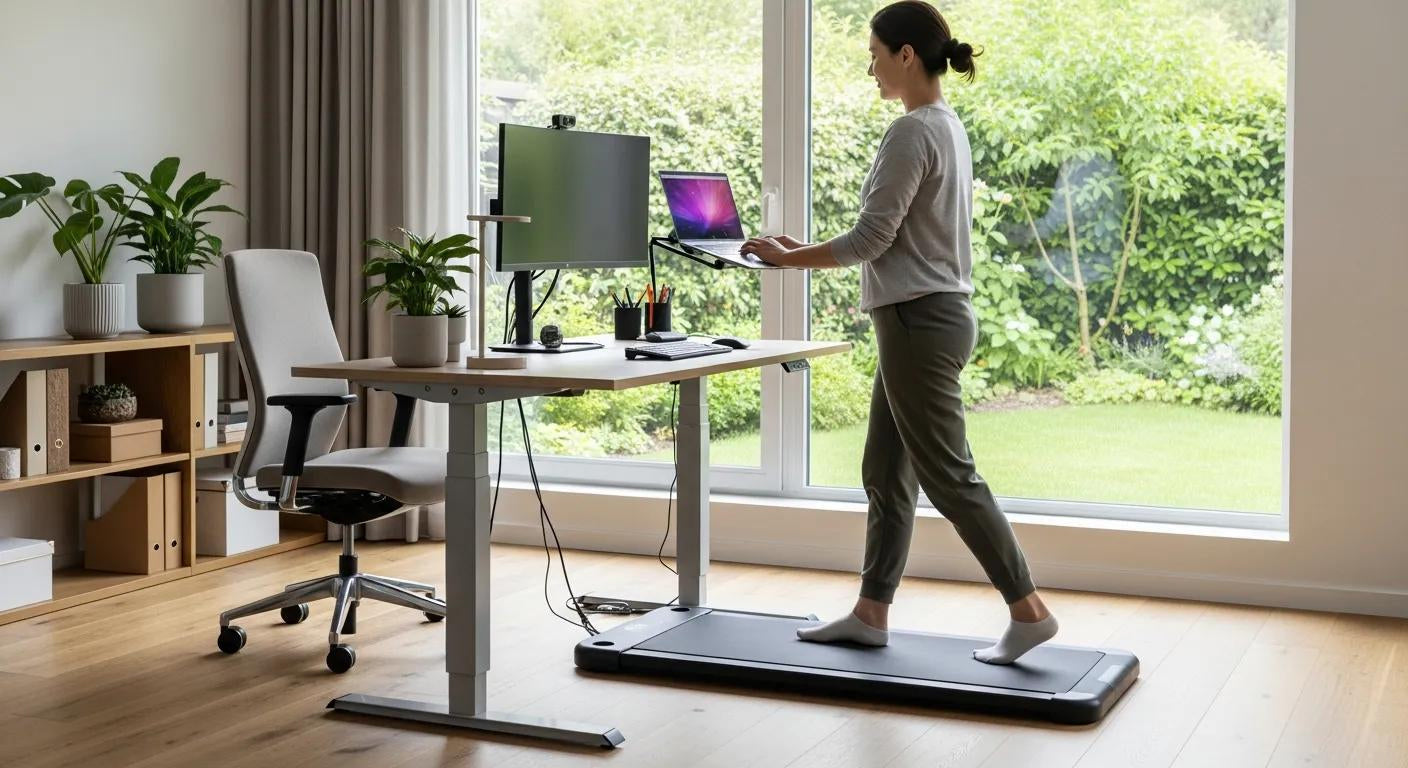
Walking pads fit modern homes because they have a small footprint, simple storage options and near‑silent operation that suit apartments, shared workspaces and home offices. Foldable frames and light builds make them easy to move and stow, while quiet motors let you take calls or join video meetings without distraction. Those practical benefits remove barriers to use — the easier a device is to store and run, the more likely you are to use it. The table below compares common features to help you find the perfect walking pad for your space and schedule.
| Feature | Characteristic | Best Use-case |
|---|---|---|
| Foldability | Collapsible frame or removable deck | Small apartments or closet storage |
| Noise Level | Quiet motor often specified under ~50 dB | Shared offices and home meetings |
| Footprint | Narrow width and short length | Under‑desk placement and compact rooms |
| Portability | Weight and wheels for easy movement | Users who move devices between rooms |
Why Foldable, Quiet Walking Pads Work Best at Home and in the Office
Foldable, quiet walking pads reduce friction when in use. A device that stores easily and runs quietly is far more likely to become part of your routine. Quiet motors mean you can easily take calls or join meetings while walking, without disturbing anyone. Foldable designs with integrated wheels let you reclaim floor space when the device is idle. When shopping, look for a stable walking surface, an office‑friendly noise rating and a folded depth that fits your storage options.
How to Make a Walking Pad Part of Your Daily Routine
Walking pads integrate best through habit stacking and time‑blocking: pair movement with regular activities like calls, reading or passive learning. Start with two 10–15 minute sessions per day, set calendar reminders and link walking to low‑attention tasks before progressing to focused intervals. A sample day could include a morning walk to energise, a midday walking pad break to reset concentration, and a brief evening ambulation to aid digestion and sleep readiness. Consistency builds tolerance and habit strength, making walking pads a sustainable way to increase daily activity.
Why Choose Terra Wellness Walking Pads for Holistic Health?
At Terra Wellness, we take a holistic view: walking pads sit alongside recovery tools like grounding mats and home saunas to support both active movement and restorative practices. As a wellness hub, we're here to guide you towards integrated solutions that combine daily exercise with recovery and relaxation. This overview shows how a walking pad fits into a wider wellness routine to improve adherence, recovery and overall wellbeing.
- Walking pads provide accessible, at‑home options to boost daily NEAT.
- Grounding mats and home saunas act as recovery tools that complement active movement.
- We provide guidance and product resources to help you blend exercise and recovery into sustainable routines.
How Terra Wellness Walking Pads Complement Grounding Mats and Home Saunas
Pairing light aerobic activity on a walking pad with grounding mat sessions or occasional sauna use creates a practical recovery cycle: walking increases circulation and reduces stiffness, grounding mats promote parasympathetic activation and relaxation, and saunas add heat‑based recovery when used sparingly. A simple routine might be a 20–30 minute walking pad session to stimulate circulation, a grounding mat period to wind down and support sleep, and occasional sauna use to enhance muscle relaxation. Balancing movement with restorative practices reduces perceived fatigue and makes ongoing activity easier to maintain.
| Product/Model | Feature | Customer Benefit |
|---|---|---|
| Home Treadmill (fitness accessory) | Compact, under‑desk compatible | Enables daily walking without needing a large space |
| Grounding Mat | Passive recovery surface | Supports relaxation and complements post‑exercise recovery |
| Home Sauna | Heat therapy option | Helps muscle relaxation and improves sleep quality after activity |
What Quality and Support Terra Wellness Offers for Walking Pads
At Terra Wellness, we're all about helping you find the best wellness solutions. We offer clear guidance and resources to help you discover walking pads and complementary items like grounding mats and saunas that fit perfectly into your routine. We know you'll want to feel confident about your purchase and how to care for your new wellness tools. That's why we're committed to providing clear product descriptions and helpful advice, ensuring you make the right choice for your needs.
This closing section links product choices to everyday use and recovery strategies, completing the practical path from mechanisms and benefits to real‑world application.