






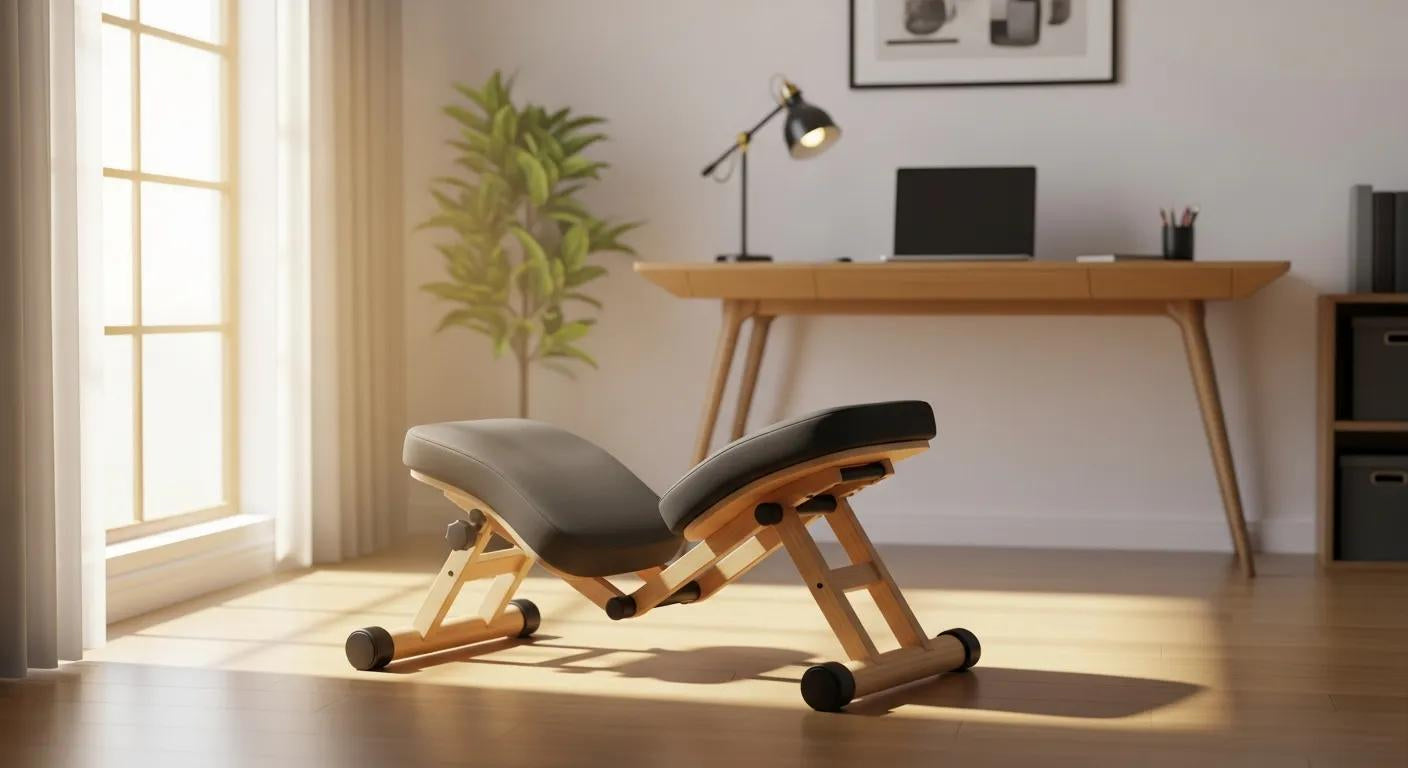
Elevate your comfort with a kneeling chair
Disclaimer: This article provides general information and is not a substitute for professional medical advice, diagnosis, or treatment. Always consult with a qualified healthcare professional for any health concerns or before making any changes to your health routine.
Many people find short-term relief during focused use with gradual adaptation, but individual results can vary depending on existing conditions and usage patterns. If you have significant knee problems, advanced spinal degeneration or certain medical conditions, it's always best to check with a clinician before prolonged use. You may notice a reduction in symptoms, but planning to alternate postures is key for longer-term benefit.
A kneeling chair is a type of ergonomic seat that gently tips the pelvis forward and opens the hip angle, helping you sit more upright and reducing slouching. In this article, we explain how the tilted seat, knee pads, and redistributed weight work together to improve posture, unload the lower back and encourage active sitting. You’ll get a clear look at the core biomechanics, the main health benefits (like less back pain and better circulation), practical setup and adjustment tips, and guidance on choosing between a kneeling chair and a conventional office chair. We also include safe-use steps and alternation schedules so you can add a kneeling chair to your day without overdoing it.
What is an ergonomic kneeling chair, and how does its design promote comfort?
An ergonomic kneeling chair repositions your thighs and shins so the pelvis tips slightly forward and the lower back maintains its natural curve. Typical features are a forward-tilted seat pan, cushioned knee rests and a stable frame that shares weight between the buttocks and shins. That weight shift reduces compressive load on the lumbar discs and encourages active sitting — small postural adjustments that engage your core and prevent long, static slumping. These design choices can lead to less lower-back discomfort and a better chance of maintaining an upright posture after adapting to kneeling-style seating. The next sections break down the specific biomechanics of the open hip angle and how weight distribution eases lumbar pressure.
How does the open hip angle and spinal alignment improve posture?
The open hip angle of a kneeling chair increases the space between your torso and thighs compared with a regular chair. That change tilts the pelvis toward a more neutral position and helps preserve the lumbar lordosis — the natural inward curve of the lower back. Preserving that curve reduces posterior pelvic tilt and the rounded shoulders that come with slumped sitting. With a more neutral spine, the erector spinae and deep core muscles can assist with stability, lowering abnormal loads on the lumbar discs. Over time, practising a neutral seated posture can reinforce better standing posture and reduce repetitive strain. Seeing the hip angle as a direct influence on spinal geometry makes it clear why kneeling chairs are often recommended as part of an ergonomic plan.
In what ways does weight distribution relieve pressure on the lower back?
A kneeling chair shifts some body weight from the sitting bones (ischial tuberosities) to the shins and knee pads. That redistribution lowers posterior shear forces on the lumbar spine and reduces peak compression on lumbar discs, which is often the source of discomfort during long periods of sitting. You may notice less pressure and greater comfort during shorter sitting periods, though a period of adaptation and regular alternation with other postures is important to avoid anterior chain fatigue. By combining pressure redistribution with small, active movements, the chair can offer short-term relief and help maintain functional spinal alignment when used correctly. Let's look at the health benefits that come from these mechanical effects.
What are the key health benefits of using a kneeling chair?
Kneeling chairs can improve posture, activate supporting muscles and aid circulation — benefits that often translate into less back pain, better spinal alignment, increased core engagement and reduced fatigue. Reduced lumbar disc pressure and improved upright posture are often the main drivers of back-related improvement, while active sitting encourages gentle activation of the abdominal and paraspinal muscles. The overall effect is usually greater comfort during focused work and better tolerance for seated tasks when kneeling is alternated with other postures. Below is a concise table that summarises the main benefits, the mechanisms behind them and typical outcomes you can expect.
| Benefit | Mechanism | Typical Outcome |
|---|---|---|
| Lower back pressure | Weight redistribution to the shins and buttocks | Reduced lumbar disc compression and less acute discomfort |
| Posture improvement | Open hip angle preserves lumbar lordosis | Upright spine and reduced slouching over time |
| Core activation | Active micro-adjustments during sitting | Increased core endurance and postural control |
| Circulation and reduced fatigue | Upright posture and micro-movements stimulate blood flow | Less lower-limb numbness and improved alertness |
This table shows how mechanical changes become practical improvements for desk-based users. If you want to try a kneeling chair, Terra Wellness lists an Ergonomic Kneeling Chair in the Ergonomic Accessories category, and we're here to help you find the right fit. For bulk or commercial enquiries, please contact Terra Wellness customer support.
How does a kneeling chair provide back pain relief and support spinal health?
The main way kneeling chairs help with back pain is by reducing posterior compression and helping the lumbar spine keep its natural curve. Kneeling chairs help by reducing posterior compression and encouraging your lumbar spine to keep its natural curve. This can lower internal disc pressure compared with slumped sitting, and a kneeling chair can help maintain that healthy lower-back curve.
Can active sitting on a kneeling chair strengthen core muscles and improve circulation?
Active sitting on a kneeling chair encourages continuous small postural adjustments that engage deep core stabilisers and the lumbar extensors. This supports endurance and neuromuscular control rather than producing large-strength gains. Compared with passive slumped sitting, kneeling can raise core activation and, over time, help build better postural resilience when combined with other exercises and varied seating. The upright, open-hip position and micro-movements also help reduce venous stasis in the lower limbs and support healthier circulation during seated work. For conditioning, start with short sessions and gradually increase duration while alternating with other seating to avoid localised fatigue.
How can you properly use and adjust a kneeling chair for maximum well-being?
A correct setup is essential to get the benefits safely. Begin by tilting the seat so your thighs slope gently downward without pressing the knees. Adjust the knee-pad height so your shins carry a comfortable portion of your weight, and you don’t feel sharp contact. Check your desk and monitor heights — the monitor top should sit at or just below eye level, and your forearms should be roughly parallel to the desk, to avoid neck or shoulder compensation. Use short, structured sessions and increase duration slowly, alternating with a conventional chair to prevent anterior-chain overload. The table below gives quick-reference settings and an alternation schedule you can follow.
| Adjustment | Purpose | Recommended Setting |
|---|---|---|
| Seat tilt and height | Maintain an open hip angle and a neutral pelvis | Seat tilted slightly forward; thighs angled downward modestly |
| Knee-pad position | Even weight distribution to the shins | Pads positioned under the mid-shin with soft padding contact |
| Desk/monitor alignment | Prevent neck/shoulder compensation | Desk at elbow height; monitor top at or just below eye level |
| Session length & alternation | Avoid muscle fatigue | Start 15–30 minutes, alternate every 30–60 minutes with conventional seating. |
These settings reduce common adjustment mistakes and support a gradual adaptation plan. Terra Wellness lists an Ergonomic Kneeling Chair in the Ergonomic Accessories range, and our team is ready to assist with any questions, including options for larger or commercial orders.
What are the best practices for setting up your kneeling chair?
Start by setting the seat height so your hips are slightly higher than your knees, creating a gentle forward pelvic tilt without forcing lumbar extension. Position the knee pads so most weight rests on the shins, not the kneecaps — aim for broad, cushioned contact instead of a sharp pressure point. Align your workstation (keyboard at elbow height, monitor to avoid neck flexion) and use a foot mat if the floor is slippery or cold. Begin with four to six short sessions per day and watch for signs of anterior muscle fatigue or knee discomfort; reduce session length if you experience sharp pain. These steps help you gain posture benefits while avoiding common setup problems.
Why should you alternate kneeling chairs with traditional seating?
Alternating protects you from overusing the same muscles and helps avoid tightness in the front of the body or knee irritation from prolonged pressure. Rotate between kneeling posture, a conventional ergonomic chair and short standing breaks to spread load across different tissues and preserve joint mobility. A practical schedule is 15–30 minutes kneeling, followed by 30–60 minutes in a conventional chair, with standing or movement breaks every hour. Shorten kneeling sessions if you notice localised knee tenderness, quadriceps fatigue or growing postural discomfort — then switch posture and allow recovery. Alternation keeps the benefits of active sitting while limiting the downsides of any single seat.
How does a kneeling chair compare to traditional office chairs for comfort and health?
Kneeling chairs and traditional office chairs use different ergonomic approaches: kneeling chairs focus on spinal alignment and active sitting, while high-quality adjustable office chairs prioritise lumbar support, multiple adjustments and sustained comfort for long sessions. Choose based on your needs — if you want improved posture and light core engagement for short- to mid-length tasks, a kneeling option may suit you; if you need to sit long hours with lots of adjustability, a conventional ergonomic chair is often the better fit. The table below helps you compare mechanisms and typical outcomes across seating types.
| Seating Type | Primary Mechanism | Typical Outcome / Use-case |
|---|---|---|
| Kneeling chair | Open hip angle; weight redistribution | Upright posture, core engagement, short-to-mid-duration seated work |
| Ergonomic office chair | Adjustable lumbar support; multiple adjustments | Long-duration comfort, customised support, task variability |
| Standard office chair | Limited adjustability; flat seat | Greater risk of slouching and discomfort during prolonged use |
This comparison makes it easier to see when a kneeling chair may outperform traditional seating and when a conventional ergonomic chair is the better choice. The sections that follow outline the main advantages and the limitations to keep in mind when choosing.
What are the advantages of kneeling chairs over conventional desk chairs?
Kneeling chairs can improve spinal alignment by promoting an open hip angle and preserving lumbar lordosis, which reduces slouch-related stress on the lower back. They encourage micro-movements and light core activation, lowering static muscle load and improving postural endurance compared with passive slumped sitting. For focused, moderate-length tasks, many find they feel more alert and experience less lower-back pressure than with standard chairs. Kneeling chairs are often lighter and more compact, too, so they work well in smaller workspaces or as an alternate seat alongside a conventional chair. Used appropriately and alternated, they complement a broader ergonomic strategy.
Are there any disadvantages or limitations to using a kneeling chair?
Common drawbacks include possible knee or shin discomfort, limited support for all-day use, and the need to build anterior-chain endurance during onboarding. People with knee conditions, circulatory problems, or restricted hip mobility may not tolerate kneeling well and should consult a health professional before use. Practical mitigations include soft knee padding, shorter sessions, planned alternation and regular stretching to counter front-of-body tightness. Kneeling chairs aren’t one-size-fits-all — they work best as part of a varied seating plan tailored to your health and work patterns.
Why choose Terra Wellness for your ergonomic kneeling chair needs?
Terra Wellness is an Australian online retailer focused on natural health and wellbeing products. We list an Ergonomic Kneeling Chair in our Ergonomic Accessories category, alongside posture and workplace-wellbeing solutions. We aim to make trying a new seating approach easy and accessible. As a direct-to-consumer platform, we make products accessible to individual buyers and also accept enquiries about larger or commercial orders through our support team. Our focus on wellness, convenient shopping, and dedicated customer support makes Terra Wellness a great place to explore kneeling-style seating as part of your wellbeing routine.
What unique features does the Terra Wellness ergonomic kneeling chair offer?
The Terra Wellness kneeling chair highlights ergonomic elements such as a tilted seat pan, cushioned knee rests and a stable frame designed for active sitting. These components map to the biomechanical principles that support posture and comfort: seat tilt helps preserve lumbar curvature, padded knee rests reduce point pressure and a firm base keeps the chair stable during micro-movements. For exact dimensions and technical specs, review the product page to check fit and personal comfort; images and measurements help confirm whether the chair suits your body and workspace.
How do customer support options enhance your purchase confidence?
We want you to feel confident trying a kneeling chair. Our customer support team is here to help you assess comfort and adaptation, and we strive to make ergonomic options accessible. If you’re considering multiple units or a commercial fit-out, contact our support team to confirm availability and suitability for bulk purchases. We're committed to helping you make an informed choice, ensuring you feel supported every step of the way.
A few practical next steps when evaluating options:
- Test short sessions: Start with brief 15–30 minute periods to gauge comfort and adaptation.
- Compare features: Match seat tilt, padding and adjustability to your workstation and body dimensions.
- Use alternation: Combine kneeling sessions with an adjustable ergonomic chair and standing breaks.
Following these steps and knowing our team is here to support you will help you make a measured decision about adding a kneeling chair to your ergonomic routine.