






How Grounding Mats Improve Your Wellbeing — Sleep, Stress and Recovery
Grounding mats are conductive surfaces that restore a subtle electrical connection between your body and the Earth’s natural energy. By allowing a gentle flow of electrons, these mats can influence basic physiological signals. This guide explores how grounding mats work, the simple ideas behind earthing, and practical ways to use grounding mats and sheets at home to support your sleep, lower stress, and aid recovery.
Many people deal with restless nights, ongoing stress, and aches driven by inflammation or disrupted circadian rhythms. Grounding is a simple, complementary tool you can add to existing wellness habits to support those concerns.
Read on to discover what grounding mats do, their main benefits, how to choose the right mat or sheet for Australian homes, and basic safety steps before trying indoor earthing. This guide is organised into clear sections on how they work, sleep, stress, inflammation and pain, selection checklists, and the everyday Australian context.
What Are Grounding Mats and How Do They Work?
A grounding mat is a conductive pad or sheet that recreates the electrical contact you get when walking barefoot outdoors. It gives electrons from the Earth a pathway to your body and helps balance surface electrical charge.
Most mats use a conductive layer—commonly carbon or silver‑infused fabric—linked by a grounding cord to a building earth point or grounded outlet. That connection provides a route for electron transfer that can neutralise charge differences at the skin.
The immediate effect is usually subtle: users often describe a calmer nervous system state and less static, which can support sleep onset and ease muscle tension.
Grounding is thought to help balance your body's natural processes, which in turn can affect inflammation and your body's internal clock.
This is the same principle behind outdoor earthing and explains why people use mats indoors to access similar effects when barefoot time is limited.
What Is Earthing and Its Role in Wellbeing?
Earthing, also called grounding, means direct contact between the body and the Earth—skin to soil, sand or grass—to equalise electrical potential. Barefoot contact used to be normal; modern indoor living and insulated footwear reduce those opportunities. Grounding mats and sheets are designed to reproduce that natural connection for people who spend most of their time inside.
Many people find that restoring this basic connection can have a positive impact on their health.
The basic idea is that electrons from the Earth can interact with your body's natural processes, encouraging a shift toward a more relaxed state. Practically, earthing can be as simple as placing a mat under your desk, using a conductive pad during meditation, or sleeping on a conductive sheet. Each method adapts outdoor contact to modern routines and sets the stage for the benefits discussed next.
Many users report positive effects on functions ranging from immune response to mood.
What Are the Key Benefits of Using Grounding Mats?
People use grounding mats mainly to support sleep quality, lower stress and anxiety, help manage inflammation and pain, and support circulation and recovery. Below, we outline these core benefits and the simple physiological links users commonly describe.
- Improved Sleep: Grounding can help regularise your body's natural rhythms and make it easier to fall into restorative sleep.
- Reduced Stress and Anxiety: Contact with the Earth’s energy tends to promote a calmer state.
- Inflammation and Pain Support: Electron transfer may help reduce local inflammatory signalling.
- Circulation and Recovery: Small improvements in blood flow can speed recovery after exercise and lessen morning stiffness.
These benefits connect to how grounding works, like electron transfer and helping your body find balance — the practical reasons many people try grounding sheets or desk mats. The table below summarises outcomes, how they're linked to grounding, and likely effects you might notice.
Different physiological outcomes map to grounding mechanisms and practical effects.
| Physiological Outcome | How Grounding Helps | Practical Effect You Might Notice |
|---|---|---|
| Sleep regulation | Supports your body's natural sleep-wake cycle | Easier sleep onset and better sleep continuity |
| Stress response | Encourages a calmer nervous system state | Lower perceived anxiety and a calmer feeling during the day |
| Inflammation | Helps neutralise factors that contribute to inflammation | Reduced local pain and improved recovery |
| Circulation | Supports healthy blood flow | Less swelling and faster post‑exercise recovery |
This comparison helps translate how grounding works into everyday improvements and prepares you to choose products that fit your goals. After understanding the benefits, many people look for practical product choices and reliable accessories to begin at‑home earthing.
Ready to Experience the Benefits?
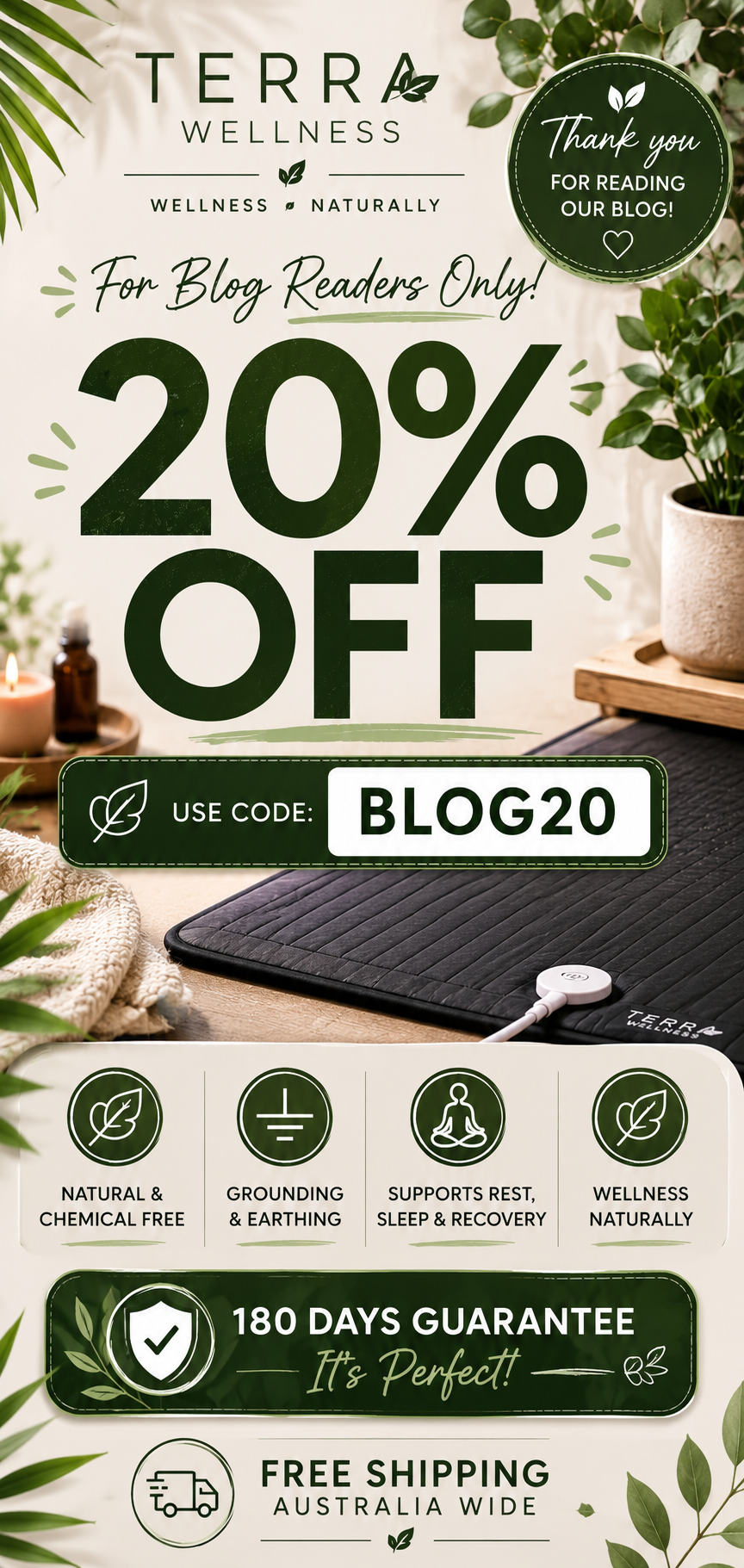
Terra Wellness offers a range of grounding accessories designed for indoor earthing. Explore our Grounding Mats and Grounding Sheets to easily incorporate earthing into your sleep or work routines and recreate that natural outdoor connection indoors.
How Do Grounding Mats Improve Sleep Quality?

Grounding mats may support sleep by helping to synchronise your body's natural rhythms and encouraging a relaxed state in the evening. When your body’s electrical potential aligns more closely with the Earth, your nervous system can shift toward a calmer state that supports melatonin production and sleep onset.
In practice, sleeping on a grounding sheet or placing a mat under your legs for several hours before bed can help align your body's natural cues. Most people notice gradual improvements over a few weeks of consistent use rather than an immediate, dramatic change.
Manage expectations: improvements are often incremental — shorter sleep latency, deeper sleep blocks — and are amplified when you also maintain good sleep hygiene like consistent bedtimes and reduced evening light exposure.
That sleep support connects directly with grounding’s effects on stress and anxiety, discussed next.
Can Grounding Mats Help Reduce Stress and Anxiety?

Grounding mats appear to reduce physiological arousal by encouraging a relaxed state and modulating your body's natural stress patterns, which many users describe as a clearer sense of calm.
Simple, targeted use — for example, a desk mat under your wrists during focused work or a small pad while meditating — introduces regular grounding periods that can help lower stress responses.
A brief 10–20 minute grounding session during a work break or before your evening routine can help shift the nervous system out of overdrive, improving concentration and emotional regulation.
Users often find that pairing grounding with breathwork or light stretching enhances the calming effect. Short, consistent sessions usually deliver more reliable results than sporadic long sessions.
These daytime calming effects also support better sleep, linking back to inflammation and pain support covered next.
How Do Grounding Mats Support Inflammation Reduction and Pain Relief?
Grounding mats are thought to support inflammation reduction and pain relief through electron transfer and small improvements in microcirculation.
By providing a path for electrons from the Earth to reach the body, grounding may help neutralise factors at sites of tissue stress, reducing signals that contribute to inflammation.
At the same time, modest improvements in blood fluidity and microflow can improve oxygen delivery and waste removal, which supports recovery and reduces perceived soreness.
Taken together, these ideas set realistic expectations: many users report modest reductions in chronic aches, quicker recovery after exercise, and less morning stiffness when grounding is used consistently alongside other recovery practices.
The sections below unpack the simple ideas behind electron transfer and how circulation changes can support wellbeing.
What Is the Idea Behind Electron Transfer and Free Radical Neutralization?
In grounding, electron transfer refers to electrons moving from the Earth into the body and interacting with certain elements to stabilise them. Put simply, electrons can help reduce stress where tissues are signalling inflammation.
Think of grounding as a complementary strategy for supporting your body's natural balance. Combine grounding with other healthy habits like sleep optimisation, good hydration, and regular movement.
Being clear about these limits helps set practical expectations around pain relief and recovery.
How Does Improved Circulation Enhance Wellbeing?
Better circulation supports wellbeing by delivering nutrients, clearing waste, and regulating temperature — all of which speed tissue repair and reduce discomfort.
Grounding has been associated with modest improvements in microcirculatory flow and blood fluidity, which can reduce swelling and help with post‑exercise recovery in everyday settings.
If you notice less stiffness or faster recovery, track straightforward measures such as soreness duration, sleep quality, and daytime energy as indicators of circulatory improvement.
Adding grounding to recovery routines — short grounding sessions after activity or overnight use with a grounding sheet — can complement mobility work and hydration strategies.
These circulation benefits lead naturally to choosing the right equipment for home use.
How to Choose and Use the Best Grounding Mats for Home Use in Australia?
Picking the right grounding mat or sheet for an Australian home means matching product type, size, and connector compatibility to how you’ll use it, while checking conductivity and durability.
Sheets are better for whole‑night sleep because they provide a large conductive area and sit under bedding; smaller mats work well for desks, chairs, or meditation where you want targeted contact.
Safety and compatibility matter: look for a proper grounding cord and connector suited to local electrical standards, and keep mats on dry, stable surfaces to maintain conductivity.
Typical setup involves connecting the mat’s cord to a verified earth point — if you’re unsure, have an electrician confirm the grounding point for safety.
Use the checklist below to compare options before you buy.
Before the checklist, here is a quick product comparison table that highlights common product types, key features, and why they matter for home use.
| Product Type | Key Feature | Why It Matters for You |
|---|---|---|
| Grounding Sheet | Large conductive area | Best for full‑night sleep and extended contact |
| Grounding Mat | Compact size for desk or floor | Ideal for targeted sessions and portability |
| Grounding Pad | Small contact surface for chairs | Useful for meditation or seated work |
| Grounding Cord & Connector | Durable, well‑insulated cable | Ensures safe, reliable earth connection |
This table helps you decide between a sheet or a mat based on how you plan to use earthing at home. The checklist below sets out concrete features to prioritise when shopping.
What to look for when evaluating grounding mats and sheets:
- Conductive Material: Choose products with a reliable conductive layer, such as carbon or silver‑infused fabric, for consistent electron flow.
- Size and Fit: Match surface area to use — sheets for sleep, mats for desks, pads for chairs.
- Connector Type and Build: Prefer durable cords with clear grounding connectors and robust insulation.
- Ease of Cleaning and Durability: Pick materials that tolerate regular cleaning without losing conductivity.
After checking these features, focus on safe setup and daily routines to get the most from grounding accessories. In Australia, Terra Wellness offers grounding accessories, including a Grounding Mat and Grounding Sheets that match these priorities and offer simple options for sleep and desk use.
What Features Should You Look for in a Grounding Mat?
Use this concise checklist to choose a mat: conductive layer type, surface area, connector quality, and maintenance requirements are the essentials.
Carbon or silver‑infused fabrics offer a good balance of conductivity and flexibility for comfortable use, while larger surfaces improve the chance of sustained skin contact during sleep.
Connector quality affects safety and lifespan: a robust grounding cord and secure connectors reduce intermittent contact and help maintain consistent electron flow.
Finally, select surfaces that can be cleaned without damaging the conductive layer so performance lasts over time.
These considerations lead naturally into practical ways to add grounding to daily life.
How to Incorporate Grounding Mats into Your Daily Routine?
Grounding works best when paired with consistent timing and complementary habits like hydration and good sleep hygiene.
Start small and regular: 10–20 minutes at a desk, 20–60 minutes during meditation, and overnight use with a grounding sheet if sleep support is the goal. Track changes over several weeks to see what works for you.
Combine grounding with calming rituals: a short pre‑sleep grounding session plus dimmed lights and a cool bedroom supports your body's natural rhythms; a grounding break during work with deep breathing can reset focus and reduce tension.
Track simple metrics such as time to fall asleep, perceived stress, and soreness duration to measure impact, and tweak duration and placement to suit your needs. Small, consistent habits usually provide clearer feedback than occasional long sessions.
Make Grounding Part of Your Day!
Terra Wellness stocks grounding solutions made for these routines, including a Grounding Mat for desk or floor use and Grounding Sheets for overnight contact — options that make indoor earthing straightforward to try.
- Evening wind‑down: Use a grounding sheet or mat for 30–60 minutes before bed while practising relaxation breathing.
- Work breaks: Place a desk grounding mat under your wrists for 10–20 minutes during focused work sessions.
- Post‑exercise recovery: Sit or lie on a mat for 15–30 minutes after moderate exercise to support circulation and reduce soreness.
Keeping grounding simple and measurable helps it complement your existing wellness routines.
Are Grounding Mats Safe and Effective? Addressing Common Questions and Scepticism
Grounding mats are generally safe when used correctly and with attention to electrical safety, and many users report positive physiological effects.
Safety relies on correct setup: use intact cords, place mats on dry surfaces, and confirm the grounding point. If in doubt, consult an electrician to verify the earth connection.
Effectiveness combines the plausible ways grounding works — like electron transfer and helping your body find balance — with many user reports of improved sleep and reduced tension.
If you’re curious, trying a personal trial with clear self‑monitoring for a few weeks is a great, low‑risk way to assess whether grounding adds value for you without replacing medical care.
With sensible precautions, grounding offers a safe, low‑intervention option to explore at home.
Do Grounding Mats Really Work? User Perspectives
Many users report benefits from grounding that align with the proposed ways it works, such as helping your body's natural processes and promoting a relaxed state. User stories commonly describe better sleep, calmer days, and reduced soreness after consistent use.
The practical recommendation is to treat grounding as a promising addition to your routine: try a focused trial (several weeks of nightly or daily sessions), track sleep, stress, and pain markers, and combine grounding with other lifestyle measures. This approach lets you judge personal benefit.
How Do Grounding Mats Compare to Outdoor Earthing?
Indoor grounding mats replicate many aspects of outdoor earthing with added convenience and consistency, though barefoot time outdoors also offers sensory and environmental benefits that a mat can’t fully reproduce.
Mats give year‑round access, predictable placement, and the ability to target beds or desks. They are a practical substitute for extended barefoot sessions on natural ground, especially in urban areas or adverse weather conditions.
To better mimic outdoor earthing, place mats on natural fabrics, avoid insulating barriers, and combine indoor grounding with short barefoot sessions outside when possible.
What Do Australian Users Say About Their Grounding Mat Experiences?
Across Australia, people are adding grounding mats and sheets into wider routines that focus on sleep optimisation, natural stress relief, and simple recovery.
From cool inland bedrooms to city apartments, Australians report fitting grounding into bedroom setups or desk practices where barefoot time is limited.
Grounding products tend to be used alongside other wellness tools — sleep aids, hydration, and simple movement — rather than as standalone cures. This reflects realistic adoption patterns and sensible expectations when grounding is part of a broader routine.
Real Stories from Terra Wellness Customers Across Australia
Anonymised customer summaries show recurring themes: steadier sleep, calmer evenings, and reduced post‑exercise soreness when grounding is used regularly.
Many users pair grounding sheets with established sleep habits and notice gradual improvements over several weeks rather than immediate, dramatic changes.
While experiences vary, the geographic spread — coastal homes to urban apartments — suggests that grounding products adapt to many living situations. We encourage customers to share setup tips and routines so others can refine their use.
How Grounding Mats Fit into Australian Holistic Wellness Trends
Grounding mats fit naturally with Australian holistic wellness trends that favour simple, low‑intervention tools for sleep and stress management.
People often combine grounding with hydration, movement, and structured sleep routines as part of an integrative approach to wellbeing.
In outdoor‑friendly climates, grounding supplements barefoot time; in dense urban settings, it’s a practical way to retain earthing benefits indoors.
When paired with sensible lifestyle choices, grounding accessories become one adaptable tool among many Australians use to support balanced, present, and calm daily lives.