





How to Use a Walking Pad for Maximum Benefits: A Complete Guide to Health, Posture, and Workouts
Walking pads are slim, under-desk treadmills built for small spaces and steady low‑intensity movement while you work, read or relax. This guide walks you through how to use a walking pad to support heart health, improve posture, burn more daily calories and sharpen focus. We cover safe ergonomic setups, practical beginner and interval workouts, and easy recovery strategies to make a reliable part of your day. Many people take occasional steps without seeing change — a consistent walking pad routine converts those steps into measurable gains by raising non‑exercise activity thermogenesis (NEAT) and reinforcing good posture when the setup is right. Inside, you’ll find fantastic benefits, a step‑by‑step ergonomic setup, ready‑to‑use workout plans, and tips on integrating walking pads into a fuller wellness routine. Each section includes clear recommendations for speeds, durations and safety checks so you can start safely and progress toward cardio and weight‑management goals.
To see how simple movement adds up, start with the idea of Non‑Exercise Activity Thermogenesis (NEAT).
This opener leads into a clear breakdown of the key health benefits, a quick comparison of outcomes, step‑by‑step ergonomic setup and safety checks, beginner and intermediate workout templates, ways to pair walking pad sessions with recovery tools, and answers to common safety questions. We use terms like under‑desk walking pad, active workstation and ergonomic setup so you can match recommendations to both work and home settings. Practical lists and comparison tables show expected calorie burn, session lengths and progression plans so you can build a routine that fits your time and goals.
What Are the Key Health Benefits of Using a Walking Pad?
A walking pad delivers gentle, low‑impact aerobic activity that raises heart rate modestly, increases daily energy use and supports weight management when used consistently. The mechanism is simple: regular slow‑to‑moderate walking improves cardiovascular fitness, boosts circulation and adds measurable calorie burn without the joint stress of running. Below is a concise summary of the main benefits and practical takeaways.
While high‑intensity training gets a lot of buzz, steady low‑intensity activity offers fantastic benefits for your heart health, too.
Walking pads deliver several overlapping, accessible advantages:
- Cardiovascular Support: Regular low‑intensity walking builds baseline aerobic fitness and cuts down sedentary time.
- Weight Management: Adding walking minutes raises daily calorie burn and supports metabolic balance when paired with sensible eating.
- Mental Well‑being and Productivity: Light movement reduces stress, helps concentration and lifts mood by improving blood flow and neurotransmitter balance.
That summary leads into how many calories you can expect to burn and what weekly duration can make a real difference to your heart health.
Intro to benefit comparison table: the table below lays out primary benefits, how they work and practical takeaways you can use right away.
| Benefit Area | Mechanism | Practical Takeaway |
|---|---|---|
| Cardiovascular health | Sustained low‑intensity aerobic work increases stroke volume and capillary density. | Aim for 150+ minutes/week of moderate‑intensity walking (cumulative) to support heart health. |
| Weight management | Increased NEAT (non‑exercise activity thermogenesis) and daily calorie burn | 30–60 minutes/day of walking pad use can help create a caloric deficit when paired with sensible nutrition |
| Joint and musculoskeletal health | Low‑impact repetitive motion preserves joint health versus impact activities. | Use cushioned footwear and maintain neutral posture to reduce overload |
| Mental health & cognition | Movement increases cerebral blood flow and reduces stress hormones | Incorporate short walking sessions during work blocks to boost focus and mood |
This comparison shows how walking pads support cardio fitness, calorie burn, joint protection and mental clarity. Next, we’ll get into calorie estimates and recommended session timing so you can plan workouts that fit your life.
How Does a Walking Pad Improve Cardiovascular Health and Weight Loss?
Walking pads increase total daily light‑to‑moderate aerobic activity, which can raise resting metabolic rate and improve cardiorespiratory efficiency over time. Calorie burn varies with speed, incline (if available), body weight and gait: an average adult walking at 3–4 km/h on a flat pad will typically burn about 200–300 calories per hour, though individual results vary. For weight loss, consistency beats intensity — 30–60 minutes a day adds up to a meaningful weekly energy deficit when paired with controlled nutrition. Public‑health guidance recommends 150 minutes of moderate activity per week; using a walking pad to break up sitting is a practical way to reach that target.
We recommend starting with smaller daily targets and increasing time or speed by no more than 10% per week to lower the risk of overuse injury.
With that context, you’ll be ready to choose session frequency and intensity; next, we turn those choices into simple workout templates for beginners and interval users.
What Mental Health and Productivity Benefits Can You Expect?
Using a walking pad during work reduces perceived stress and helps maintain alertness without wearing you out. Movement increases blood flow to the brain and shifts neurotransmitters that support attention. Short walking breaks between focused tasks act as active resets — they reduce mental fatigue and make it easier to return to concentrated work. Many people find a better mood and productivity when active workstations replace long sitting sessions.
Practically, schedule walking pad time for low‑cognitive‑demand tasks like calls or emails, and reserve seated work for high‑focus tasks. Pairing easy walking with mindful breathing or light standing stretches enhances stress relief. Next, we’ll cover the setup basics so you can get these benefits without compromising posture or comfort.
How Do You Set Up and Use a Walking Pad Correctly for Optimal Results?
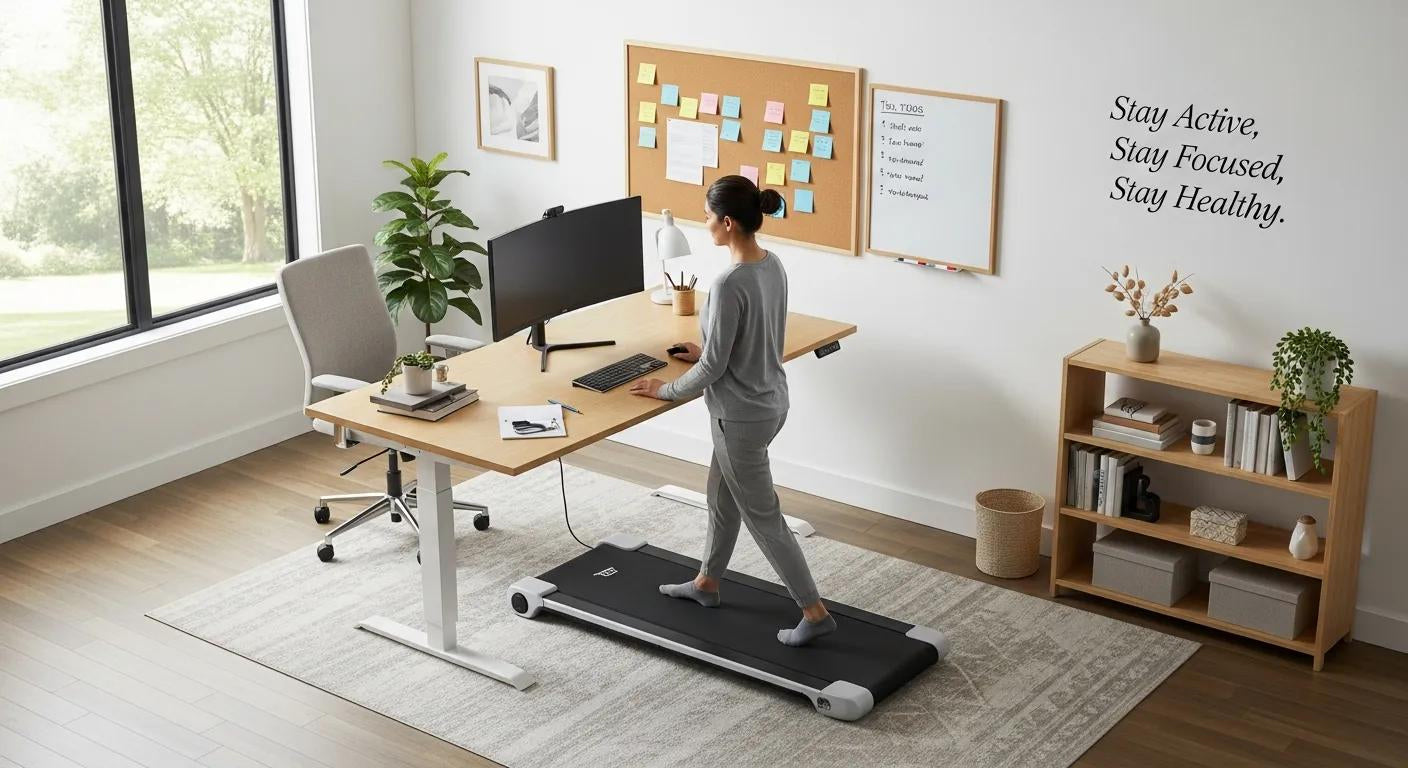
A good walking pad setup depends on ergonomic desk alignment, posture cues and routine safety checks so sessions stay productive and strain‑free. Aim to keep your spine neutral, feet positioned for a steady stride, and safety features (like an emergency stop key) ready. Below are simple setup steps and daily checks to get you started.
- Place and test: Put the pad on a level surface and try it at a low speed for 2–3 minutes to confirm stability and comfort.
- Adjust desk height: Set your desk so forearms sit roughly parallel to the floor and shoulders can relax while typing.
- Align monitor: Position the top of the screen at or slightly below eye level to keep your neck neutral.
These steps create a safe baseline and lead to specific ergonomic measurements and posture cues that make longer sessions more comfortable.
Intro to ergonomic table: the table below lists recommended measurements and equipment features to guide your setup choices.
| Ergonomic Element | Recommended Specification | Rationale |
|---|---|---|
| Desk height | Elbows at 90–110°; desk surface roughly 68–80 cm, depending on user height | Keeps shoulders relaxed and wrists neutral during typing while walking |
| Monitor height | Top of screen at eye line or slightly below | Prevents forward head posture and neck strain |
| Footwear | Lightweight shoes with cushioning and stability | Protects feet and joints; avoid barefoot use on the moving belt |
| Walking pad speed range | 1.5–6 km/h for most under‑desk use | Enables safe walking without disrupting work or posture |
These measurements and equipment choices directly affect comfort and movement mechanics; next, we’ll cover posture cues that keep your spine and neck neutral during sessions.
What Is the Proper Posture and Ergonomic Setup for Walking Pad Use?
Start with a neutral spine: shoulders back and down, hips over ankles, and head balanced — not pushed forward. Engage your core gently to stabilise the pelvis and avoid over-arching the lower back. Keep a small bend in the elbows when using a standing desk to limit shoulder tension. Your eye line should sit around the top third of the screen to discourage chin‑forward posture during longer sessions.
Quick posture checks before each session help: march in place for five seconds, scan shoulders and neck for tightness, and adjust monitor tilt if needed. These brief checks prevent gradual posture drift and protect your neck and back during regular use.
Which Footwear and Safety Tips Ensure Injury Prevention?
Wear shoes with moderate cushioning, arch support and a stable heel counter to keep a safe, comfortable gait on the belt. Avoid soft slippers or barefoot use — they raise slip risk and reduce shock absorption.
Key safety habits: always attach the safety key to clothing, start at a slow speed when mounting or dismounting, and use handrails or a desk for balance when you begin moving.
Regular maintenance — cleaning and inspecting the belt, checking tension and confirming the motor and controls are working — reduces noise and prolongs the machine’s life.
A brief daily checklist (safety key attached, shoes on, quick speed test) stops small problems from becoming accidents and keeps the unit running quietly. This also sets the stage for recovery options that support post‑session soreness management.
What Are Effective Walking Pad Workout Routines for All Fitness Levels?
Choose routines that match your fitness, available time and goals. The templates below range from gentle beginner plans to interval sessions. They blend steady‑state walking for endurance, short bursts for cardiovascular gains, and simple bodyweight moves for strength without stressing the joints. Use these templates to progress safely and consistently.
- Beginner starter programme: 20 minutes/day at 2.0–3.0 km/h, five days a week; add 5–10 minutes per session each week.
- Progression plan: After 2–4 weeks, increase speed by 5–10% or add about 10 minutes total per week until you reach 45–60 minutes/day as tolerated.
- Interval template: 1:2 work‑to‑rest (for example, 60s brisk at 4–5 km/h, 120s easy at 2.5–3 km/h), repeat 6–10 rounds depending on fitness.
These templates emphasise gradual overload to reduce injury risk while encouraging cardiovascular and metabolic improvements. The next sections include week‑by‑week plans and safe ways to combine intervals with light bodyweight moves.
Intro to workout comparison table: the table below compares common walking pad workout types, perceived effort and simple progression tips.
| Workout Type | Duration/Speed Example | Expected RPE | Progression Tip |
|---|---|---|---|
| Beginner steady | 20–30 min at 2.0–3.5 km/h | 3–4/10 | Add 5 min/session weekly until 45 min |
| Interval walk | 30 min with 1:2 work: rest | 5–7/10 | Increase work interval length or speed gradually |
| Mixed circuit | Alternating 5 min walk + 2–3 bodyweight moves | 4–6/10 | Add sets or increase pace on walking segments |
Use this comparison to pick the template that best fits your current conditioning and schedule. The sections below give an exact beginner plan and interval combinations you can start with today.
How to Start with Beginner Walking Pad Workouts?
A simple 2–4 week starter plan builds tolerance and a lasting habit. Begin with 10–20 minutes daily at an easy pace (2.0–3.0 km/h) in week one, move to 20–30 minutes in week two, and aim for 30–45 minutes by week four while watching perceived exertion. Warm up for 3–5 minutes at a very easy pace and cool down for 3–5 minutes with slower walking and gentle stretches to limit stiffness. Set measurable targets — minutes per day or sessions per week — and log them to stay motivated.
Slow, steady increases keep injury risk low and deliver consistent cardiorespiratory improvements. From here, you can add interval work to raise intensity without long continuous sessions.
How to Incorporate Interval Training and Bodyweight Exercises?
Interval training on a walking pad alternates short, higher‑intensity walking with easy recovery to raise cardiovascular efficiency and calorie burn. For example, try 30 seconds at a brisk pace (4.5–5.5 km/h) followed by 60 seconds at an easy pace, repeating for 15–25 minutes. Use recovery periods or brief pauses to do bodyweight moves like wall push‑ups, standing calf raise, or chair squats — always performed off the moving belt or while the belt is paused to avoid balance loss.
Progress by lengthening the brisk intervals or increasing rounds, and prioritise controlled movement and good posture. Next, we’ll look at fitting walking pad sessions into a broader wellness routine that supports recovery.
How Can You Integrate Walking Pad Use into a Holistic Wellness Lifestyle?
Integrating a walking pad into your daily wellness means coupling regular movement with deliberate recovery, good sleep habits and stress management to multiply benefits across heart, muscle and mental health.
Mind‑body practices — short breathing exercises or mindful walking during easy sessions — enhance stress relief. Consistent timing (morning walks, mid‑afternoon active breaks) helps habit formation. Complementary recovery tools, such as grounding mats and home saunas, can support relaxation and circulation after longer or more intense sessions.
- Morning: 15–30 minute walk to wake up and prime metabolism.
- Midday: 20–40 minute walking pad session during lower‑intensity tasks to beat the afternoon slump.
- Evening: Gentle 10–20 minute walk to aid digestion and wind down, followed by sleep‑focused recovery practices.
This daily template treats walking pad sessions as movement pillars that combine well with other recovery routines. Below, we explain how grounding mats and saunas fit into post‑session recovery.
How Do Grounding Mats Support Post-Walking Pad Recovery?
Grounding mats are simple recovery aids that may help relaxation, sleep and post‑exercise recovery when used after activity. The idea is straightforward: 10–30 minutes of barefoot contact with a grounding surface while resting can encourage a parasympathetic shift and support recovery and sleep onset. Practically, place a grounding mat under a reclined or seated area for 10–20 minutes after a session and combine it with breathing or light stretching to amplify the relaxation response.
Individual responses differ, but grounding is a low‑effort addition to mobility and stretching. If you’re interested, a range of grounding mats and accessories is available to slot into your home recovery routines.
What Role Do Home Saunas Play in Detoxification and Muscle Relaxation?
Home saunas pair well with walking pad workouts by boosting circulation, relaxing muscles and providing a short, controlled cardiovascular challenge that can aid recovery and wellbeing when used appropriately. A common protocol is 10–15 minutes at a moderate temperature, followed by a cool‑down and rehydration to support blood flow and ease muscle tension. Saunas work well after light mobility or low‑intensity walks, but should be avoided immediately after maximal effort without adequate cooling and fluids. Used sensibly, saunas become a restorative ritual that supports recovery. A range of home sauna options and accessories are available that fit perfectly into these recovery sequences for those who prioritise post‑session restoration.
What Are Common Questions About Walking Pad Use and Safety?
People often ask how long and how fast they should walk, whether walking pads make much noise, and what limitations to expect. Below are straightforward answers to help you match walking pad use to your health, productivity and safety goals.
- Duration and speed: Aim for a cumulative 30–60 minutes per day at 2–4 km/h for general health; increase duration or add interval work for weight‑loss goals.
- Noise and disadvantages: Some models have motor noise and limited incline or top speed compared with full treadmills; a dense vibration mat and routine maintenance reduce sound.
- When to seek clinical advice: Talk to a clinician before you start if you have cardiovascular disease, recent surgery or unstable balance.
These answers help you weigh benefits and safety; the following subsections expand on exact speed and duration guidance plus noise‑mitigation tips.
How Long and At What Speed Should You Walk on a Walking Pad?
Recommended speeds depend on your goal. For under‑desk productivity and gentle movement, aim for 1.5–3.5 km/h so you can type and stay comfortable. For dedicated cardio or higher calorie burn, use 3.5–5.5 km/h in focused sessions or add short intervals at brisk speeds. Follow public health guidance to accumulate at least 150 minutes/week of moderate activity — 30 minutes/day across five days is a practical starting point, progressing to 45–60 minutes as fitness improves.
Increase time or speed by about 10% per week and stop immediately if you feel dizziness, chest pain or severe joint pain — those symptoms warrant medical review. Below, we cover machine limits and sound management.
Are Walking Pads Noisy and What Are Their Disadvantages?
Walking pads are usually quieter than full treadmills but can still produce motor or belt noise depending on build, surface and upkeep; placing the unit on a dense vibration mat and following manufacturer lubrication and alignment steps will reduce noise. Main trade‑offs are lower top speed, limited incline options and a narrower belt compared with traditional treadmills, which limits running and stride length for some users. Regular lubrication and alignment checks reduce wear and noise, and pairing walking pad use with off‑pad strength work widens your training options.
Knowing these trade‑offs helps you set realistic expectations and plan complementary exercises and recovery strategies to create a balanced fitness approach. This guide has covered the core health benefits, ergonomic setup, workout templates, integration into wider wellness habits and common safety concerns so you can begin using a walking pad confidently and sustainably.