





Revitalise Recovery with Portable Ice Baths
Portable ice baths are compact cold‑water immersion units built to deliver the great benefits of cold therapy while fitting into commercial environments. This guide explains how cold plunges work, how they help reduce muscle soreness and inflammation, and practical ways facilities can use them. Facility managers and business owners will get real recovery benefits, operational and hygiene advice, installation best practices, and guidance on evaluating commercial units for durability and chiller compatibility. Our aim is to turn physiological effects into great results for your business — faster athlete turnaround, improved client satisfaction and new opportunities for premium recovery services. The content is organised into four practical sections: physiological benefits; the business case and value; fit‑out and maintenance best practices; and product features plus buying advice for commercial purchases.
What are the key benefits of portable ice baths for muscle recovery and inflammation reduction?
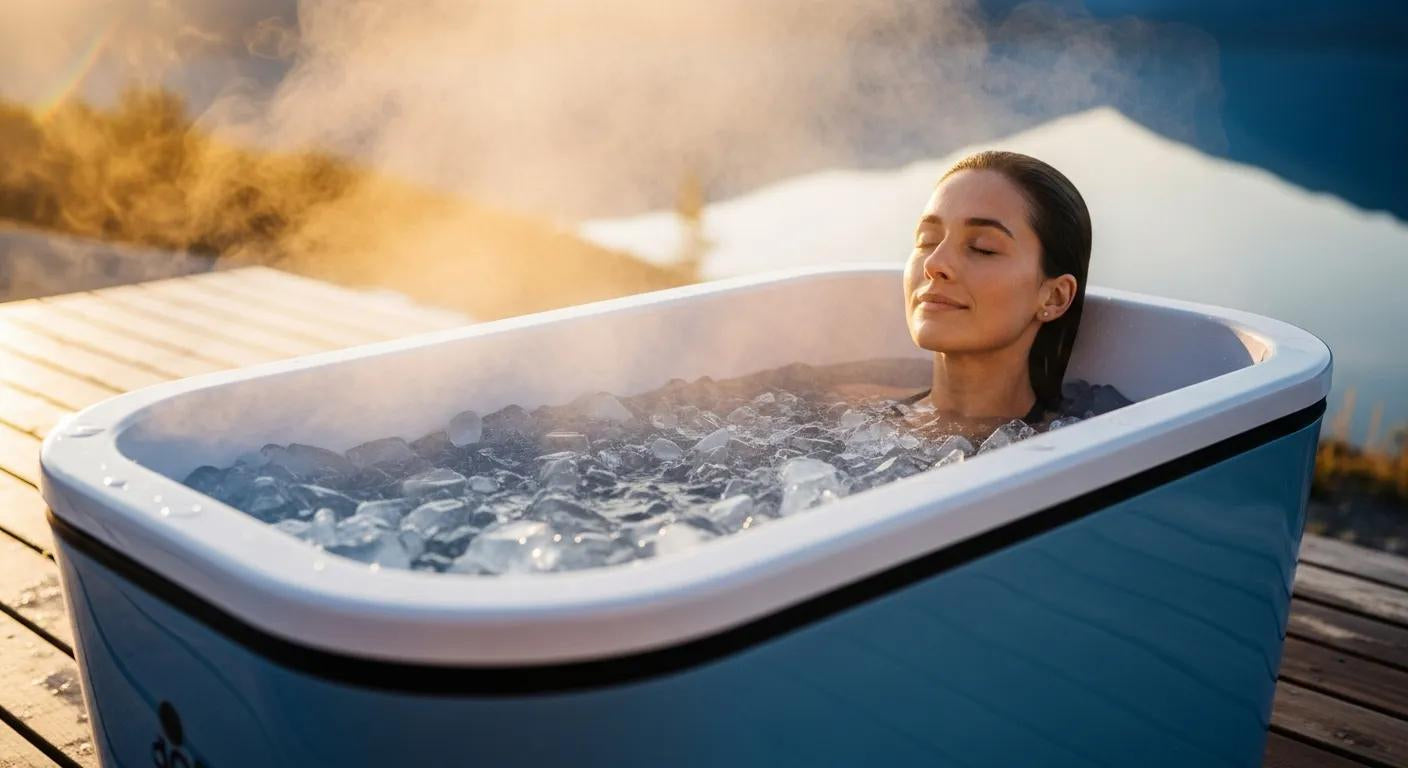
Portable ice baths provide targeted cold exposure that lowers tissue temperature, constricts superficial blood vessels and triggers recovery responses that help blunt inflammation. Cold water immersion reduces metabolic activity in overworked tissue and speeds clearance of metabolic by‑products, producing noticeable reductions in delayed onset muscle soreness (DOMS) and perceived exertion. The portable format adds operational advantages — mobility for flexible placement, easier scheduling for classes and clinics, and simpler setup compared with fixed plunge pools. Put simply, facilities can offer accessible, effective cold therapy that complements active recovery, massage or compression work and supports athlete readiness and member retention.
To make these benefits clear, here are the main ways they can help your facility.
- Faster muscle recovery: The cold helps blood vessels constrict, then expand, which flushes out waste and speeds up functional recovery.
- Inflammation modulation: Lower tissue temperature reduces inflammatory signalling and limits swelling after intense effort.
- Improved circulation: Alternating constriction and dilation enhances microvascular flow and nutrient delivery during recovery phases.
- Operational flexibility: Portability enables pop‑up recovery stations and multi‑site deployment without extensive civil works.
These four benefits can help you see how portable cold plunges fit into your recovery offerings. Next, we'll look at how they achieve these results.
How does cold water immersion accelerate muscle recovery?
Cold water immersion triggers a rapid physiological cascade: immediate vasoconstriction reduces local blood flow and swelling, then controlled reperfusion helps clear metabolites such as lactate. This modulation lowers tissue temperature and metabolic rate, which in turn reduces enzyme activity linked to inflammation and cellular damage. We generally find that effective immersion temperatures are between 10°C and 15°C for short sessions, but protocols should be tailored to the athlete's profile and timing. A typical practical approach is a short immersion (6–10 minutes) after intense sessions; repeated exposures should be scheduled carefully to avoid interfering with long‑term training progress. Framing the sequence as vasoconstriction → metabolite clearance → reduced inflammation helps teams build consistent standard operating procedures.
Knowing how they work, let's look at how cold plunges specifically help with inflammation and lactic acid.
In what ways do portable cold plunges reduce inflammation and lactic acid?
Portable cold plunges alter the local tissue environment in a couple of ways: reduced temperature slows inflammatory enzyme activity and lowers capillary permeability, which helps limit fluid accumulation and swelling. The vascular response — initial constriction followed by blood flow returning — promotes flushing out of lactate and other metabolites from the muscle. Practical recommendations for facilities: maintain controlled temperature ranges and frequency guidelines; for most athletes, 6–12 minute immersions at ~10–15°C performed once or twice post‑session help with short‑term recovery without hindering long‑term training progress. Document session protocols and have performance staff adjust them to align with training goals so recovery supports, rather than hinders, long‑term adaptation.
Clear instructions on duration, temperature, and how often to use them help your staff deliver consistent sessions and see great results for clients.
Why should businesses invest in portable ice baths for commercial wellness facilities?
Portable ice baths present a strong business case: they differentiate service offerings, increase perceived membership value, create opportunities for premium add‑on services and support employee wellbeing programmes for corporate clients. Commercially, cold therapy equipment is a compact piece of equipment that can be redeployed across zones or sites, making it easier to offer effective recovery services. Portable units also allow faster client turnaround after classes or events, reducing downtime and increasing effective capacity. For corporate wellness, on‑site cold immersion signals genuine investment in employee health and can boost morale and perceived employer support.
Terra Wellness works with facilities as a commercial partner, supplying curated portable ice baths and ancillary recovery equipment designed for repeated commercial use. We provide advice on choosing, chiller compatibility advice and fit‑out consultations to help teams choose the right unit and plan deployment. Prioritise vendor conversations that cover logistics, ongoing support to protect uptime and service quality.
Here are the main reasons businesses choose to invest:
- New income streams: Premium recovery sessions or add‑on passes create new income streams.
- Happier members: Distinct recovery offerings increase perceived value and membership loyalty.
- Easier to use: Portable units speed installation and allow flexible placement for class turnover.
- Great for corporate wellness: Portable ice baths are attractive extras for corporate wellness programmes and events.
These business benefits show why a cold plunge can be a smart move for your facility.
How do portable ice baths enhance client recovery and satisfaction in gyms and wellness centres?
Portable ice baths boost client satisfaction by providing a visible, effective recovery option that complements training and therapeutic programmes. Clients often report shorter perceived recovery times and greater readiness for subsequent sessions, which can raise class uptake and loyalty. When offered as a post‑class recovery station or part of a premium pathway, cold plunges can create opportunities for session upgrades or bundled recovery packages. Operationally, staff can sequence bookings to minimise wait times and manage water treatment cycles; successful implementations use defined time slots and clear hygiene protocols to deliver a consistent experience.
Tracking things like how often clients use them and their feedback can help you see the impact on satisfaction and decide how to grow your offerings.
What is the value of commercial cold therapy installations?
Estimating the value combines benefits from premium services, retention gains and operational impacts. These benefits can help you see how a cold plunge can fit into your facility's strategy and planning.
| Benefit Category | Metric |
|---|---|
| Happier members | Improved loyalty |
| New service opportunities | Potential for new income |
| Smoother operations | Quicker client turnover with dedicated recovery stations |
These benefits can help you see how a cold plunge can fit into your facility's strategy and planning.
How can portable ice baths be seamlessly integrated into commercial fit‑outs?
Seamless integration starts with coordinated planning across site selection, drainage, electrical supply and user flow so the unit supports operational schedules and safety. Choose locations with easy user access, proximity to changing areas and clear entry/exit flow to minimise cross‑traffic. Typical technical needs include a hard, non‑slip floor, an appropriate floor waste or drain connection, and either a local electrical supply for chiller‑equipped units or routed access for external chiller lines. Early engagement with contractors ensures the fit‑out addresses water handling, weight distribution and any acoustic or privacy requirements. Planning these elements before buying avoids costly changes and smooths contractor handover.
Here are the main things to confirm before installation.
- Site selection: Dedicated space with non‑slip surfacing and suitable drainage.
- Drainage provision: Floor gradient and waste connection sized for overflow and cleaning cycles.
- Electrical & chiller access: Verify power ratings and chiller routing or compatibility.
- User flow & safety: Plan access, slip‑resistant surfaces and clear signage for safe use.
This table helps ensure your unit is set up correctly for best performance.
| Fit‑out Component | Requirement | Typical Specification |
|---|---|---|
| Drainage | Floor gradient & connection type | Appropriate floor waste or alternative drainage |
| Flooring | Surface type & load rating | Non‑slip tiles or sealed concrete can support unit weight plus water |
| Power | Electrical supply | Suitable electrical supply; safety protection recommended |
| Space | Clearances | Enough clear space for maintenance and user safety |
This table helps ensure your unit is set up correctly for best performance.
What are the best practices for installing portable ice baths in gyms and spas?
Start with a pre‑installation survey to confirm floor loadings, drainage routing and power supply, then follow a staged delivery, commissioning and training process. Stages should include unit inspection on delivery, chiller compatibility tests, and a wet commissioning cycle to confirm drains and leak‑free operation. Involve maintenance teams early so cleaning schedules, water chemistry monitoring, and filter servicing integrate into existing routines. Finally, document safe operating procedures and train staff on session management, emergency response and user guidance to ensure a consistent client experience.
Use this stepwise checklist to reduce risk and operational disruption.
- Survey & sign‑off: Confirm floors, drainage and electrical before purchase.
- Delivery & inspection: Check unit integrity, controls and fittings on arrival.
- Commissioning: Perform wet‑test, chiller pairing and temperature control validation.
- Training & handover: Train staff on SOPs, maintenance and emergency procedures.
Following these steps helps avoid common issues and ensures reliable operation.
How to maintain hygiene and operational efficiency in commercial ice bath use?
Maintaining hygiene and throughput needs a tiered approach to water treatment, turnover procedures and scheduled cleaning. Daily routines typically include skimming and pH checks, a turnover protocol between users (rinse and wipe exposed surfaces), and logged sanitation steps; weekly tasks cover deeper cleaning, filter inspection and chemical rebalancing. Adopt water‑treatment methods compatible with the unit (low‑residue disinfectants, UV or ozone adjuncts where supported) and keep records for compliance and quality assurance. Clear staff responsibilities ensure hygiene and efficiency remain consistent across shifts.
- Key hygiene tasks by cycle include water testing, surface disinfection and filtration maintenance to support safe, repeatable operation at commercial throughput.
These protocols help keep things running smoothly and ensure user confidence.
What are the features and specifications of Terra Wellness portable ice baths for commercial use?
When evaluating commercial portable ice baths, prioritise features that support frequent turnover: robust construction that withstands regular filling and cleaning, integrated or chiller‑compatible interfaces for steady temperature control, and serviceable components for straightforward maintenance. Terra Wellness curates units and recovery equipment suited to commercial settings, balancing durability, portability and ease of integration. Consider things like user capacity, how tough the materials are, and what support is available. The table below outlines three representative unit types to guide planning and supplier conversations.
This comparison can help you find the right model for your needs.
| Unit Type | Characteristic | Commercial Value |
|---|---|---|
| Compact single‑user | Smaller footprint, easy relocation | Great for smaller spaces and corporate wellness |
| High‑capacity commercial | Larger volume, reinforced shell | Ideal for busy gyms and sports clubs |
| Chiller‑ready modular | External chiller compatibility and service ports | Allows for continuous use with separate chillers |
Match the unit type to your facility's needs. Ask suppliers about ongoing support and parts availability.
Which models offer durability and capacity suitable for business environments?
Select models based on the use case: high‑turn gyms need reinforced shells and larger capacity for rapid throughput, while boutique spas may prioritise a compact footprint and aesthetic fit. Durable materials and easy‑service drains are essential in heavy‑use sites, and ergonomic features — comfortable lip heights and handholds — improve safety and uptake. Ask about maintenance advice and recommended water treatment systems to ensure the chosen model fits your operations. Comparing these attributes across vendors simplifies selection and helps you make a confident choice.
Choosing the right model ensures reliable service and helps manage long-term running.
How do customisation and chiller compatibility enhance commercial use?
Custom options — dedicated drain configurations, handrails for assisted entry and digital temperature controls — let facilities adapt portable ice baths to workflow and safety needs. Dedicated chiller compatibility delivers stable setpoints during back‑to‑back sessions, reducing temperature drift under heavy use. Modular chiller designs also simplify servicing because chillers can be maintained independently. Consider the pros and cons of integrated cooling versus standalone chillers to find the best fit for your facility.
These choices affect both user experience and how reliable the unit is long-term, so discuss customisation and chiller integration when you're looking to buy.
What do commercial clients say about their experience with Terra Wellness ice baths?
Commercial clients who add portable cold plunges generally report higher client satisfaction, faster athlete turnaround and the ability to launch premium recovery services that attract new members or corporate programme participants. While individual testimonials vary, common implementation outcomes include increased session uptake, improved perceived recovery among users and operational gains from flexible deployment across facility zones. Facilities that track things like uptake, repeat usage and membership churn can see the business impact and refine offerings based on real‑world data. These aggregated outcomes make a strong case for including portable ice baths in a comprehensive recovery offering.
After seeing the results, many businesses chat with us to confirm the right model and setup. Terra Wellness is here to discuss your needs, model options, and installation support.
Which success stories highlight improved recovery and business growth?
Representative examples show how portable ice baths support recovery and commercial outcomes: a high‑turn athletic facility used portable plunges to reduce athlete downtime and increase training availability; a boutique wellness centre added recovery packages and created new opportunities for client services; a corporate programme deployed a portable unit for wellness days and recorded strong engagement. These case studies follow a simple pattern: identify a recovery bottleneck, deploy portable immersion solutions and see improvements in readiness or how often they're used. Use similar examples in internal discussions to get everyone on board with recovery equipment.
You can adapt these ideas to your own situation and track how often they're used and how happy your clients are to see the benefits.
How have corporate wellness programmes benefited from portable ice baths?
Corporate wellness programmes gain an experiential wellbeing service that supports recovery, reduces perceived stress and signals employer investment in employee health. Short immersion sessions paired with recovery education tend to increase event satisfaction, and recovery stations can be positioned as part of a broader health strategy that supports retention and morale. When proposing to corporate stakeholders, include clear measurement plans — engagement rate, self‑reported recovery and absenteeism trends — to show the programme's value. For bespoke corporate deployments, Terra Wellness can advise on unit selection and logistics to match programme goals.
If your organisation is looking into commercial options or a customised corporate solution, get in touch with us to chat about your needs and how we can help.