






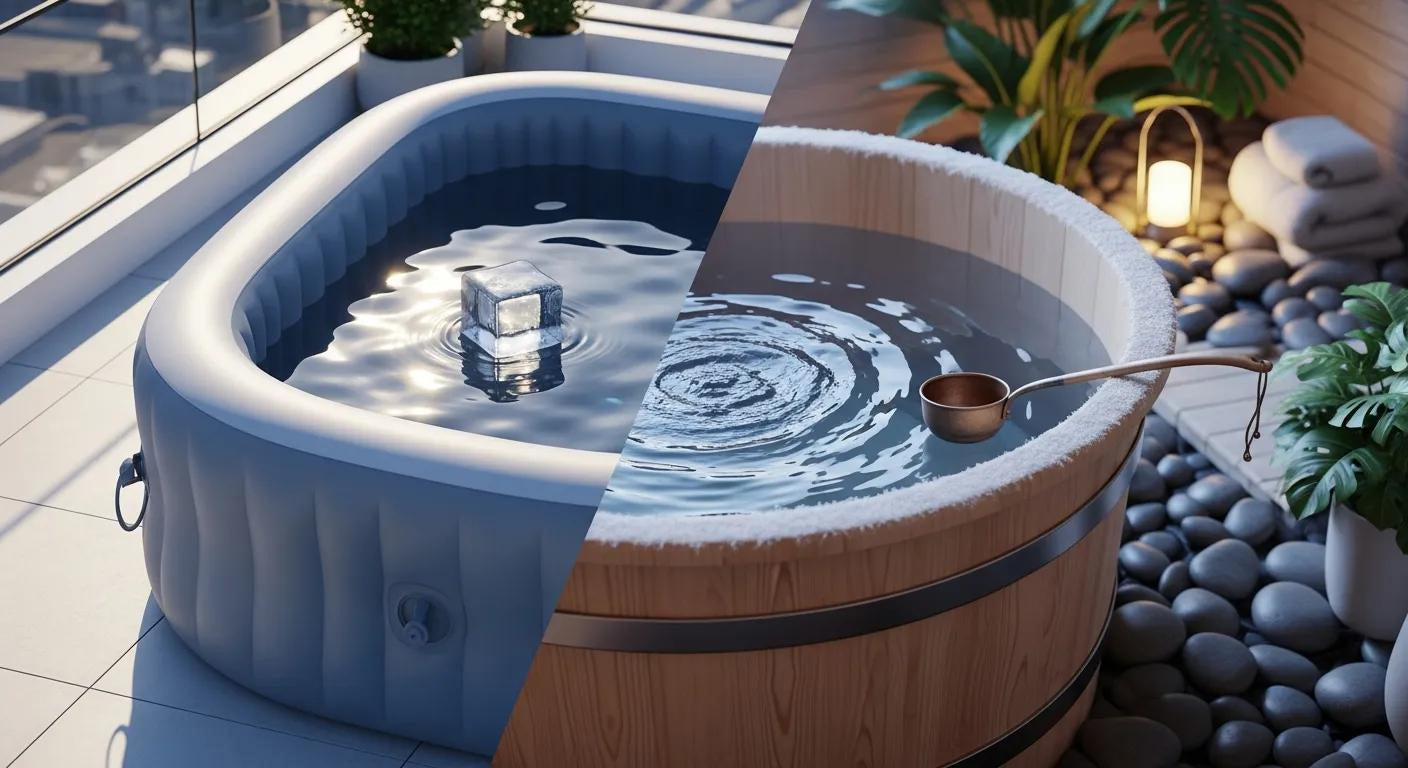
Portable vs Traditional Ice Baths
Cold-water immersion is a cornerstone of modern recovery. Choosing between a portable ice bath and a traditional plunge affects how easily you can access recovery, how reliably you control temperature, and how well you scale treatments for individuals or facilities. This guide walks through both options: what portable ice baths are and how they work, how traditional baths are built and maintained, and the health, operational and commercial implications for users and facility managers. You'll get practical comparisons on setup, temperature stability, maintenance, costs, and the user experience, along with notes on recovery and mental health benefits. We also cover key components (chillers, insulation, pumps), steps for permanent installs, and a side-by-side attribute table to help with purchasing or fit-out choices. Finally, we explain how commercial facilities can evaluate throughput and compliance – and how Terra Wellness supports organisations choosing portable ice bath solutions.
What Defines a Portable Ice Bath and Its Key Features?
A portable ice bath is a transportable plunge solution: a compact, insulated tub that uses either added ice or an integrated chiller to hold therapeutic cold temperatures for recovery. Designs range from inflatable and foldable tubs to rigid units with built-in chillers. Portables prioritise mobility, fast setup and a small footprint compared with permanent plunge pools. Typical benefits include quick deployment at home, in gyms, at events or in mobile clinics, minimal installation work, and the choice between manual ice use or automated chilling for steadier temperatures. When comparing models, focus on insulation quality, chiller type, temperature controller accuracy, tub durability, and how simple draining and sanitation are – these practical details determine whether a portable unit is right for your needs, whether it's for daily athlete recovery, occasional event use, or continuous operation in a small commercial suite.
How Does Portability Enhance Ice Bath Convenience and Usage?
Portability means you can position a plunge where it's most useful — beside the gym floor, in a home garage or inside a therapy room — then store it when not needed. Many portable systems set up in minutes: inflatable or collapsible tubs are often ready to fill in 10–20 minutes, while rigid units typically need only power or a chiller connection. Being able to store or seasonally deploy a unit removes the need for permanent space, so coaches, trainers and small gyms can offer cold plunges without heavy renovations or plumbing. The easiest options lower the barrier to regular use, which improves adherence to recovery routines and helps athletes and clients get consistent benefits from cold-water therapy.
- Portable placement lets facilities add recovery services without major construction.
- Quick setup and takedown increase session frequency and convenience for users.
- Seasonal or intermittent storage reduces long-term space commitment and capital cost.
These advantages matter when flexibility and mobility are priorities, and they point to the equipment choices that determine real-world performance.
What Technologies Power Portable Ice Bath Chillers?
Portable chiller systems use either compressor refrigeration or thermoelectric cooling, and that choice affects energy use, noise and temperature stability. Compressor chillers deliver higher cooling capacity and faster ramp-down to target temperatures — commonly reaching therapeutic ranges around 1–4°C — while thermoelectric units are quieter and simpler but suited to milder temperature drops and smaller volumes. Tub insulation, construction material and pump circulation are integral to system efficiency: better insulation cuts chiller runtime, and a reliable pump ensures even temperature distribution and filtration. Maintenance differs, too: compressor systems need periodic servicing, whereas thermoelectric units have fewer moving parts but lower peak performance.
Precise temperature control is important for many cold-water applications, and stable cooling systems support consistent therapeutic outcomes.
- Compressor chillers: fast cooling, consistent deep temperatures, higher energy demand.
- Thermoelectric chillers: lower capacity, quieter operation, lower maintenance for light use.
- Good insulation and a quality pump improve efficiency and reduce running costs.
Knowing these technologies helps buyers match a portable system to expected usage, which leads to how traditional ice baths differ in construction and service needs.
What Are the Characteristics and Setup of Traditional Ice Baths?
“Traditional” ice baths usually mean a fixed bathtub retrofit, an above- or in-ground plunge pool, or a purpose-built permanent installation that uses ice deliveries or HVAC-grade chillers for temperature control. These setups favour full-body immersion in a fixed location and commonly include plumbing, drainage and water treatment to meet hygiene and operational standards for frequent use. Construction considerations include structural support, waterproofing, floor drains, and hookups to filtration or disinfection systems — and permanent installs typically need professional assessment and building or plumbing approvals. Typical users are sports facilities, rehabilitation clinics and high-throughput wellness centres where an always-available plunge supports continuous service delivery.
How Is a Traditional Ice Bath Constructed and Maintained?
Building a traditional ice bath involves choosing a durable basin material (concrete, tile, stainless steel or reinforced fibreglass), specifying plumbing for fill and drain, and fitting filtration plus chemical or UV sanitation to manage microbial risk. Maintenance commonly includes scheduled water changes or continuous filtration, regular disinfection, flow and pump checks, and surface cleaning to prevent biofilm. Staff time and training are ongoing operational needs. Ice-only strategies add storage and labour for ice deliveries and daily top-ups; chiller-equipped permanent pools shift labour toward mechanical maintenance but remove repetitive manual tasks. A good maintenance plan balances sanitation, downtime and user safety to keep therapeutic conditions consistent.
- Construction requires structural, plumbing and sanitation planning for safety and compliance.
- Ongoing work often includes filtration, disinfection and scheduled pump/chiller service.
- Labour for ice handling or mechanical maintenance is a predictable recurring expense.
These factors affect total cost and operational fit, which we cover next when discussing space and budget trade-offs.
What Are the Cost and Space Considerations for Traditional Ice Baths?
Traditional installs usually mean higher upfront construction costs and a permanent footprint, with expenses driven by excavation or structural work, plumbing, water treatment and chiller systems when required. Operating costs include greater water usage, energy for cooling and pumps, ongoing chemical or UV treatment, and staff time for cleaning and user management — over time, these can be higher than portable options but may be justified by high throughput. Space planning must allow safe entry/egress and, where applicable, ADA-aligned access, which can constrain layouts in smaller studios. Budgeting for a traditional plunge should reflect expected client volume, energy use, and the value of offering a permanent premium amenity.
- Upfront: portable options are generally more budget-friendly, while traditional installs require a larger initial investment.
- Ongoing: traditional setups often have higher running costs for water, chemicals, and staff.
- Durability: Traditional constructions tend to be more robust; high-end portable units can offer excellent longevity.
Understanding these space and cost trade-offs helps managers choose between portability and permanence; next, we compare essential attributes directly.
How Do Portable and Traditional Ice Baths Compare Across Essential Attributes?
Portable and traditional ice baths differ in temperature control, cost, maintenance, durability and user experience. The right choice depends on priorities like mobility, throughput and long-term needs. Portable systems win on flexibility and lower upfront cost but may trade off absolute durability and maximum throughput, while traditional plunge pools offer consistent full-immersion experiences and higher continuous capacity at the cost of construction complexity and greater ongoing maintenance. The table below summarises core differences to help decision-makers scan options quickly.
Different ice-bath types contrast across attributes important to buyers and facility managers:
| Type | Key Attribute | Typical Outcome |
|---|---|---|
| Portable Ice Bath | Portability & setup | Fast deployment, small footprint — ideal for home, gym or event use |
| Portable Ice Bath | Temperature control | Varies by chiller type; integrated chillers give stable temps |
| Portable Ice Bath | Maintenance | Lower structural upkeep; integrated chillers need periodic service |
| Traditional Ice Bath | Immersion consistency | Permanent installs deliver reliable full-body immersion and depth control |
| Traditional Ice Bath | Throughput & durability | Higher throughput for busy facilities; durable materials, but higher ops costs |
| Traditional Ice Bath | Operational complexity | Requires plumbing, filtration and trained maintenance staff |
This snapshot shows how attributes map to outcomes and underscores that component choices — not category alone — drive performance. The following sections dig into temperature control and long-term costs in more detail.
What Are the Differences in Temperature Control and Effectiveness?
Temperature control depends on whether a system uses ice-only methods or an integrated chiller. Compressor chillers, whether in portable or permanent systems, provide consistent therapeutic temperatures and faster cooldown to target zones compared with manual ice. Traditional baths relying on ice deliveries can reach low temperatures but often show more variability across a session, which affects repeatability. Well-designed portable units with reliable chillers can match or outperform ice-only traditional baths for single-user volumes, though chiller capacity and tub insulation determine energy use and service intervals. For anyone prioritising repeatable protocols and controlled exposures, chiller-integrated solutions — portable or permanent — are the most predictable choice.
How Do Cost, Durability, and Maintenance Compare?
When considering the long-term, think about the initial investment, maintenance intervals, energy use, and replacement parts. Portable units usually reduce initial spend but may require chiller servicing and tub replacement over time. Materials matter: rigid portable tubs with reinforced polymers last longer in varied settings, while inflatable options are more vulnerable to puncture and wear. Traditional plunge pools use durable materials with longer physical lifespans but higher ongoing costs for water treatment and staffing; they may also carry additional compliance or insurance requirements. After-sales support is important, so facilities should consider the expected useful life when making a decision.
- Upfront: portable options are generally more affordable initially; traditional options require a larger investment.
- Ongoing: traditional setups often have higher running costs for water, chemicals, and staff.
- Durability: Traditional builds are typically more robust; premium portable models can offer excellent longevity.
With those trade-offs in mind, the next sections focus on the physiological benefits of portable ice baths — the core reason most users invest.
What Are the Health and Recovery Benefits of Portable Ice Baths?
When they reach therapeutic temperatures and follow appropriate immersion protocols, portable ice baths deliver many of the same physiological effects as traditional baths. Cold immersion works via vasoconstriction, reduced tissue temperature and modulation of inflammatory signalling. Those mechanisms translate into measurable outcomes: reduced delayed onset muscle soreness (DOMS), faster subjective recovery between sessions, and short-term improvements in perceived fatigue and readiness. Practical protocols suggest tailoring immersion duration and temperature to the goal — for example, 2–10 minutes at 1–10°C for acute recovery versus milder, longer exposures for conditioning — and expecting individual response variability. Understanding how these mechanisms lead to benefits helps coaches and clinicians design effective cold-water protocols with portable units.
| Physiological Mechanism | How It Works | Resulting Benefit |
|---|---|---|
| Vasoconstriction | Cold exposure narrows blood vessels, lowering local blood flow | Reduces swelling and fluid build-up after exercise |
| Reduced tissue temperature | Cooling muscles slows metabolic reactions | Limits secondary tissue damage and helps reduce DOMS |
| Neuroendocrine response | Cold triggers norepinephrine release and sympathetic activation | Boosts alertness and can improve mood and stress resilience |
The table links mechanisms to benefits and shows how portable ice baths support recovery when used with suitable parameters. The next subsections cover practical protocol tips and mental-health considerations.
How Do Portable Ice Baths Aid Muscle Recovery and Inflammation Reduction?
Portable ice baths help muscle recovery by lowering tissue temperature and inducing vasoconstriction, which limits post-exercise inflammation and fluid accumulation that causes soreness. Short, targeted immersions — typically 2–10 minutes depending on temperature and tolerance — can speed recovery by reducing metabolic byproducts and dampening inflammatory cascades. Practitioner guidance suggests timing matters: post-exercise immersion within the first hour tends to maximise acute soreness reduction, though regular use may interact with long-term training adaptations and should be planned around your training schedule. Balance acute recovery needs with potential interference during strength or hypertrophy phases.
What Mental Health and Immune System Benefits Do They Offer?
Cold immersion triggers acute neurochemical changes — including rises in norepinephrine and alterations in dopamine pathways — that can boost alertness, lift mood and increase perceived stress resilience immediately after a plunge. When paired with breathwork or guided protocols, these psychological effects support stress management and complement broader mental health practices. Early observations suggest some transient shifts in immune system responses after cold exposure, but this area is still being explored. For many users, the combined physiological and psychological responses improve perceived recovery and readiness, which helps sustain consistent training and wellbeing routines.
For facilities equipping recovery suites, considering product choice and reliable after-sales support is key to ensuring a great client experience. Terra Wellness offers a range of portable ice bath products in our Ice Baths & Home Saunas collection, designed to support small facilities and practitioners exploring portable options.
What Are the Advantages and Limitations of Traditional Ice Baths?
Traditional ice baths offer a permanent, always-available plunge that supports full immersion and high throughput, making them ideal for busy sports centres and clinics. Benefits include predictable immersion depth, durable construction and seamless integration into facility layouts where space and capital permit — all of which enhance the user experience for clients seeking a fixed recovery amenity. Drawbacks include increased labour, potential temperature variability if relying on ice deliveries, higher water and energy use, and ongoing sanitation regimes that burden staff. Traditional baths are best when throughput and permanence are key priorities.
How Do Traditional Ice Baths Provide Consistent Full-Body Immersion?
Permanent plunge pools achieve consistent full-body immersion through careful basin depth design, considered entry points and effective circulation to maintain even temperature across target muscle groups. Features like benching, handrails and anti-slip surfaces improve safety and positioning so users can reliably reach therapeutic immersion depths. Proper plumbing and circulation keep water quality and temperature uniform, which is essential for repeatable therapy across many clients per day. For whole-body recovery protocols, permanent installations provide a stable environment that portable units can approach but may not always match at scale.
What Are the Common Drawbacks and Setup Challenges?
Common drawbacks for traditional baths include the time and expense of construction, regulatory and plumbing approvals, higher energy and water consumption, and the need for trained staff to manage sanitation and safety. Setup challenges often involve drainage integration, floor reinforcement, heating/cooling systems and meeting accessibility and safety codes. These factors lengthen project timelines and require planning for installation downtime and periodic servicing. Mitigation strategies include selecting experienced contractors, planning robust filtration and budgeting for ongoing operations to preserve the user experience.
How Can Commercial Facilities Benefit from Ice Bath Solutions?
Yes – when specified and managed correctly, ice bath solutions can be a valuable commercial addition. They can improve client retention, enable premium services, and create new revenue through recovery offerings. Facilities capture value by adding differentiated recovery modalities that support athlete programmes, post-class recovery, and premium memberships, and by using portable units for pop-ups or temporary capacity increases. Commercial operators should assess client segments, price points, and how recovery services slot into existing offers. Revenue can come from add-on sessions, premium membership tiers, recovery packages bundled with physiotherapy or personal training, and event pop-ups using portable units to test demand. Operational planning should cover throughput, staffing for sanitation and supervision, and compliance with local health rules; balancing capacity, maintenance, and client experience is key to success. Consider marketing and education – introductory sessions, guided protocols, and tracked outcomes – to increase uptake and demonstrate value.
| Facility Need | Consideration | Business Value |
|---|---|---|
| Throughput | Number of simultaneous users and session length | Higher throughput increases revenue per hour |
| Footprint | Space and access requirements | A smaller footprint reduces renovation costs |
| Maintenance | Filtration, sanitation, and chiller servicing | Lower maintenance cuts operating expenses |
| Client Experience | Safety, immersion quality, temperature consistency | Better experiences boost retention and referrals |
| Flexibility | Portable units vs permanent installs | Flexibility enables events and phased rollouts |
- Commercial upside often centres on client retention, premium services and ancillary revenue streams.
- Operational planning must include throughput modelling, maintenance scheduling and staffing.
- Portable deployment lets you test demand before committing to permanent builds.
- Marketing: education and trials improve adoption and perceived benefit.
What Should Be Considered When Integrating Ice Baths in Commercial Wellness Spaces?
Integrating ice baths commercially needs a clear, staged checklist: capacity planning, water treatment selection, safety and user-flow design, staffing for supervision and sanitation, and contingency planning for equipment downtime. Capacity planning estimates session length and peak usage to size equipment; water treatment choices (filtration, chemical dosing or UV) determine labour and operating costs. Safety measures — non-slip surfaces, clear entry/exit protocols and staff supervision — protect clients and reduce liability. Finally, consider recovery-adjacent amenities like showers and lounges to enhance perceived value and boost utilisation.
- Capacity Planning: Calculate expected users per hour and session length to size equipment.
- Water Treatment: Choose filtration and sanitation that match throughput and staffing.
- Safety & Flow: Design entry/exit, signage and supervision to protect clients and speed turnover.
How Does Terra Wellness Support Commercial Ice Bath Installations?
Terra Wellness offers portable ice bath products in our Ice Baths & Home Saunas collection and supports commercial buyers with practical service. We can advise on product selection to match facility footprints and throughput goals, and discuss chiller options or portable formats that suit operational limits. For commercial enquiries, contact our team to discuss product fit and after-sales service to keep equipment reliable in a commercial setting.
- Product category: Ice Baths & Home Saunas (portable ice bath options available).
- Customer support: We're here to help you find the right solution.
- Contact us for product advice and commercial discussions.