





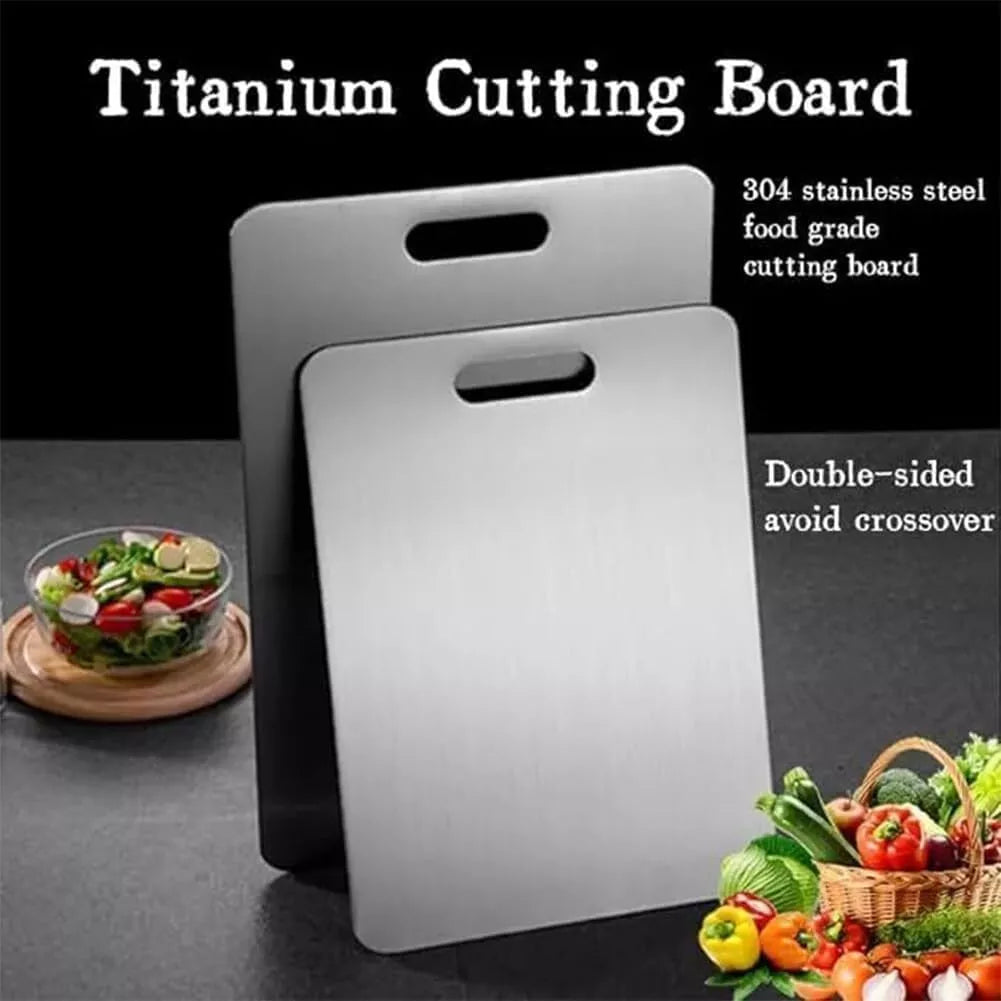
Titanium Chopping Boards: What They Could Offer Health-Conscious Kitchens
When we think about cleaner, safer cooking, the surface you prepare food on matters as much as the ingredients. Titanium is celebrated for its strength and corrosion resistance, but you won’t often find it as a chopping board — its hardness and initial investment can make it less practical for most kitchens. Still, it’s useful to explore what titanium could bring to the bench: potential hygienic benefits, long-term durability, and a non-reactive surface that aligns with a holistic wellness approach. Many cooks struggle with boards that harbour bacteria or need constant maintenance; titanium might address some of those problems, even if real-world use is limited. Let's explore what titanium could offer your kitchen, comparing it with common board materials and considering its impact on your knives and overall kitchen hygiene.
Could Titanium Be the Most Hygienic Chopping Board Material?
Titanium is known for being safe and non-toxic, with properties that suggest excellent hygienic qualities. Its smooth, non-porous surface means it won't soak up liquids or odours, which helps keep things clean. While you don't often see solid titanium chopping boards, their inherent qualities suggest it could be a real game-changer for kitchen cleanliness.
How Titanium’s Hygienic Traits Can Help Kitchen Cleanliness

Titanium is known for its impressive hygienic properties. For your kitchen, the key benefit is titanium's incredibly smooth, non-porous surface. This makes it much easier to clean thoroughly compared to porous wood or plastic boards that can develop grooves and trap bacteria. This practical advantage could significantly reduce the risk of foodborne illness, offering a cleaner prep surface for your family.
Why Titanium Is Considered Safe for Food Preparation
Titanium is widely recognised as biocompatible and chemically stable, so it doesn’t react with food or leach harmful substances in the way some plastics can when heated. For cooks focused on quality and safety, that inertness is a clear advantage: food flavours stay true, and there’s little risk of chemical transfer from surface to meal. Still, it’s worth noting that titanium chopping boards remain uncommon in kitchenware ranges.
Titanium vs Wood, Plastic and Glass: A Practical Comparison
What Health Concerns Do Traditional Boards Present?
Wood and plastic boards each carry risks: wood can trap bacteria in its pores, while plastic develops deep grooves that harbour food particles and microbes. Some plastics may also release chemicals when stressed by heat. Glass is non-porous and easy to clean, but it’s harsh on knives. These trade-offs explain why cooks look for safer, low-maintenance alternatives — though titanium sits outside most mainstream options.
Does Titanium Reduce Cross-Contamination Better Than Other Materials?
Because titanium is non-porous and easy to sanitise, it naturally reduces opportunities for cross-contamination compared with porous or scored surfaces. It won’t soak up liquids or retain strong odours the way some materials do, which helps when you’re preparing different foods on the same surface. That said, titanium’s hardness makes it less practical as a chopping surface for everyday home use.
Durability and Care: What Titanium Would Bring to the Bench

Titanium is known for its durability and resistance to corrosion. If used as a chopping board, it would shrug off stains and wear that quickly ages other materials. That robustness makes it attractive for long-term use, but again, solid titanium boards aren’t commonly produced, and their hardness poses a downside for knives.
How Titanium’s Longevity Supports Sustainability
Because titanium products last a long time, they can reduce the frequency of replacement compared with low-cost plastics. Over time, fewer replacements can mean less waste — provided the metal is sourced and processed responsibly. Sustainable extraction and manufacturing practices are important to ensure the overall environmental picture is positive.
Cleaning and Maintenance Best Practises
Care for titanium kitchenware is simple: wash with mild soap and warm water after use, and avoid abrasive scouring that can scratch the finish. For occasional deeper cleaning, a solution of vinegar and water helps remove odours. With regular, gentle care, titanium items retain their appearance and function for years.
Will Titanium Chopping Boards Preserve Knife Sharpness?
One notable drawback is knife wear. Titanium’s hardness can dull blades faster than softer surfaces like wood or certain plastics. Similar to glass or stone, titanium does not offer a forgiving cutting surface, so frequent sharpening would be required if it were used as a primary chopping board.
How Titanium Compares with Glass and Stone for Knife Care
Titanium would be at least as hard as glass or stone — both of which are notorious for shortening knife life. If preserving edge integrity is a priority, softer boards remain the better option for daily chopping tasks.
What Chefs and Experienced Cooks Say About Titanium and Knife Edges
Most chefs and experienced cooks avoid ultra-hard surfaces for chopping because they accelerate blade wear. For that reason, they typically favour wood or certain plastics that are kinder to edges — and so titanium is not recommended where knife maintenance matters most.
How Titanium Fits into a Holistic Wellness Approach
Kitchen Hygiene and Terra Wellness’s Holistic Health Mission
At Terra Wellness, we consider the kitchen an essential space for wellbeing. Clean, non-reactive food-prep surfaces support safer meals and reduce everyday exposure to contaminants. While titanium kitchenware illustrates those principles, we balance potential benefits with practical realities to help customers make informed choices.
Other Terra Wellness Products That Pair Well with Titanium Kitchenware
Alongside kitchen tools, Terra Wellness offers products designed to support a holistic lifestyle — grounding mats, home saunas and wellness accessories among them. Combined thoughtfully, these items help create a healthier, calmer home environment that complements mindful cooking and living.
Our Commitment at Terra Wellness
At Terra Wellness, we are dedicated to providing content that offers practical insights and trustworthy advice. All our articles, especially those concerning health and wellness, are developed and reviewed by qualified professionals like Dr Anya Sharma. We rely on industry best practises and practical experience to ensure our information is accurate, reliable, and actionable, empowering you to make informed decisions for your health and home.
Frequently Asked Questions
Are there any environmental concerns associated with titanium production?
Titanium’s long life reduces the need for frequent replacement, but its extraction and processing can have environmental impacts if not managed responsibly. Habitat disturbance and pollution are possible risks during mining. Choosing suppliers that follow sustainable practises and minimise ecological harm is key to aligning titanium use with environmentally conscious values.
Can titanium chopping boards be used for all types of food preparation?
In principle, a non-porous titanium surface could handle many food-prep tasks. In practise, its hardness makes it less suitable for delicate work — such as slicing soft bread or precision vegetable cuts — and it can accelerate knife wear. Users should weigh versatility against the potential impact on blades before choosing titanium for everyday chopping.
What are the investment implications of using titanium chopping boards?
Should titanium boards become widely available, they would likely represent a significant initial investment compared to typical wood or plastic boards, given the material and manufacturing processes involved. However, this initial outlay could be balanced by their exceptional durability and long lifespan, offering lasting value. Currently, they're not a common item for most home cooks.
How do titanium chopping boards affect food taste or quality?
Titanium is chemically inert, meaning it shouldn't alter flavours or leach chemicals into your food, which is a clear advantage over some plastics. Its non-reactivity suggests it would preserve food taste and quality beautifully during preparation.
What alternatives exist for those interested in hygienic cutting boards?
If you want hygienic benefits without titanium’s challenges, consider bamboo (naturally hygienic and biodegradable), treated plastic boards with hygienic coatings, or glass for a non-porous surface. Each has trade-offs — for example, bamboo requires care and glass dulls knives — so choose based on hygiene needs, knife care and maintenance preferences.
Are there any specific brands known for high-quality titanium kitchenware?
Titanium is more common in outdoor and camping cookware due to its light weight and durability; brands in that space often offer titanium pots, pans and utensils. As for solid titanium chopping boards, that niche is still emerging, so look to reputable outdoor or specialty kitchen brands if you’re seeking titanium items for food use.