





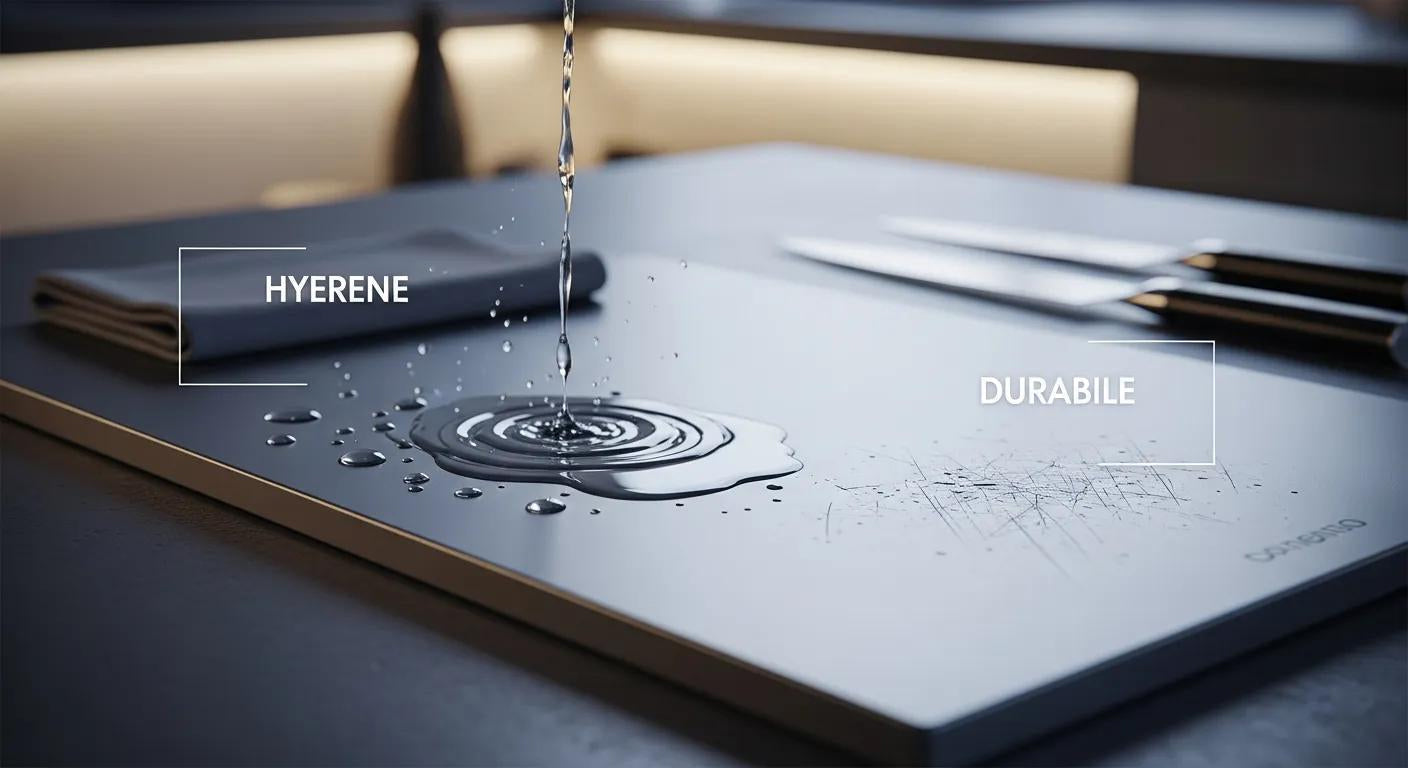
Titanium Cutting Boards: Hygiene & Durability
Titanium cutting boards offer a non‑porous, corrosion‑resistant surface that pairs practical hygiene with long-term durability — a strong option for busy home cooks and professional kitchens alike. We'll explore the main benefits, address common concerns, and help you decide if titanium fits your needs.
What Makes Titanium Cutting Boards Hygienic and Safe for Food Preparation?
Titanium is hygienic because it is inherently non‑porous and chemically stable: moisture and food particles can’t sink into the surface, so there are fewer places for bacteria to take hold. That reduces bacterial adhesion and means standard cleaning methods can reach and remove contaminants reliably. Titanium’s resistance to corrosion and staining also limits tiny nooks and crannies from forming over time, making the surface easier to keep clean through repeated use. The result: a cutting surface that supports safer handling of raw proteins, produce and ready‑to‑eat foods.
Titanium’s hygienic performance comes from a few practical mechanisms:
- Non‑porous surface — moisture and food bits stay on top of the board rather than embedding in it.
- Chemically stable — the metal doesn’t react or leach compounds that encourage biofilm formation.
- Smooth finishes and careful edge work — fewer crevices where microbes can hide.
Those qualities make cleaning simpler and more effective. Let's look at how a non‑porous structure limits bacterial growth and how you can keep things clean.
How Does the Non-Porous Surface Prevent Bacterial Growth?
A non‑porous surface lacks interconnected tiny gaps, so bacteria cannot migrate beneath the exposed layer where cleaners can’t reach. Titanium’s smooth finish reduces pits and fissures, leaving bacteria exposed to sanitisers and heat rather than sheltered in pores. This consistent cleaning response means routine sanitising — hot water, detergent and an approved food‑safe sanitiser — reliably reduces the amount of bacteria.
With that non‑porosity in mind, we'll now cover cleaning practices and explain why titanium does not contribute to microplastics during use.
Why Are Titanium Cutting Boards Microplastic-Free and Easy to Clean?
Titanium doesn’t shed microplastics because it’s a metal, not a polymer. Knife use may produce fine metal particulates under extreme conditions, but it won’t generate plastic microfibres as plastic boards do. Cleaning is straightforward: warm water and mild detergent, followed by a food‑safe sanitiser, removes soils; occasional light polishing can restore appearance. In commercial kitchens, heat sanitisation and thorough sanitiser contact work well because the surface won’t absorb fluids. The lack of polymer shedding reduces long‑term contamination concerns and supports more reliable hygiene.
This contrasts with plastic boards, which can generate tiny bits of microplastics under normal kitchen use.
Simple, practical cleaning steps for daily and deep‑clean cycles:
- Daily wash: Rinse with warm water and a mild detergent immediately after use to remove food soils.
- Sanitise: Apply a food‑safe sanitiser as directed and let the board air dry.
- Deep clean: Periodically inspect high‑use areas and, if needed, use approved non‑abrasive polishing compounds to refresh the finish.
These routines reduce staining and odour retention while keeping the board hygienic and ready for heavy commercial use.
How Durable Are Titanium Cutting Boards Compared to Other Materials?
Titanium boards are notably durable because titanium alloys balance surface hardness with excellent corrosion resistance, delivering long service lives under heavy daily use. They resist warping from heat and repeated washing and suffer fewer structural failures than wood or many plastics, which can split or crack. Scratch resistance varies by alloy and finish; most knife contact leaves surface marks rather than serious damage, preserving integrity and hygiene. Considering how long they last, titanium can offer excellent long-term value for both home and professional kitchens.
Different materials show distinct longevity and how they hold up in kitchen use. Titanium offers a very high lifespan and structural integrity, resisting corrosion and warping for many years. Wood is moderate, with a repairable surface but prone to cracking and microbial retention if not maintained. Plastic is moderate-low, offering impact resistance but prone to gouging and accumulating knife scars that can harbour bacteria.
What Resistance Do Titanium Boards Offer Against Scratches and Warping?
Titanium alloys used for kitchen surfaces offer surface hardness that resists deep gouging, so most knife contact leaves shallow marks rather than structural damage. Surface scratches may appear, but generally don’t compromise the board’s non‑porous character or hygienic performance. Titanium also tolerates temperature shifts and repeated washing without the warping that affects some wooden or plastic boards. For very heavy use, a brushed or composite finish can reduce visible marks while keeping the material’s integrity intact.
These mechanical properties help determine whether titanium is a sound long‑term choice for your kitchen.
Why Is Titanium Considered a Long-Term Investment for Your Kitchen?
Looking at the overall value, while there's an upfront cost, titanium offers a much longer service life; you won't need to replace it as often, and there's reduced downtime in commercial kitchens. Fewer disposals mean less hassle, and improved hygiene can reduce food‑safety risks. For home cooks, a single titanium board may outlast several wooden or plastic boards bought over the same period, delivering value where durability and low maintenance matter. These factors make titanium attractive where reliability and predictable performance over time are priorities.
With durability and value in mind, a common practical question remains: how does titanium interact with knife edges? Let's explore that next.
Are Titanium Cutting Boards Knife-Friendly? Understanding the Pros and Cons
Titanium behaves differently from wood and plastic because its greater hardness can accelerate blade wear under aggressive chopping. The upside is a consistent, flat surface that improves control and precision; the downside can be more frequent sharpening for some blade steels. Balancing that trade‑off comes down to cutting technique, blade selection and maintenance. With moderate care, many users find that the hygiene and durability benefits slightly outweigh the slightly increased sharpening needs.
Consider these advantages and disadvantages:
- Pro — Stable cutting surface: Titanium stays flat and consistent for accurate slicing and dicing.
- Pro — Hygiene and longevity: Non‑porous, durable surface improves sanitation and reduces replacement frequency.
- Con — Potential blade wear: Harder surfaces can blunt fine edges faster, depending on knife steel and technique.
These points explain the trade‑offs and lead into how titanium affects knife sharpness versus wood and plastic.
How Does Titanium Affect Knife Sharpness Compared to Wood and Plastic?
Because titanium is harder than most woods and many plastics, knife edges contact the surface more firmly on each cut, which can increase tiny bits of wear over time. Wood offers a slightly yielding surface that’s gentler on edges and helps maintain a sharp edge between honing; plastics fall between wood and metal in abrasiveness. How quickly titanium dulls a blade depends on the knife’s metallurgy and user technique — high‑hardness stainless or carbon steels perform well but may need more frequent honing. Regular maintenance and choosing appropriate knives reduce most of the extra wear.
Let's look at practical steps to maintain knives when using titanium boards.
What Best Practices Help Maintain Knives When Using Titanium Boards?
To limit blade wear on titanium, keep a regular sharpening and honing schedule, use cutting techniques that favour slicing over heavy impact, and choose blade steels suited to more frequent maintenance. Hone before heavy shifts and sharpen as needed, adjusting frequency based on how the blade holds an edge. Avoid chopping motions that drive the edge directly onto the board; favour controlled slicing to reduce high‑impact contact. A dedicated sharpening stone or professional sharpening service will preserve edge geometry and extend knife life when paired with titanium surfaces.
These care strategies set the scene for a broader material comparison, where hygiene, durability and value are weighed side‑by‑side.
How Do Titanium Cutting Boards Compare to Wood and Plastic Alternatives?
Choosing between titanium, wood and plastic requires balancing hygiene, durability, knife interaction and long-term value. Titanium leads on hygiene and long-term durability; wood is kinder to knives and renewable when responsibly sourced; plastics are inexpensive and light but prone to deep knife scars and microplastic concerns over time. The best choice depends on usage intensity, hygiene priorities and budget — for high‑volume or regulated environments, titanium often provides better overall value despite a greater upfront cost.
When it comes to hygiene, titanium is excellent because it's non-porous and microplastic-free, making it easy to sanitise without shedding polymers. Wood is good with maintenance, but its porous nature requires strict care to avoid bacterial retention. Plastic is variable; it can harbour bacteria in deep cuts and shed microplastics over time.
What Are the Hygiene and Durability Differences Among These Materials?
Hygiene differences come down to porosity and wear behaviour: titanium is non‑porous and resists long‑term contamination; wood is porous but can self‑seal small cuts and needs careful drying; plastic can develop deep knife scars that trap residues. Durability-wise, titanium tends to last far longer structurally, wood can be resurfaced and conditioned, and plastic usually needs replacement more often as cuts accumulate. Cleaning effort follows the same pattern: titanium requires the least intensive maintenance, wood needs attentive care, and plastic requires scar management or periodic replacement.
These trade‑offs guide procurement choices for various buyer profiles.
Which Material Offers the Best Value for Home and Commercial Kitchens?
Value depends on use intensity and hygiene priorities. Home cooks who prefer a knife feel and a lower upfront cost may choose wood; professional chefs and large caterers often prioritise hygiene and long-term performance, leaning toward titanium or high‑grade plastics. For low‑to‑moderate residential use, wood or plastic can be effective; for high‑volume or regulated commercial kitchens, titanium’s lower replacement rate and hygiene benefits can improve long-term outcomes. Compare the initial purchase against replacement cycles and sanitation risk to identify the most economical long‑term option.
For commercial procurement, look for suppliers that stock commercial‑grade titanium and can advise on suitability for larger fit‑outs or bulk orders.
What Are the Environmental and Sustainability Benefits of Titanium Cutting Boards?
Titanium supports sustainability goals through long product life and recyclability: a durable titanium board reduces how often you replace equipment and lowers the volume of kitchen waste sent to landfill. Titanium can be recycled through metal recycling programs, offering a more favourable end‑of‑life option than single‑use plastics. When you compare overall environmental impact, fewer manufacturing and disposal cycles can balance out the energy used in the production of metal products, lowering the environmental footprint across many years of service. That makes titanium a strong choice for buyers seeking durable, recyclable kitchenware.
Let's look at practical recycling pathways and how a longer service life reduces waste in concrete terms.
How Does Titanium's Recyclability Reduce Kitchen Waste?
Titanium can be reclaimed via metal recycling facilities, allowing boards to be melted down and repurposed rather than landfilled at the end of life. Because titanium boards typically last several times longer than plastic alternatives, the per‑year environmental impact drops as replacements are avoided. For example, replacing a plastic board every 2–3 years increases raw material demand compared with a single long‑lasting titanium unit. Choosing durable, recyclable materials therefore reduces total units consumed and total waste over the product's lifetime.
This recyclability advantage complements other sustainability benefits and leads to practical guidance for buyers considering titanium for eco‑friendly kitchens.
Why Choose Titanium for an Eco-Friendly Kitchen Solution?
Selecting titanium aligns with sustainable practices: the material is both durable and recyclable, cutting disposal frequency and enabling material recovery at end‑of‑life. The absence of microplastic shedding from metal surfaces also reduces plastic pollution in homes and institutions. Buyers focused on long‑term resource efficiency will find titanium fits sustainability objectives — especially when paired with recycling and responsible procurement policies. Ask suppliers about environmental impact and recycling options to ensure the eco‑benefit is realised.
These environmental points naturally connect to the procurement needs of commercial kitchens, which we cover next.
Why Are Titanium Cutting Boards Ideal for Commercial Kitchens and Fit-Outs?
Titanium boards suit commercial kitchens because they meet high hygiene standards, withstand intense daily use, and simplify sanitation routines required for food‑safety compliance. Their long service life reduces replacement logistics and offers excellent long-term value in fit‑outs, while non‑porous surfaces lower the workload for bacterial control in high‑volume production. For large operations, predictable cleaning outcomes and fewer replacements improve operational efficiency and reduce downtime.
Commercial buyers typically evaluate boards by procurement and operational benefits. Titanium offers streamlined ordering and standardisation across locations, supports food-safety protocols and audits, and reduces replacement and disposal costs over a facility's lifetime.
How Do Titanium Boards Meet Health and Safety Standards in Professional Settings?
Titanium supports compliance because its non‑porous surface is easier to check during routine cleaning and tolerates commercial-grade sanitisation without degrading. Practical protocols include scheduled washing with detergents, thorough sanitiser application with recommended contact times, and periodic inspection for surface damage — all simpler when the surface doesn’t absorb fluids. Keeping documented cleaning logs and consistent material performance helps auditors and food‑safety officers verify safe practices, reducing risk and streamlining inspections in busy commercial environments.
What Bulk and Custom Options Are Available for Commercial Clients?
We can help commercial clients with their needs, offering options for bulk orders and custom solutions to fit various project requirements. Our focus is on providing durable, hygiene-first products. Get in touch with our commercial team to chat about your specific needs and how we can assist with your kitchen fit-out.
Our Commitment to Quality
This guide on titanium cutting boards is brought to you by a team dedicated to advanced kitchen materials and commercial kitchen solutions. We are committed to providing high-performance kitchenware that prioritises hygiene, durability, and sustainability. Our focus is on fostering safer, more efficient kitchen practices for both professional and home culinary environments.
For commercial or bulk enquiries about titanium cutting boards, we're here to help. We can provide product guidance and support through our commercial channels, discussing custom quantities and fit-out requirements to match your project timelines and hygiene standards. Our range includes titanium cutting boards designed for heavy use. If you're planning a kitchen fit-out, we encourage you to get in touch for a commercial consultation. This chat can help ensure the chosen solution balances hygiene, durability, and your budget for long-term performance.