





Why Titanium Kitchenware Works: A Practical Guide to Safe, Durable, Non‑Toxic Tools
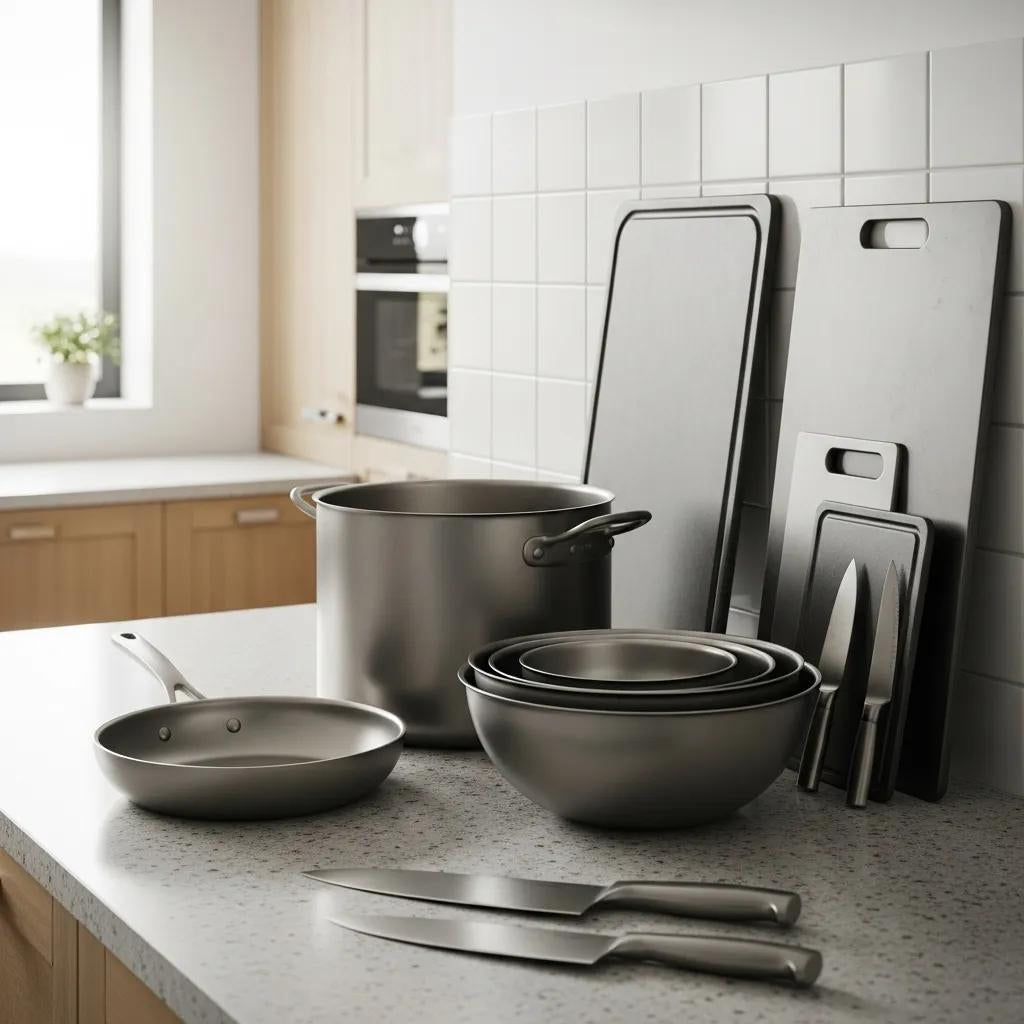
Titanium kitchenware covers pots, pans, boards and utensils made from titanium or titanium alloys. Home cooks value it because it’s strong but light, chemically stable and easy to care for. This guide walks through why titanium is seen as a health‑minded choice, how it stacks up against wood, plastic and stainless steel, and the everyday benefits you’ll notice in your kitchen — from flavour protection and hygiene to longevity and sustainability. We'll also explore how quality titanium cutting boards deliver on promises like "Cut Bacteria, Preserve Flavour." Read on for clear comparisons, practical tips and simple routines that make choosing titanium straightforward for Australian homes.
Why Is Titanium Kitchenware Considered a Health-Conscious Choice?
Titanium is considered health‑conscious because it’s largely non‑reactive, resists corrosion and can be finished with a smooth, non‑porous surface. That stability means acidic or alkaline foods are far less likely to draw metal ions into your food, helping keep flavours true and reducing contamination risks. These benefits – non-toxic contact, easy cleaning, and durable construction – are key to preventing common kitchen problems like cross-contamination and off-tastes. Below, we list the main health benefits that make titanium a logical pick for everyday cooking.
Titanium is known for its safety, releasing minimal metal into food during everyday cooking.
Titanium kitchenware delivers three core health advantages:
- Non‑toxic stability: Titanium is largely inert with acidic foods, which lowers the risk of metal ions entering food.
- Non‑porous surface: Smooth finishes mean fewer places for microbes to hide compared with porous materials.
- Corrosion resistance: Long‑term resistance to rust and degradation helps keep food‑contact surfaces sanitary.
Together, these benefits reduce common contamination pathways in daily food prep. Next, we look closer at the surface chemistry that makes titanium so stable.
How Does Titanium Ensure Non-Toxic and Safe Cooking?
Titanium forms a thin, protective oxide layer that creates an inert barrier between the metal and food. That passive surface resists acids, salts and most cooking conditions, so flavours and food chemistry stay largely unchanged — even when handling tomatoes, citrus or other acidic ingredients. In everyday use, titanium cookware and boards need the same sensible cleaning as other non‑porous tools, but they don’t require sealing or oiling like wood. That simpler care routine is one reason cooks concerned about leaching prefer titanium. The next section explains how these surface properties affect bacterial adherence.
What Are the Antibacterial Properties of Titanium Cutting Boards?

Titanium cutting boards naturally discourage bacterial adherence because a smooth, non‑porous surface offers far fewer crevices for microbes to lodge in. Unlike wood or deeply scored plastic, a properly cleaned titanium surface can be sanitised quickly and thoroughly, which reduces cross‑contamination between raw proteins and ready‑to‑eat foods. Typical care is simple: warm soapy water, a short scrub, and full drying; occasional mild sanitiser or heat sanitisation can be used without damaging the board.
Fewer microscopic hiding places mean titanium boards support better hygiene in busy kitchens and cut down the need for deep‑clean restorations that porous materials often require.
How Does Titanium Kitchenware Outperform Traditional Materials?
Titanium outperforms many common kitchen materials thanks to its strength‑to‑weight ratio, corrosion resistance and hygienic surface. Compared with wood, titanium resists warping and staining; versus plastic, it avoids deep knife grooves and odour retention; and against stainless steel, it often offers similar corrosion resistance at a lower weight while remaining chemically inert in many cooking situations. The table below lays out these practical differences to help you choose the right material for your priorities.
| Material | Characteristic | Practical Impact |
|---|---|---|
| Titanium | Non‑porous, corrosion‑resistant, high-strength-to-weight | Long service life, fewer grooves, easier sanitisation |
| Wood | Porous, self‑healing grain absorbs moisture | Can harbour bacteria, needs oiling, prone to warping |
| Plastic | Lightweight, lower initial investment, scores easily | Knife grooves trap food and odour, harder to fully sanitise |
| Stainless steel | Durable, corrosion‑resistant, heavier | Generally non‑reactive but heavier to handle |
These contrasts show why titanium is often chosen where durability and hygiene meet: it limits groove formation and won’t absorb odours, helping reduce hidden contamination. Next, we explore why titanium cutting boards last longer than wood or plastic.
What Makes Titanium Cutting Boards More Durable Than Wood or Plastic?
Titanium cutting boards resist cracking, deep gouging and staining — common failure modes for wood and plastic boards. Wood can split along grain lines, and plastic develops knife grooves that trap residue; titanium keeps a smooth surface that tolerates heavy use and resists long‑term wear. To get the most out of your titanium board, avoid abusive use such as excessive pounding; treat them like precision tools: clean after use and dry thoroughly to protect the oxide layer. These simple habits keep the board’s hygienic advantages effective for years.
How Does Titanium Compare to Stainless Steel in Kitchen Tools?
Titanium compares well with stainless steel on strength‑to‑weight and in situations where lightness and non‑reactivity matter. Titanium’s high strength‑to‑weight ratio makes spatulas, boards and utensils easier to lift without losing durability; stainless steel is typically heavier. Both resist corrosion, though titanium’s passive oxide layer is especially inert with acidic foods; stainless steel’s performance varies with alloy and finish. Stainless steel still has uses where thermal conductivity and commonality are top priorities, but titanium shines where lightweight handling and truly inert food contact are important.
With ongoing advancements, titanium is becoming an even better choice for many kitchen applications, offering a fantastic alternative to stainless steel.
What Are the Practical Benefits of Using Titanium Kitchenware Daily?
In daily use, titanium simplifies food prep by being lighter to handle, faster to clean and consistently reliable — all of which reduce fatigue and kitchen time. Its low weight makes moving boards, transferring chopped produce and storing tools easier than with heavy stainless or dense hardwood boards. Non‑porous surfaces rinse clean more readily and shorten sanitisation cycles, which helps busy households. Because titanium resists staining and odour build‑up, your kit keeps performing like new for longer, reducing replacements and making routine cooking more predictable.
Three clear everyday benefits stand out:
- Lightweight handling: Easier to lift and reposition during extended prep sessions.
- Time‑saving cleaning: Non‑porous surfaces rinse and sanitise faster than porous boards.
- Low maintenance: No oiling or resealing required, unlike many wooden options.
Those benefits translate into a smoother workflow and less time spent on upkeep. Below, we look at how titanium’s lightness improves handling.
How Does Lightweight Titanium Enhance Kitchen Handling?
Titanium reduces the effort needed to lift and move boards, pans and utensils while still standing up to heavy cutting and transfer tasks. Cooks who prep for long stretches notice less wrist and shoulder fatigue when items are noticeably lighter, which helps maintain speed and precision. In small kitchens or where items are stored frequently, lighter tools are easier to stow and retrieve. By cutting effort without sacrificing durability, titanium supports both home cooks and small commercial kitchens where repetitive motion is common.
Why Is Easy Cleaning Important for Titanium Kitchen Tools?
Easy cleaning matters because simple routines increase the chance surfaces are cleaned properly, reduce the risk for bacterial growth, and keep tools looking and performing well. A quick wash with warm, soapy water, a short scrub for trapped residue and complete drying will generally restore a titanium surface; fewer special treatments make it easier to be consistent with care. That consistency lowers cross‑contamination risk over time and prevents stubborn stains or odours that reduce performance.
How Does Titanium Kitchenware Preserve Food Flavour and Hygiene?
Titanium helps preserve flavour and hygiene through its non‑reactive chemistry and non‑absorptive surface, which limit flavour transfer and allow thorough sanitisation after contact with strong‑smelling foods.
Because titanium does not soak up oils or volatile compounds, garlic, onion and other aromatics leave less residual aroma than they might on porous wood or deeply scratched plastic. A sensible prep workflow — move from mild to strong flavours, clean between tasks and use separate boards for raw proteins — makes the most of titanium’s flavour and hygiene benefits.
| Surface Property | Impact on Food | Practical Tip |
|---|---|---|
| Non‑porous finish | Reduces absorption of oils and odours | Clean immediately after handling odorous foods |
| Non‑reactive chemistry | Prevents metallic aftertaste with acidic foods | Use for citrus and tomato prep when flavour matters |
| Smooth, sealed surface | Fewer niches for bacteria to persist | Sanitise after raw protein contact and dry fully |
This makes clear why titanium both protects flavour and supports kitchen hygiene: the material itself limits absorption and simplifies sanitation. Next, we cover practical steps to avoid flavour transfer during common tasks.
In What Ways Does Titanium Prevent Flavour Transfer?
Titanium prevents flavour transfer by not absorbing volatile compounds. Unlike porous wood that can soak up oils and odours, a cleaned titanium surface leaves little behind to taint mild foods such as fruit or dairy. In practice, prep mild items before strong aromatics, or rinse and sanitise the board between tasks. For stubborn smells, wash with a mild alkaline detergent, rinse in warm water and dry thoroughly — that normally restores a neutral surface. These simple habits help titanium boards keep flavours pure across multiple uses.
How Does Titanium Promote Superior Kitchen Hygiene?
Titanium supports superior hygiene through reduced micro‑crevices, easy sanitisation and resistance to the surface degradation that creates bacterial niches in other materials. Regular washing with detergent, occasional sanitiser after raw‑protein contact, and complete drying make the most of titanium’s properties. Because the material resists deep gouges and staining, it’s less likely to develop hidden traps for bacteria over time, which reduces the need for heavy‑duty restoration or early replacement.
Simple storage and drying practices keep the surface in prime condition and maintain the hygiene benefits titanium provides.
Our quality titanium cutting boards are a fantastic example of these benefits in action. We often highlight "Cut Bacteria, Preserve Flavour" because our non-porous surface and easy sanitisation really do reduce microbial harbourage while protecting taste. In everyday use, these boards help minimise cross-contamination and preserve flavour across a wide range of ingredients without adding complex maintenance steps. It just goes to show how the right material can make a real difference in Australian home kitchens.
Why Is Investing in Titanium Kitchenware a Smart Choice for Australian Homes?
Buying titanium kitchenware makes sense for Australian homes because the material’s longevity, low maintenance and resilience address common kitchen challenges while offering great value and reducing waste over time. Durable titanium items need replacing far less often than less durable plastic or lower‑grade wood, which means you'll replace them far less often, offering great value and reducing waste over time. We know many Australian buyers appreciate companies that focus on natural, health-forward solutions and provide practical guidance for use and care, and that's exactly what we aim to do. Below, we outline lifecycle considerations to help homeowners think long term.
| Material | Attribute | Long-term Value |
|---|---|---|
| Titanium | High durability, low maintenance | Fewer replacements, less waste |
| Wood | Renewable but needs upkeep | Periodic refinishing or replacement increases resource use |
| Plastic | Lower initial investment, shorter lifespan | Higher turnover and landfill contribution |
This long-term view shows how choosing titanium is a smart investment, offering a longer service life and reduced waste, which is great for households prioritising durability and sustainability.
What Are the Long-Term Sustainability Benefits of Titanium Kitchen Tools?

Titanium’s sustainability benefits come from fewer replacements, resilience to wear and potential recyclability for some products. Because titanium items can last many years without structural failure, they reduce the total material throughput compared with short‑lived plastics or repeatedly replaced wood pieces. You can maximise this benefit by following care advice, avoiding abrasive misuse and repairing minor surface damage when possible. Planning for durable purchases helps households lower their environmental impact over a multi‑year horizon.
Choosing Quality Titanium for Australian Kitchens
Our quality titanium products are designed with Australian kitchens in mind, focusing on health, simplicity, and durable design. Our core message — often highlighting "Cut Bacteria, Preserve Flavour" — underscores hygiene and flavour preservation while keeping instructions clear and practical. This approach helps buyers choose products suited to Australian cooking styles and household needs. For customers prioritising non‑toxic, low‑maintenance kitchenware, our well-designed titanium range shows how thoughtful material choice and product design deliver fantastic long‑term value.
- Choose tools that fit your workflow: Pick titanium pieces you’ll use often to get the most value.
- Follow simple cleaning routines: Warm soapy water, occasional sanitiser and full drying preserve performance.
- Store to prevent damage: Avoid heavy stacking or abrasive contact that could mar the surface.
Follow these simple steps and titanium kitchenware will deliver ongoing health, hygiene and sustainability benefits throughout its useful life.
Conclusion
Investing in titanium kitchenware offers numerous benefits, including enhanced durability, low maintenance, and superior hygiene, making it a smart choice for Australian homes. This material not only preserves food flavour but also reduces the risk of contamination, ensuring a healthier cooking environment. By choosing quality titanium products, you can enjoy long-lasting performance while contributing to sustainability efforts. Explore our range of premium titanium kitchenware today to elevate your cooking experience.