





Titanium vs Traditional Cutting Boards: Hygiene, Durability and Kitchen Wellness
Titanium cutting boards use titanium or titanium-coated surfaces to create a hard, non-porous prep area that resists corrosion — a practical alternative to wood, plastic and stainless steel. This guide compares hygiene, durability, knife impact and the day-to-day implications for kitchen wellness so Australian cooks can decide what suits their home. Many people worry about bacteria, smell transfer and blade wear; a clear look at material properties and simple care routines helps answer those questions. We define titanium boards, explain how they reduce microbial risk, contrast common materials (wood, plastic, stainless steel) and offer a straightforward head-to-head comparison. We also tackle the common concern about metal boards dulling knives, show how Terra Wellness positions a titanium option for health-minded kitchens, and finish with a practical buyer’s checklist and local purchasing tips. Throughout, you’ll find practical cleaning advice to help you choose a safe, lasting surface for food prep.
What Are Titanium Cutting Boards and Their Key Benefits?
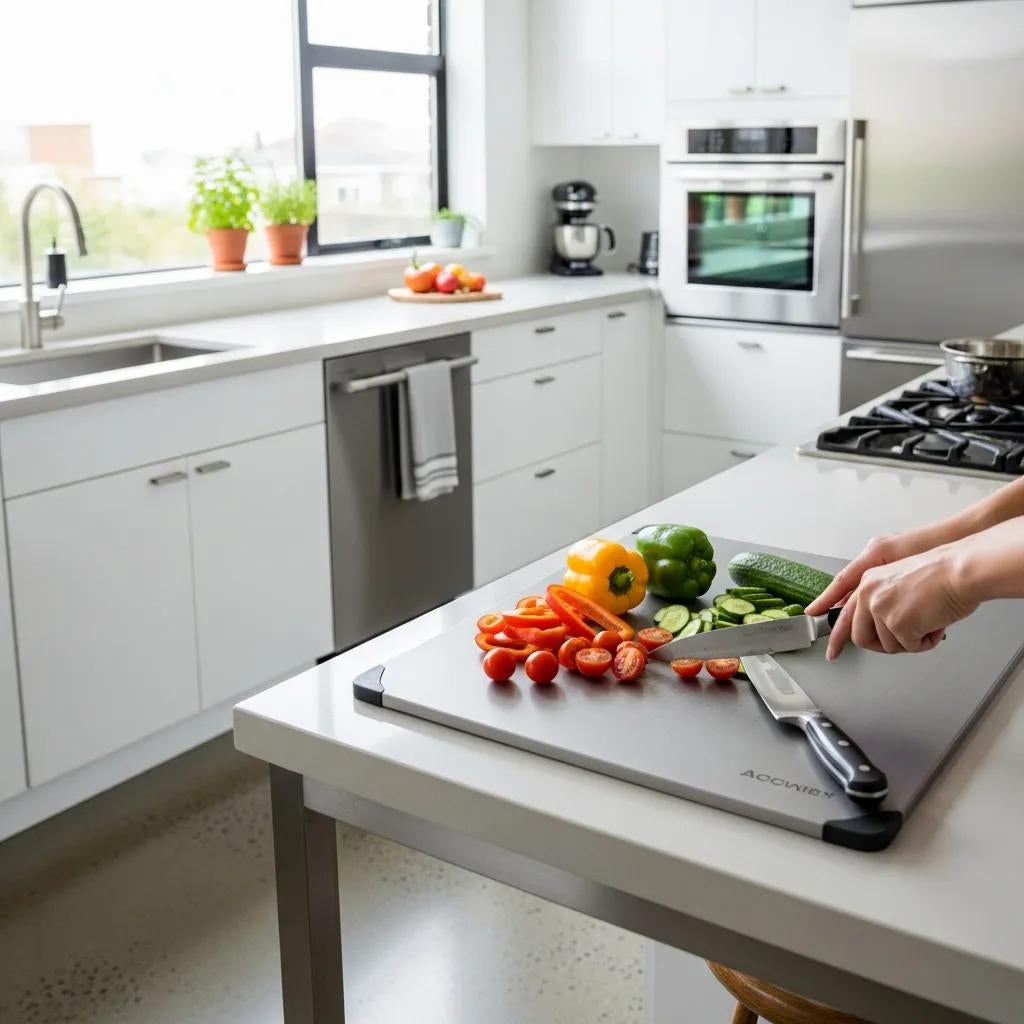
Simply put, titanium cutting boards are food‑prep surfaces with a titanium face or coating. Their smooth, non‑porous finish reduces places for moisture and microbes to hide, and the metal resists rust and staining. The main benefits are better hygiene, strong durability, minimal flavour transfer and easy upkeep — features that suit kitchens focused on health and low fuss. Below are the core advantages most people can expect from titanium boards.
Titanium cutting boards commonly offer these advantages:
- Non‑porous surface that limits bacterial hiding places and resists stains.
- Smooth metal finish that reduces odour absorption and lingering smells.
- Durable construction that resists warping, cracking and corrosion.
- Quick, straightforward cleaning — faster sanitising and less build-up after heavy use.
Those strengths make titanium a strong option for anyone wanting a hygienic, long‑lasting prep surface with minimal maintenance. Next, we explain how titanium’s surface chemistry supports safer food handling.
How Does Titanium Enhance Kitchen Hygiene and Food Safety?
Titanium helps keep kitchens cleaner because its sealed surface gives microbes fewer places to lodge and multiply. Unlike porous wood or deeply grooved plastic, bacteria can’t penetrate the metal layer, so routine washing removes contaminants more reliably. Dish soap and occasional sanitising solutions work better on titanium because liquids and food particles don’t soak in — that also means fewer lingering smells after cutting garlic or onion. To get the best results, pair the right board with good food‑safety habits: separate raw meat prep, wash between tasks and dry thoroughly. These simple steps amplify the hygiene advantages titanium brings.
Why Is Titanium Considered Durable and Knife‑Friendly?
Titanium’s physical properties — strong corrosion resistance and low tendency to warp or crack — help the board stay flat and serviceable through frequent use and washing. Though titanium is a hard metal, the finish and thickness chosen by manufacturers affect how a blade behaves: smoother, slightly forgiving surfaces reduce micro‑chipping, and regular blade care (honing and sensible sharpening intervals) keeps edges working well. For most home cooks, the trade‑off is worthwhile: you get far less deformation and a longer lifespan at the cost of a touch more knife maintenance compared with the softest woods. Basic habits — weekly honing, avoiding excessive power sharpening and using good cutting technique — go a long way to protecting edges on a metal board.
With those benefits in mind, let’s compare how wood, plastic and stainless steel behave in everyday kitchens.
How Do Traditional Cutting Boards Compare: Wood, Plastic, and Stainless Steel?

Each common board material brings familiar pros and cons that affect hygiene, upkeep and knife wear. Wood is gentle on blades and visually warm but porous and needs care; plastic is light and affordable yet can score deeply and trap bacteria; stainless steel is easy to sanitise and long‑lasting but can be tough on knives and heavier to handle. The table below summarises these typical strengths and trade‑offs for practical comparison.
| Material | Typical Pros | Typical Cons |
|---|---|---|
| Wood (hardwoods) | Forgiving for knives; attractive; small cuts often close up | Porous — needs oiling and careful drying; can absorb odours |
| Plastic (HDPE, polypropylene) | Lightweight and inexpensive; many are dishwasher‑safe | Scores trap bacteria and smells; often needs replacing when heavily cut |
| Stainless steel | Non‑porous and simple to sanitise; resists stains and warping | Hard on edges; noisy to use; heavier to move |
No single traditional material is perfect—wood protects blades but needs upkeep, plastic is convenient but can hide microbes once scored, and stainless steel prioritises sanitation at the cost of knife life. Those trade‑offs lead to the specific care challenges for wooden and plastic boards.
What Are the Hygiene and Maintenance Challenges of Wooden and Plastic Boards?
End‑grain wooden boards are prized because their fibres can close after a cut, reducing visible grooves. But the same structure can hold liquids and tiny food particles, so thorough cleaning and periodic oiling are essential to prevent bacterial growth. Plastic boards start non‑absorbent and many can be cleaned in the dishwasher, but deep cuts create channels where microbes and odours hide — when a plastic board is badly scored, replacement is often the safest choice. Practical care for both materials includes washing promptly after raw meat, drying flat to avoid warping, sanitising with a dilute bleach or vinegar solution when necessary, and rotating or replacing boards as wear becomes visible. Those routines help you match the right board to your habits and priorities.
How Does Stainless Steel Perform in Durability and Knife Impact?
Stainless steel performs very well for sanitation because it’s non‑porous and easy to keep sterile with simple cleaning. That same hardness, however, is unforgiving to knife edges: repeated cutting on metal speeds dulling and can mean more frequent sharpening or careful honing. Steel boards are also heavier and noisier in use, which affects comfort and kitchen ambience. For heavy, hygiene‑critical tasks — say, frequent raw‑meat prep in a busy household — stainless steel can be appropriate, but most home cooks balance sanitation needs with a desire to protect blade life.
Titanium vs. Traditional Cutting Boards: A Detailed Head‑to‑Head Comparison

Below is a side‑by‑side view of how titanium compares to wood, plastic and stainless steel across hygiene, durability, knife friendliness and upkeep. The table highlights practical impacts so you can weigh options for common cooking scenarios. After the table, we note when titanium is the better pick and when a traditional board still makes sense.
| Material | Attribute | Practical Impact |
|---|---|---|
| Titanium | Non‑porous, corrosion‑resistant surface | Easier sanitising, less odour absorption, long service life |
| Wood | Softer surface, porous microstructure | Blade‑friendly but requires oiling and careful drying to stay hygienic |
| Plastic | Low initial porosity; scores easily | Convenient but can harbour bacteria in deep grooves; replace when damaged |
| Stainless steel | Extremely non‑porous and durable | Top hygiene, higher knife wear and heavier to handle |
This comparison shows titanium blends the hygiene advantages of metal with surface and weight choices that can be kinder to knives than plain stainless steel — a solid middle ground for cooks who prioritise cleanliness without completely sacrificing blade life. Which option is best still depends on your most common tasks; the following sections unpack flavour preservation and maintenance in more practical terms.
Which Material Offers Superior Hygiene and Flavour Preservation?
Titanium’s sealed surface limits liquid and aroma uptake, so it reduces flavour carryover when you move from chopping garlic to preparing delicate herbs. Wood can trap and slowly release flavours if not maintained, and plastic may hold odours in scored grooves. Stainless steel resists smells well, but it can feel cold and less forgiving for certain tasks. If you regularly switch between pungent and subtle ingredients or want minimal odour transfer, titanium’s resistance to absorption is a clear advantage.
How Do Durability and Maintenance Requirements Differ?
Titanium resists warping, cracking and surface corrosion, which often means a longer usable life and fewer replacements than wood or plastic. Wood needs periodic oiling and careful drying to remain sanitary; plastic typically requires replacement once deep grooves form; stainless steel needs little structural care but can drive higher sharpening costs for knives. For titanium, you’ll usually stick to regular washing, occasional sanitising and avoiding aggressive scouring pads to keep the surface clean. Knowing these maintenance patterns helps you forecast long‑term costs and routines.
Do Titanium Cutting Boards Dull Knives? Addressing Common Concerns
In short, Metal boards, including titanium, can increase edge wear compared with soft wood, but the effect is manageable with proper blade care and technique. Because titanium is harder than common knife steels, blades can benefit from more frequent honing and occasional sharpening. That said, smooth titanium finishes and considered design reduce micro‑chipping compared with very hard surfaces like glass. Regular honing, controlled cutting technique and using the titanium board for tasks where hygiene matters most will minimise extra wear and keep your knives performing well.
What Is the Impact of Titanium Hardness on Knife Edges?
Titanium is a hard material, but many consumer boards use finishes that temper direct abrasion. Knife steels also vary — harder alloys tolerate metal surfaces better. Practically, a home cook who hones weekly and sharpens as needed will find the extra maintenance acceptable given titanium’s hygiene and longevity benefits. For ultra‑fine work (sushi, fine filleting), softer wood or specialised composites are still the preferred choice. Regular honing keeps the bevel aligned and reduces the frequency of full re‑grinds.
How Does Titanium Compare to Wood and Glass in Knife‑Friendliness?
Wood is the most forgiving common board because its fibres give way under the blade and help preserve edge geometry. Glass is the worst: its extreme hardness dulls and can chip edges quickly. Titanium sits between these extremes — harder than wood but often finished so it’s less aggressive than glass or some stainless steels. A practical approach is to alternate: use titanium for raw meat and pungent tasks, and keep a wooden board for delicate slicing when edge retention is critical.
Why Choose the Terra Wellness Titanium Cutting Board for Your Australian Kitchen?
At Terra Wellness, we present our titanium board as a wellness‑minded kitchen tool that prioritises hygiene, flavour preservation and easy cleaning — aligning with our "Elevate Your Wellness" philosophy. The board sits in our Home & Kitchen range and highlights benefits like reducing bacteria, protecting flavours, strong durability and low maintenance — the same practical advantages discussed above. Framing the product within a wellness context shows how a considered material choice can make everyday cooking feel calmer and more reassuring for Australian households.
How Does Terra Wellness Ensure Hygiene and Durability in Their Titanium Boards?
We focus on a non‑porous titanium surface as the primary hygiene advantage: a sealed finish means fewer places for bacteria and odours to linger and makes standard sanitising more effective. Design choices target durability — surfaces that resist warping and corrosion and finishes that simplify cleaning — so the board remains dependable through frequent use. These attributes are presented within a wellness narrative that values non‑toxic, low‑maintenance kitchenware for everyday life. For buyers, that translates to less time managing board care and greater confidence in home food safety.
What Makes Terra Wellness Titanium Boards Ideal for Health‑Conscious Australians?
Our titanium boards suit health‑focused households because they prioritise easy cleaning, reduced odour transfer and durable, non‑porous materials — qualities that match Australian expectations for food safety and busy lifestyles. The wellness framing emphasises calm and balance in the kitchen: choosing a board that helps cut bacteria and preserve flavour supports broader daily wellbeing. This appeals to households that prepare varied meals, handle raw proteins regularly, or prefer low‑maintenance tools that support a non‑toxic home. If you want a hygienic board aligned with a wellness mindset, Terra Wellness’s messaging and product features reflect those practical priorities.
How to Choose the Best Durable and Hygienic Cutting Board in Australia?
Choosing the right board depends on how you cook, how much care you’ll commit to, and whether hygiene or blade preservation is your priority. The checklist below highlights the main decision factors so you can set priorities. After that, a decision table connects common use cases to recommended materials and features.
Use this five‑point checklist to identify what matters most in your kitchen:
- Material and hygiene: Pick non‑porous surfaces if you prep raw meat or seafood frequently.
- Maintenance willingness: Choose wood only if you’ll oil and dry it regularly; choose titanium or stainless steel for lower maintenance.
- Knife impact: Choose wood or end‑grain if blade longevity is paramount; reserve metal boards for hygiene‑sensitive tasks.
- Intended use: Heavy chopping favours durable materials; delicate slicing benefits from softer surfaces.
- Size and handling: Consider weight and storage — metal boards can be heavier but often last longer.
This checklist clarifies priorities and leads into a practical table mapping common kitchen tasks to recommended materials.
Below is a decision table linking typical use cases to the attributes you’ll want and the materials that best deliver them.
| Use Case | Important Attribute | Recommended Material/Feature |
|---|---|---|
| Raw meat and seafood prep | Hygiene, easy sanitising | Titanium or stainless steel with a non‑porous finish |
| Delicate slicing (fish, herbs) | Knife preservation, smooth blade interaction | Hardwood end‑grain boards |
| Heavy chopping (bones, squash) | Durability, impact resistance | Thick hardwood or durable composite boards |
| Quick, low‑maintenance kitchens | Ease of cleaning, odour resistance | Smooth‑finish titanium board |
This table shows how different cooking styles point to different choices: hygiene‑first cooks often prefer titanium or stainless steel, while those focused on blade care tend toward quality wood. If you’re leaning towards titanium, Terra Wellness’s board is one option that aligns with hygiene, flavour‑preservation and low‑maintenance needs.
What Factors Should Influence Your Cutting Board Selection?
Think about how often you cook, the kinds of ingredients you use, your storage space and how much upkeep you’ll do — these factors determine how the trade‑offs between hygiene and blade care play out in daily life.
Ingredient variety matters — if you frequently move from garlic and fish to salad greens, a non‑porous surface avoids unwanted flavour carryover.
Maintenance habits matter too: if you want low effort, choose metal options that clean easily; if you enjoy restoring and oiling a board, wood gives warmth and blade friendliness.
Finally, consider blade care: if you sharpen and hone regularly, you can confidently use metal boards for specific tasks while keeping wood for delicate work.
Where to Buy Quality Titanium Cutting Boards in Australia?
Buy from trusted retailers or directly from brands that clearly state material composition, care instructions and product positioning. Authorised sellers reduce the risk of unclear material claims. On product pages, prioritise clear descriptions of non‑porous finishes, recommended cleaning methods and guidance on balancing hygiene and knife care.
Terra Wellness offers a titanium cutting board in our Home & Kitchen range that emphasises hygiene, flavour preservation, durability and easy cleaning — qualities that appeal to Australians seeking wellness‑oriented kitchen tools. Look for transparent care guidance, and choose retailers who offer clear return or exchange policies if the product doesn’t meet your expectations.
This final buyer guidance is meant to help you match material choice to real kitchen habits, so whichever board you choose supports both food safety and the everyday rhythm of cooking.