





Titanium vs Wooden Cutting Boards: Which Is Better for a Healthy and Durable Kitchen?
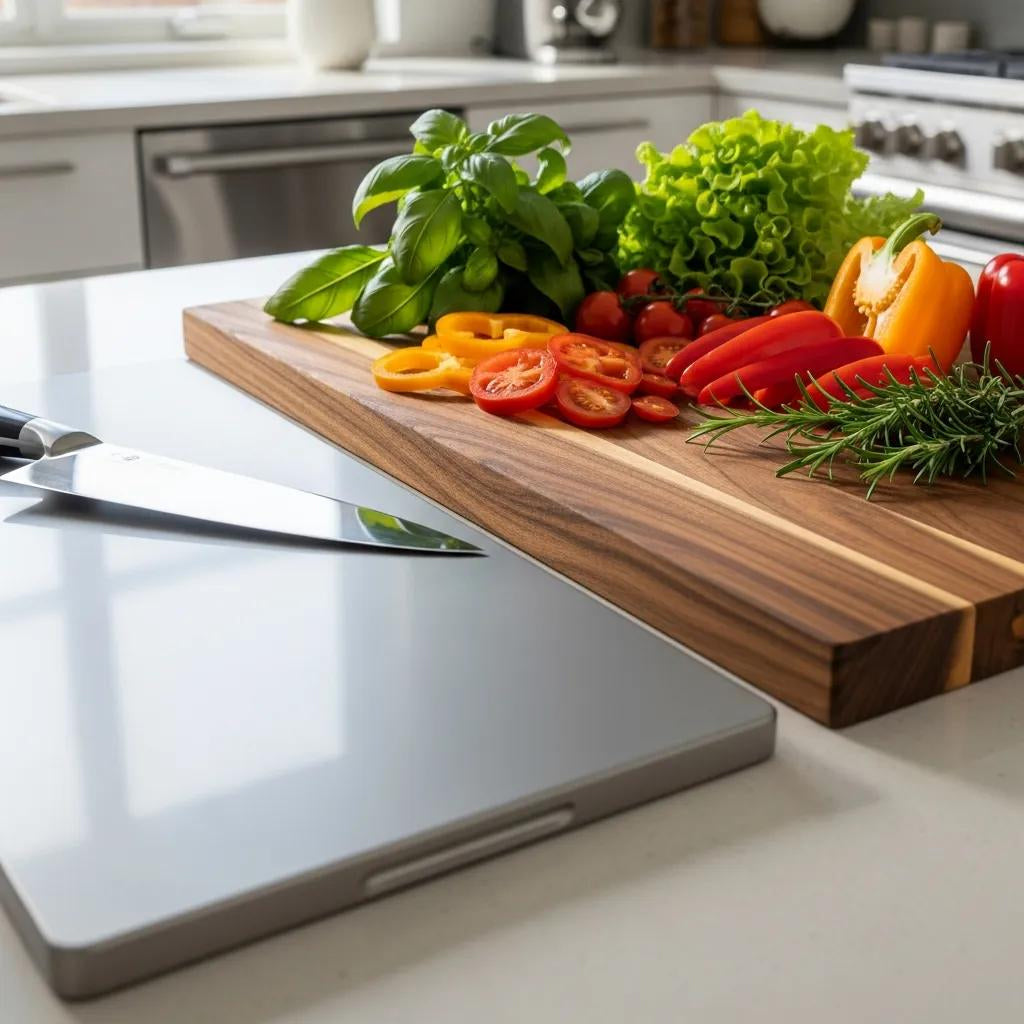
Titanium and hardwood cutting boards offer two very different ways to approach food prep. Titanium is a top pick for its non‑porous, hygiene-first surface and long life, while wood is often favoured for being kinder to knife edges and for its warm, natural look.
This guide will walk you through how each material performs for everyday healthy cooking. We'll cover hygiene, durability, how they impact your blades, and even some environmental considerations, so you can easily pick the board that best fits your kitchen priorities.
You might be wondering about things like cross‑contamination, lingering flavours, and how often your knives will need sharpening. Understanding how each material behaves really helps make those choices clear.
Below, we'll explore titanium’s hygiene advantages and low maintenance needs, explain how wood protects blades and looks great for presentation, compare the two across key attributes, answer whether titanium dulls knives faster, and give you a practical checklist to help you decide.
Throughout, you’ll find clear lists, three handy comparison tables, and actionable tips to help you choose a cutting board that supports healthy cooking and will last you for ages.
What Are the Key Benefits of Titanium Cutting Boards?

Titanium boards give you a hard, non‑porous surface that leaves fewer nooks and crannies for bacteria to hide. They also resist moisture‑related warping and need very little specialised care – a combination that really supports safer, cleaner meal prep.
Because liquids and food particles stay on the surface instead of soaking in, they’re much easier to wash away. Titanium’s resistance to corrosion also helps the board last a long time when you look after it properly.
In everyday cooking, this means fewer deep‑clean rituals, steadier flavour transfer between tasks, and a durable prep surface that stands up to repeated use.
Here’s a simple look at how titanium's traits link up with health and wellness benefits to make things practical.
| Attribute | Health / Wellness Benefit | Practical Outcome |
|---|---|---|
| Non‑porous surface | Reduces places for bacteria to hide | Easier sanitisation after raw meat prep |
| Corrosion and moisture resistance | Less warping and surface breakdown | Longer safe service life, fewer replacements |
| Smooth metal finish | Minimal residue absorption | Better flavour neutrality, fewer lingering smells |
This quick table shows how titanium’s material properties translate to concrete kitchen benefits. Next, let's look at how to use those properties safely in your routine hygiene practices.
How Does Titanium Promote Hygiene and Food Safety?
Titanium’s hygiene advantage comes from being non‑porous: juices and crumbs stay on the surface rather than seeping into tiny pores where bacteria can grow. That means standard cleaning — hot water and detergent, followed by thorough drying — removes most contamination risk, and many titanium products tolerate stronger sanitising routines when needed. For higher‑risk tasks like raw poultry or fish, surface‑level sanitisation reduces cross‑contamination compared with porous boards, where microbes can lodge. Practical steps are simple: rinse promptly, wash with a mild detergent and hot water, then let the board air‑dry fully before storing — habits that make the most of titanium’s non‑porous advantage.
These simple cleaning habits naturally lead us to consider the maintenance differences between titanium and other materials, and why titanium often needs less ongoing care.
- Titanium cleaning routine for higher‑risk tasks: Rinse the surface to remove solids immediately after use. Wash with hot water and a food‑safe detergent, scrubbing with a soft brush if needed. Rinse, sanitise when appropriate, and air‑dry completely before storing.
These straightforward steps make titanium appealing for cooks who prioritise hygiene without a heavy upkeep routine. Next, we discuss why titanium is also seen as durable and low-maintenance.
Why Is Titanium Considered Durable and Low Maintenance?
Titanium’s durability comes from its resistance to corrosion and its dimensional stability when exposed to moisture — it simply doesn’t behave like organic materials that swell, warp or split. Because titanium doesn’t rely on breathable fibres, it rarely needs conditioning, oiling or special drying cycles. Maintenance is mainly routine cleaning and occasional sanitising. That simplicity lowers the chance of damage from incorrect care and can reduce replacement frequency, which is meaningful from a sustainability perspective. For busy kitchens where replacement time and maintenance matter, titanium’s low-maintenance profile fits a wellness-focused routine that performs predictably.
With titanium’s strengths in mind, we turn next to the contrasting advantages of wooden boards, especially for blade care and aesthetics.
What Advantages Do Wooden Cutting Boards Offer?
Wooden cutting boards combine blade‑friendly resilience with visual warmth and traditional presentation — qualities that make them a favourite for many home cooks and professional chefs. The fibrous structure of hardwoods like maple and walnut gives the blade a bit of give, reducing microscopic chipping and helping knives stay sharp longer. Wood’s tactile and visual appeal also makes it great for serving, creating a sense of ritual that many users appreciate. Those benefits do require more care — regular oiling, prompt washing and careful drying — to keep the board sanitary and structurally sound.
These maintenance needs lead to why certain species are preferred for longevity and edge protection.
How Do Wooden Boards Protect Knife Sharpness?

Wood helps preserve sharpness because its fibres compress slightly under pressure, absorbing impact and preventing the blade edge from hitting a uniformly hard surface that speeds wear. Hardwoods such as maple and walnut balance density and resilience — they resist deep gouges but remain forgiving on edges. Regular upkeep (sanding out deep grooves when necessary and applying food‑grade oil) keeps the fibres resilient. Using separate boards for raw proteins and produce also helps hygiene and lets blade care and food safety coexist.
What Are the Aesthetic and Traditional Appeals of Wood?
Wooden boards bring warmth, natural variation and visual richness that suit many kitchen styles, from rustic to modern. They create a tactile link to traditional cooking and double as attractive serving platters for cheese, charcuterie and bread, elevating the dining experience. Different species offer distinct grain and tone options, so you can match boards to your cabinetry or tableware. Many households keep multiple boards — a wooden one for serving and edge‑friendly prep, and another board for heavier or hygiene‑sensitive tasks.
Aesthetic choice often overlaps with practical concerns, which is why the next section compares the two materials across key attributes to help you prioritise.
How Do Titanium and Wooden Cutting Boards Compare Head‑to‑Head?
Comparing titanium and wood on hygiene, durability, knife impact, maintenance and environmental factors clarifies which material suits particular kitchen needs.
| Attribute | Titanium | Wooden |
|---|---|---|
| Hygiene | Non‑porous, easier to sanitise | Porous; needs careful maintenance |
| Durability | Highly resistant to warping and corrosion | Can warp or split if neglected; often repairable |
| Knife impact | A harder surface can increase edge wear | Forgiving fibres preserve sharpness longer |
| Maintenance | Low — routine wash and dry | Higher — oiling, sanding, careful drying |
| Environmental | Long‑lived and recyclable | Biodegradable when sustainably sourced |
This comparison highlights where each material fits: titanium for hygiene and low maintenance, wood for blade care and presentation. The sections that follow unpack each attribute with short scenarios and practical guidance.
Which Material Excels in Hygiene and Food Safety?
When it comes to hygiene and food safety, titanium generally has the advantage because its non‑porous surface prevents liquids and microbes from embedding. In real‑world tasks like prepping raw poultry or seafood, a titanium board lowers cross‑contamination risk when paired with consistent cleaning. Wood can be hygienic if well maintained — prompt washing, occasional sanitising and full drying — but its porous nature makes lapses in care more likely to leave residues. For households with young children, immunocompromised members, or frequent high‑risk food prep, prioritising a non‑porous surface is often the safer choice.
Many cooks find a balanced approach works best — use titanium for raw proteins and wood for vegetables and serving, which preserves both safety and blade life in daily practice.
- Practical hygiene guidance: High‑risk prep (raw meat/fish): Use a non‑porous board and sanitise after use.Every day, veg and fruit: A well‑maintained wooden board is suitable.Serving and presentation: Reserve wooden boards to preserve their look and feel.
These simple rules help allocate tasks to the right board and reduce cross‑contamination risk. Next, we compare expected lifespan and lifecycle trade‑offs.
How Do Durability and Lifespan Differ Between Titanium and Wood?
Titanium boards usually outlast wooden boards in everyday use because they don’t absorb liquids, resist moisture‑driven deformation and tolerate frequent washing without structural damage. Properly cared‑for wooden boards can last many years but are vulnerable to cracking, warping and deep grooves if left wet or stored incorrectly. From a lifecycle view, titanium’s longevity can reduce replacement frequency and related waste, while sustainably sourced wood is biodegradable and simpler to dispose of responsibly. The overall environmental balance depends on production methods, how long each board is used and disposal options.
These durability differences matter for busy kitchens where replacement cycles and environmental impact are important considerations.
What Is the Impact of Each Material on Knife Sharpness?
Titanium’s harder surface can increase friction and the hardness differential against knife steels, which may accelerate microscopic edge damage and mean more frequent honing or sharpening. Wood’s fibrous compliance cushions the blade and reduces chipping, so knives often stay serviceable longer with regular care. Many cooks compromise by using titanium selectively for high‑contamination tasks and wooden boards for everyday chopping and slicing to protect edges. Good cutting technique and a regular maintenance routine also help minimise material impact on knife longevity.
Next, we cover how maintenance and convenience compare between the two materials.
How Do Maintenance and Convenience Compare?
Titanium scores high for convenience: quick washes, minimal conditioning and predictable drying make daily routines simpler. Wooden boards require more attention — periodic oiling, immediate washing and careful air‑drying — which some users enjoy as a ritual, and others find tedious.
Convenience also affects how many boards a household keeps: titanium owners may rely on a single multi‑purpose surface, while wood users often keep several boards for different tasks. Time‑poor cooks tend to prefer titanium for speed and predictability; those who value craftsmanship and presentation accept the extra care wood needs.
Convenience choices usually line up with lifestyle and time availability rather than pure performance metrics, which links to the environmental trade‑offs below.
What Are the Environmental Considerations for Each Material?
Wooden boards can be environmentally preferable when sourced from certified sustainable forestry: they’re biodegradable and, at end‑of‑life, return to the biosphere with relatively low processing demands.
Titanium needs energy‑intensive extraction and processing, but lasts a long time and is recyclable, which lowers the need for frequent replacements. The net environmental impact depends on production methods, how long the board is used and disposal options: a long‑lived titanium board that replaces several wooden boards may have a smaller cumulative footprint, while responsibly sourced wood kept for decades can also be low‑impact. Consider sourcing and expected replacement cycles when choosing for sustainability.
With those trade‑offs in mind, many cooks ask the central practical question: Do titanium boards dull knives more quickly? The next section gives a clear answer and mitigation tips.
| Knife Type | Attribute | Practical Tip |
|---|---|---|
| Carbon‑steel chef's knife | Very hard, fine edge | Hone often; avoid heavy chopping directly on metal zones |
| Stainless‑steel utility knife | Common household steel | Use the slicing technique and regular honing to limit wear |
| Ceramic knife | Extremely hard but brittle | Avoid titanium surfaces; use wood to preserve the edge |
Do Titanium Cutting Boards Dull Knives More Than Wooden Boards?
Short answer: titanium can speed up knife dulling compared with wood, but the effect depends on your knife steel, edge geometry and how you cut — and it’s definitely manageable. Hard surfaces and metal‑on‑metal contact increase abrasive wear, especially on thin, hard steels; wood’s compliance reduces micro‑chipping. Regular honing, choosing tougher knife steels and adjusting your technique (favouring slicing over forceful chopping) go a long way to reducing dulling on titanium. Below, we outline the mechanisms and offer practical steps to protect your blades while keeping those hygiene benefits.
These tips come from practical experience and point to concrete ways you can protect your knives.
How Can Users Minimise Knife Dulling on Titanium Surfaces?
Reducing dulling is a mix of tool choice, technique and maintenance. Pick knives with tougher steels and slightly thicker edge angles if you use metal surfaces often. Alter your technique to prefer slicing and forward motion instead of heavy vertical chops and twisting that stresses the edge. Keep a maintenance rhythm: frequent handheld honing, scheduled professional sharpening based on use, and, where possible, use softer zones of the board for delicate slicing.
- Knife‑care checklist to reduce dulling on titanium: Choose tougher knife steels and moderate edge angles for durability. Hone frequently with a quality rod to maintain geometry. Adjust technique: slice with a draw motion rather than forceful vertical chops. Rotate board use: use titanium for high‑hygiene tasks and wood for delicate slicing.
Following these measures preserves blade life while you still benefit from titanium’s hygiene advantages.
How to Choose the Best Cutting Board for Your Healthy Kitchen?
Choosing the right cutting board depends on how you prioritise hygiene, knife life, aesthetics and how much maintenance you’re willing to do. If contamination risk and fast cleaning are top priorities, a non‑porous titanium board is a strong fit. If preserving knife edges and creating attractive serving pieces matter more, a hardwood board is the better option. For many households, a hybrid approach — titanium for raw proteins and a wooden board for vegetables and serving — strikes the best balance. The checklist below helps match common household scenarios to material choices.
| Decision Factor | If You Prioritise This | Best Material Choice |
|---|---|---|
| High hygiene / minimal upkeep | Fast sanitisation and low maintenance | Titanium |
| Knife preservation/presentation | Keep edges sharp and board presentable | Wooden (maple, walnut) |
| Balanced needs/flexibility | Want both safety and blade care | Keep both types or rotate use |
This decision grid should help you align your priorities with a material choice that fits your everyday cooking patterns.
Which Cutting Board Aligns with Your Hygiene and Maintenance Needs?
If hygiene is paramount — for families with young children, people with fragile immune systems, or cooks who frequently handle raw proteins — a titanium board simplifies sanitisation and reduces hidden contamination risk. If you care most about knife maintenance and presentation, hardwoods like maple or walnut offer a forgiving surface that preserves edges and looks great on the table. For mixed kitchens, a two‑board system preserves both hygiene and blade condition: titanium for raw proteins and quick sanitisation; wood for slicing, dicing and serving. Match your willingness to maintain the board with the demands of the material, so you get consistent benefits.
Put simply: if hygiene guides your choices, a titanium board designed for wellness kitchens is a sensible option.
Why Choose Terra Wellness’s Titanium Cutting Board for Wellness‑Focused Cooking?
At Terra Wellness, we've designed our Titanium Cutting Board with practical wellness benefits in mind — think hygiene, flavour neutrality and long-lasting performance. For cooks who want a low‑maintenance prep surface that supports safer handling of high‑risk foods, our titanium board is a great choice.
We focus on a non‑porous surface to reduce bacterial harbourage and a metal construction that resists warping and needs minimal conditioning. If your kitchen prioritises hygiene-forward tools and straightforward care routines, Terra Wellness’s titanium offering could be a fantastic match for your healthy-cooking approach.
- Quick decision checklist for choosing a board: If hygiene and low maintenance dominate, choose a titanium board for easy, non‑porous cleaning. If knife life and presentation dominate, choose a hardwood board like maple or walnut and keep an oiling routine. If you need both, use both boards and assign tasks by contamination risk.