






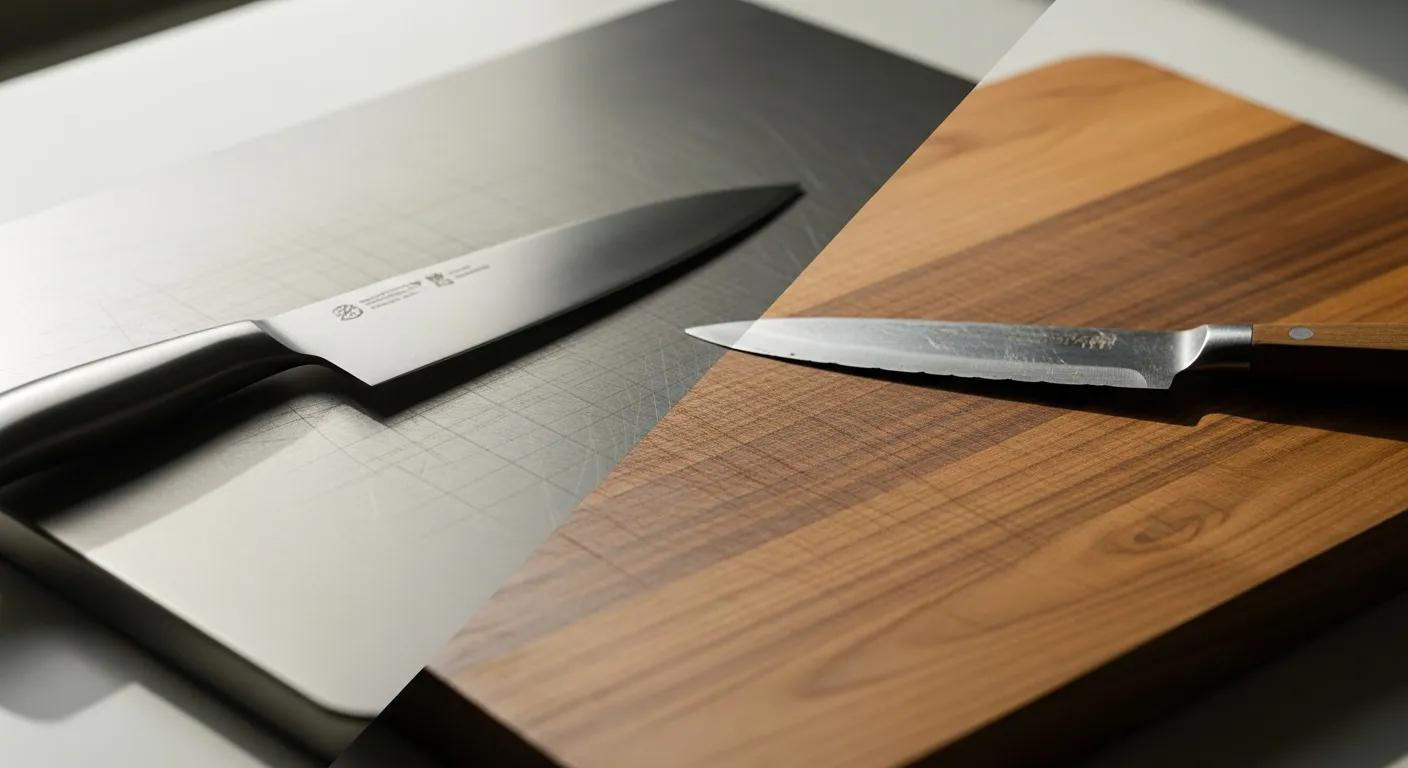
Titanium vs Wooden Cutting Boards
Picking the right cutting board changes more than the look of your bench — it affects food safety, how often you sharpen knives and how much care the board needs. This guide walks you through the options of titanium and wooden cutting boards, so you can choose the surface that best fits your kitchen. We explain what titanium boards are, why they’re praised for their hygiene and lifespan, why chefs still choose wood for its knife-friendly feel and presentation, how the two materials compare directly, and which other materials might suit specific tasks. You’ll find practical comparisons, clear recommendations for everyday scenarios (raw meat, fine slicing, busy households) and up-to-date food-safety context to help you decide with confidence.
What Are Titanium Cutting Boards and Their Key Benefits?
Titanium cutting boards are made from solid titanium, titanium alloys or surfaces coated with titanium to create a non-porous, corrosion-resistant work surface. The metal’s hardness and chemical stability mean it won’t soak up liquids or odours, which makes cleaning straightforward and reduces places for bacteria to hide. Many models have smooth, dishwasher-tolerant finishes and are marketed for kitchens where hygiene and long service life are priorities. The main trade-offs are clear: excellent cleanliness and long-term stability versus a potentially higher initial investment and the potential for greater blade wear depending on the finish. Knowing these pros and cons helps you decide if a titanium surface matches your cleaning routine and kitchen demands.
Titanium cutting boards tend to offer three practical benefits:
- Non-porous surface: won’t absorb liquids and is less likely to trap bacteria than porous materials.
- Easy to sanitise: tolerates hot-water cleaning and common sanitising agents.
- Durable: resists warping, cracking and staining for long-term use.
If hygiene and low maintenance are your priorities, titanium is worth considering. Next, we’ll look closer at what “titanium” means in practice and how finishes affect performance.
What Defines a Titanium Cutting Board and Its Material Properties?
A titanium cutting board can be a solid plate of commercially pure titanium, a titanium alloy, or a different core finished with a titanium surface. Titanium sits below ceramic in hardness but above many food-grade metals, giving a tough, corrosion-resistant surface without reacting with food. The surface finish matters: a polished, slightly forgiving finish reduces friction and is kinder to blades, while a very hard or textured finish increases abrasion. Designs vary too — solid titanium, titanium-coated stainless steel, or composites with a titanium face — and each option balances weight, overall value and rigidity differently. For cooks, this means considering how the board feels, how it interacts with knives and how it stands up to dents and cuts when choosing a model.
With that material context, it’s easier to see how titanium’s non-porous nature affects everyday hygiene and long-term durability.
What Are the Hygiene and Durability Advantages of Titanium Boards?
Because titanium is non-porous, bacteria and moisture have less chance to penetrate the surface, so routine cleaning is more effective, and the cross-contamination risk is lower when you clean correctly. The metal also resists staining and odour retention, so a quick wash with detergent or hot water usually removes residues more reliably than with porous wood. Durability is another strength: titanium resists warping and cracking, so the board stays flat and stable under regular use. That said, no surface is “self-sterilising” — titanium still needs proper sanitisation after raw meat and should be checked for deep grooves where debris can collect. These practical benefits make titanium a sensible option for busy kitchens that value fast, reliable cleaning.
Why Are Wooden Cutting Boards a Popular Traditional Choice?
Wooden boards stay popular because they combine a forgiving surface for knives, a warm, natural look and a tendency to “hide” or heal small cuts, which keeps blades sharper for longer and the board looking good as it ages. Wood fibres give a little under the blade, cushioning the edge and slowing down dulling compared with harder materials. Different species — maple, walnut, teak — offer varied colours, grain and natural durability to suit preparation and presentation needs. Wood does need more hands-on care: hand-wash, dry thoroughly and oil regularly to keep fibres sealed and reduce bacterial ingress. Despite that upkeep, many home cooks and chefs prefer wood for day-to-day prep and for serving because it balances function with presentation.
Next, we’ll explore how wood protects blades and why specific species are chosen for particular uses.
What Makes Wooden Cutting Boards Knife-Friendly and Aesthetically Appealing?
Because wood is softer than metal or glass, a blade meets less resistance and is less likely to chip or dull quickly, which is why chefs reach for wooden boards for precise slicing. Popular species include maple (durable and neutral-toned), walnut (deep colour for serving) and bamboo (appealing for sustainability-minded buyers). End-grain boards — where fibres run vertically — are especially blade-friendly because the wood fibres part around a blade and close again, reducing visible scoring and helping preserve edges. If you value knife longevity and presentation, choosing the right wood species and construction gives both functional and visual benefits; the next step is learning the maintenance that keeps both food-safe and beautiful.
Knowing how blades and wood interact helps you get the best performance and life from both tools.
Now we’ll cover the practical cleaning and care steps that keep wooden boards safe and long-lived.
What Are the Hygiene and Maintenance Considerations for Wooden Boards?
Wood needs a consistent care routine to stay hygienic: wash by hand with hot, soapy water right after use, dry fully to avoid trapped moisture, and apply food-grade oil or wax periodically to maintain a sealed surface. Because wood is porous, leaving it wet or letting deep grooves fill with food debris lets bacteria linger — so upkeep is both prevention and repair. Best practice is to use separate boards for raw meat and ready-to-eat foods, sand or resurface boards when deep cuts appear, and replace boards if they crack or retain odours. Properly cared-for hardwoods can also offer mild, natural antimicrobial benefits, but those only help when you maintain the board correctly. With regular care, wooden boards do a great job of preserving knives and looking good on the table while keeping contamination risks low.
With both materials’ strengths in mind, the next section compares key attributes side-by-side to help you decide.
How Do Titanium and Wooden Cutting Boards Compare Head-to-Head?
A straight comparison helps match a surface to your priorities by listing hygiene, durability, knife impact, maintenance and overall value practically. Titanium wins on non-porous hygiene and long-term dimensional stability; wood wins on being gentle to knives and offering natural warmth. Maintenance differs: titanium copes with dishwasher-style sanitisation and needs little specialised care, while wood requires hand-washing, drying and periodic oiling. Considering the overall value, titanium might involve a higher initial investment but could offer long-term savings through its durability, while wood's initial affordability and potential for resurfacing can also be economical over time. The quick table below makes those trade-offs easy to scan.
| Material | Key Attribute | Practical Value |
|---|---|---|
| Titanium | Hygiene | Non-porous, easy to sanitise, resists staining and odours |
| Titanium | Durability | Low risk of warp, crack or long-term change; long service life |
| Wooden | Knife-friendliness | Softer surface preserves edge; end-grain can self-heal |
| Wooden | Maintenance | Needs hand-washing, thorough drying and routine oiling |
In short, titanium favours hygiene and low upkeep; wood favours knife care and presentation. The sections that follow break down hygiene, durability, blade impact and lifetime value with clear tips you can use today.
How Do Hygiene and Food Safety Differ Between Titanium and Wood?
Titanium’s non-porous surface makes it less likely to soak up liquids or bacteria, so hot-water washing and standard sanitising are generally more predictable than with porous woods. Wood can be safe when you follow good routines — wash promptly, dry thoroughly and oil periodically — but it requires more attention. Food-safety guidance also stresses task separation: keep raw meat and ready-to-eat food on different boards, no matter the material. For raw meat in particular, a non-porous surface like titanium or food-grade plastic simplifies sanitisation and reduces variables in cleaning.
- After raw meat contact: wash with hot, soapy water, sanitise and let the board air-dry completely.
- Daily general use: wash promptly and check for grooves or stains.
- When deep grooves appear, sand or replace the board to avoid trapped residue.
Keeping tasks separate and following these steps reduces contamination risks on any surface, which is why titanium is often chosen where fast, repeat sanitisation is needed.
What Are the Differences in Durability and Longevity?
Titanium usually resists warping, cracking and long-term change better than wood, offering a predictable long service life even under frequent use. Wood performs well in normal home kitchens but can warp or split if left wet or poorly dried; end-grain hardwoods hide wear longer and can be resurfaced. In heavy-use settings, a wooden board may need sanding or replacement sooner, while titanium will show fewer functional failures, though it can accumulate cosmetic scratches depending on the finish. When considering the long-term value, think about the initial investment, maintenance time, and how often you might need to replace or resurface the board. Titanium's initial investment could be worthwhile if you're looking for decades of low-maintenance service.
How Does Each Material Affect Knife Sharpness and Edge Retention?
Blade wear depends on both material hardness and surface texture. Wood’s fibrous, slightly yielding surface generally slows dulling and is kinder to edges. Very hard surfaces — metal or glass — accelerate abrasion and require more frequent honing. Titanium’s effect on knives depends on finish: a finely polished titanium face can be relatively gentle, but titanium is still harder than wood and may abrade edges faster in some conditions. To reduce dulling, use dedicated boards for fine-knife work, rotate surfaces, and keep a regular honing and sharpening routine. If preserving knife edges matters most, pairing high-quality knives with wooden or end-grain surfaces remains a common choice.
What Are the Maintenance Requirements and Cost Implications for Each?
Titanium generally needs little beyond regular washing and occasional checks for deep gouges; it tolerates machine-style sanitisation and fewer specialised care products, so it saves time. Wood requires a simple but consistent routine: wash and dry after every use, oil monthly or quarterly depending on use, and sand and reseal when deep cuts build up. From a financial perspective, titanium might involve a higher initial investment but could save you time and money on replacements and maintenance over the years. Wood, with its lower initial cost and ability to be repaired, can also be an economical choice, especially for lighter use.
Simple maintenance schedule:
- Titanium: wash after use, sanitise after raw meat and inspect for deep grooves periodically.
- Wood: wash and dry after each use, oil regularly and sand/resurface as needed.
That schedule shows the time and value behind the sticker price and helps you estimate real worth.
What Other Cutting Board Materials Should You Consider?
Beyond titanium and wood, common alternatives each bring a different balance of hygiene, blade impact, overall value and looks. Plastic (HDPE), bamboo, glass and stainless steel sit at different points on the trade-off map: plastics are affordable and easy to sanitise, bamboo is renewable but tougher on knives, glass is hygienic for presentation but dulls blades, and stainless steel is extremely durable but aggressive to edges. Treat each material as a tool for specific tasks rather than a one-size-fits-all solution — mixing boards gives you the best combination of hygiene, blade care and presentation.
| Material | Pros | Cons |
|---|---|---|
| Plastic (HDPE) | Affordable, easy to sanitise, lightweight | Grooves can trap bacteria; they wear faster |
| Bamboo | Renewable, attractive, and harder than many woods | Can be tougher on knives; moisture-sensitive |
| Glass | Very hygienic, stain-resistant, great for plating | Dulls knives quickly; risk of breakage |
| Stainless steel | Extremely durable and non-porous | Harsh on blades; noisy and cold to the touch |
Knowing these alternatives helps you build a set of boards tailored to different tasks — raw proteins, fine slicing and serving, or heavy chopping.
What Are the Pros and Cons of Plastic, Bamboo, Glass, and Stainless Steel Boards?
Each material solves a particular need: plastic is affordable and easy to sanitise but wears out in grooves; bamboo looks good and is renewable but can be harder on knives; glass gives a spotless surface for presentation but ruins edges; stainless steel lasts a long time but accelerates blade wear. In a multi-board kitchen, use plastic or titanium for raw proteins, wood for delicate slicing and serving, and reserve glass or steel for specific jobs like pastry work or hygienic plating.
Practical one-line recommendations:
- Plastic: best for budget-friendly, task-separated raw meat prep.
- Bamboo: pick if you want a renewable option and accept more sharpening.
- Glass: Use sparingly for clean presentation, not everyday chopping.
With those options in mind, the final section matches priorities to the right material for your kitchen.
Which Cutting Board Material Is Best for Your Kitchen Needs?
There’s no single “best” board — the right one depends on what matters to you. If hygiene and low maintenance top your list, choose a non-porous titanium or food-grade plastic surface. If knife care and presentation are most important, choose an end-grain hardwood and commit to regular upkeep. Think about your regular tasks — raw meat, heavy chopping, precision slicing or serving — and how much time you’ll spend on care. For busy homes or commercial kitchens, prioritise durable, easy-to-clean surfaces and a rotation plan; for home chefs who prize edge retention and looks, wooden boards are still the go-to. The checklist below turns those priorities into concrete guidance.
Quick checklist to decide:
- If hygiene and fast sanitisation are top priorities, choose a non-porous titanium or HDPE board.
- If knife preservation and presentation matter most, choose an end-grain hardwood and follow a care routine.
- If you run a busy household or commercial kitchen, prioritise durability, easy cleaning and planned rotation.
These criteria turn trade-offs into practical choices; the next short sections outline typical scenarios and the best material for each.
When Should You Prioritise Hygiene and Durability?
Choose hygiene and low-maintenance materials when you prepare raw meat often, live with young children or immunocompromised people, or run a busy or commercial kitchen where fast sanitisation is essential. Titanium and high-grade plastics work well for quick cleaning cycles and predictable sanitation. Pair them with a rotation system — dedicated boards for raw proteins and others for ready-to-eat foods — to further reduce cross-contamination risk. When throughput and reliable cleaning matter most, non-porous boards deliver clear benefits.
When Is Knife Preservation and Aesthetic Appeal More Important?
Choose wooden boards when your work focuses on delicate slicing, keeping premium knife edges, and presenting food on a warm, attractive surface. Home chefs, charcuterie fans and hosts who serve from the board value wood’s forgiving feel and natural look. To protect both board and knives, pick end-grain hardwoods, oil and dry them regularly, and use harder surfaces only when needed. For those willing to invest a little care, wood rewards with longer-lasting edges and better presentation.
What Are the Considerations for Heavy Home or Commercial Use?
In high-throughput kitchens, pick materials and routines that reduce downtime and contamination risk: non-porous surfaces, clear task separation, scheduled rotation and a replacement plan tied to visible wear. Commercial settings might opt for stainless or titanium for durability, but it's wise to use wooden or plastic boards for delicate knife work to limit blade wear. When making purchasing decisions, consider the overall value, including initial investment, replacement schedules, and the time staff will spend on upkeep. Clear cleaning checklists and task-based rotation reduce hygiene and performance risks and keep lifecycle costs predictable.
- Before you buy: match the board to your common tasks, willingness to maintain it and your knife priorities.
- Try first: test the surface feel and how it interacts with your knives on a small scale.
- Rotation plan: keep a budget board for raw proteins if hygiene is critical.
This practical approach helps you pick the right cutting surface for everyday cooking and for special culinary tasks.