





Why Titanium Cutting Boards Make Sense in Australian Kitchens — Hygienic, Durable and Gentle on Knives
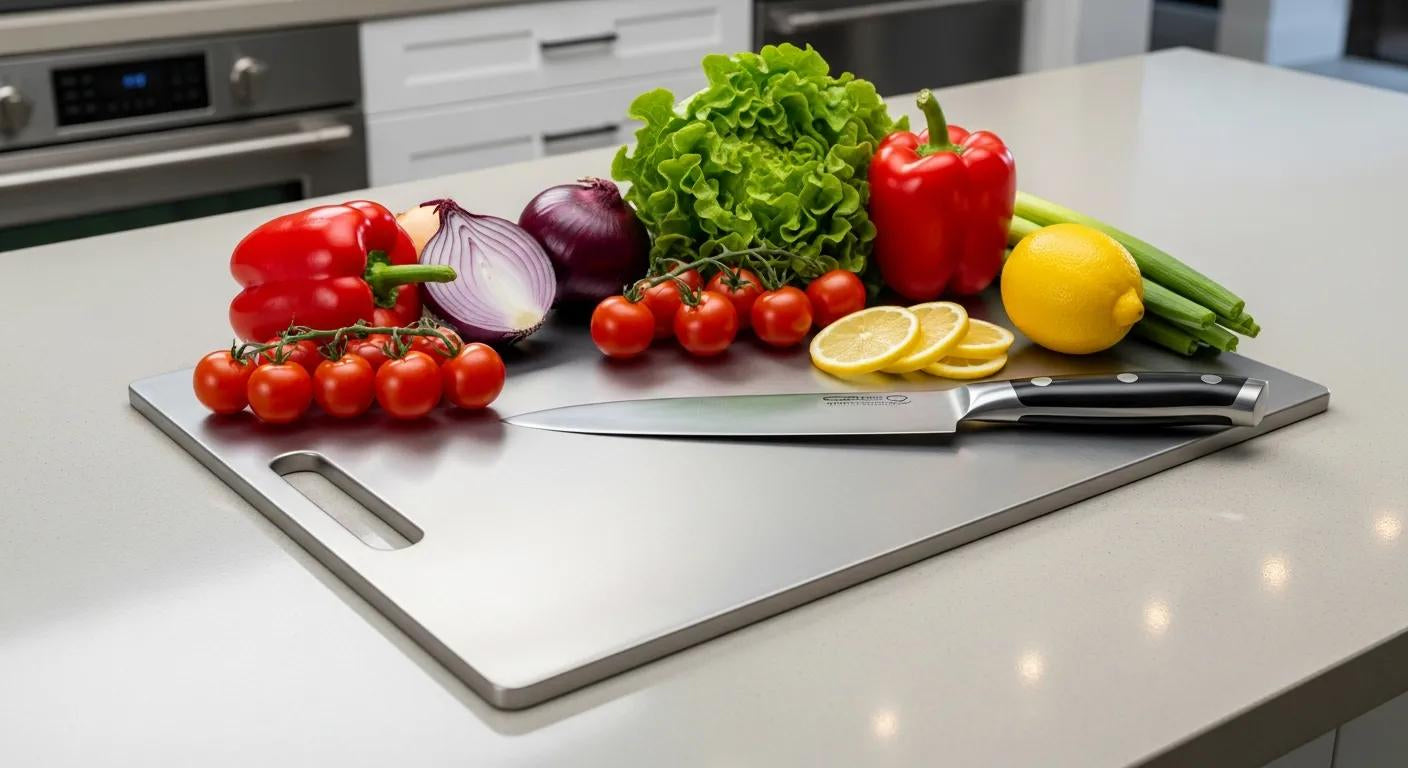
Titanium cutting boards are non‑porous, food‑safe surfaces made from high‑grade titanium or titanium alloys. They protect kitchen hygiene, help preserve knife edges and last far longer than many traditional boards. Let's explore how titanium’s unique qualities — non‑porosity, corrosion resistance and a balanced surface hardness — translate into everyday benefits for Australian kitchens: safer food prep, less waste over a board’s lifetime and easier cleaning. If you’re tired of boards that stain, trap bacteria or blunt knives, titanium offers a different approach: low maintenance without compromising blade care. Read on to see how titanium compares with wood and plastic, what it means for knife sharpness, why it’s so durable, how to keep it clean, the environmental upsides and the buying checklist to help you choose the right board for your cooking routine.
Why Are Titanium Cutting Boards the Best Choice for Australian Kitchens?
Titanium cutting boards sit in a premium category because their smooth, non‑porous metal surface resists corrosion and bacterial build‑up, giving clear hygiene and lifespan advantages. Pure titanium doesn’t absorb juices or oils and is far less likely to develop the microscopic grooves that trap food and microbes. For Australian homes — where humidity, busy meal prep and straightforward cleaning matter — titanium offers a dependable surface that minimises staining and lingering odours while staying stable under normal temperature and moisture changes. Here's why so many cooks are choosing titanium over conventional options.
Titanium brings three practical benefits to everyday cooking:
- Superior hygiene: A non‑porous finish resists bacterial harbouring and staining.
- Knife‑friendly surface: The surface hardness is balanced to help preserve edge retention, unlike glass or ceramic.
- Long‑term durability: Excellent corrosion resistance reduces warping and cracking in regular kitchen use.
To give you a clearer picture, here's a quick look at how common board materials stack up in an Aussie kitchen.
Different cutting board materials deliver distinct hygiene and maintenance outcomes.
| Material | Hygiene & Care | What it Means for You |
|---|---|---|
| Titanium | Non‑porous, easy to clean | Less bacteria, no fuss cleaning |
| Plastic (polymer) | Can become scratched and porous over time; may shed microplastics | Needs frequent replacing; can shed microplastics |
| Wood | Naturally antimicrobial but porous | Needs oiling & careful drying; can warp |
As you can see, titanium is a fantastic choice for cooks who value hygiene and easy care. Let's dive a bit deeper into how it compares with wood and plastic in your daily cooking.
What Makes Titanium Cutting Boards Superior to Wood and Plastic?
Titanium outperforms wood and plastic mainly because it stays non‑porous and resists the surface wear that creates tiny niches for bacteria. Wood fibres can absorb liquids, and plastic can develop deep grooves that trap food. Titanium’s smooth metallic finish prevents those problems and avoids the need for routine oiling. Unlike older polymer boards, titanium doesn’t shed microplastics as it wears, and its inert surface makes flavour and odour transfer far less likely. If you want hygiene with minimal upkeep, titanium is a strong option — just choose the right size and finish to suit your cutting style.
Practical takeaway: pick titanium when you want reliable hygiene with little fuss, but match board dimensions and surface finish to your cooking habits for the best results.
How Does Pure Titanium Enhance Kitchen Hygiene?

Pure titanium improves kitchen hygiene by presenting a continuous, non‑absorbent surface that prevents juices and microbes from penetrating the board. Its corrosion resistance and fine microtexture limit the microscopic crevices where bacteria can multiply after repeated chopping, making sanitisation simpler and more reliable. For higher‑volume prep — common in many Australian households — this means quicker, more effective cleaning with standard detergents or thermal washing. With hygiene covered, many cooks then ask how the board impacts their knives.
How Do Titanium Cutting Boards Preserve Knife Sharpness?
Titanium cutting boards help preserve knife sharpness by offering a surface hardness and microtexture that balance support with a small amount of edge give, reducing micro‑chipping and flattening that happens on very hard materials. Unlike glass or ceramic — which are much harder than steel and quickly blunt blades — titanium is firm enough to resist deep gouges yet forgiving enough to minimise abrasive wear on the edge. That means knives stay serviceable longer and need sharpening less often. To show you what we mean, here's a quick look at how different surfaces impact your knife edges.
Surface hardness directly influences blade wear and maintenance.
| Surface | Hardness | Impact on Knives |
|---|---|---|
| Titanium | Balanced & knife-friendly | Keeps edges sharper, reduces chipping |
| Glass | Very hard | Dulls & chips blades fast |
| Wood | Moderate | Gentle on edges, but porous |
To get the most out of this, a quick hone after heavy prep is a good idea, and try to avoid cutting super hard items (like frozen blocks) directly on the board. Let's explore why titanium is so kind to your blades.
Why Are Titanium Boards Gentle on Knife Blades?
Titanium boards are gentle because their microtexture and elastic response provide a small degree of compliance during cutting, which reduces instantaneous stress on a blade edge. That compliance lowers micro‑abrasion compared with ultra‑hard surfaces, so the knife shears food rather than hitting an inflexible plane that causes deformation. Many cooks find that their knives stay sharper for longer with titanium, especially with regular honing. For precision tasks, reserve ceramic or glass when necessary, but for everyday chopping, titanium is a reliable, blade‑friendly choice.
How Does Titanium Compare to Other Materials in Knife Care?
Compared with wood, plastic and ceramic, titanium sits in the middle: it offers durability without the blade‑dulling traits of ceramic or glass and without the maintenance wood requires. Wood is blade‑friendly but needs oiling and drying to avoid warping; plastic can become deeply scored and promote abrasive wear. Titanium reduces the need for board replacement and supports predictable knife care: routine honing, occasional sharpening and avoiding metal‑on‑metal impacts. Pair titanium with a simple honing habit after heavy use to extend blade life further.
What Makes Titanium Cutting Boards Exceptionally Durable?

Titanium cutting boards are notably durable thanks to titanium’s high tensile strength, strong corrosion resistance and dimensional stability when exposed to moisture and heat. These material properties mean titanium resists common problems — warping, cracking and deep gouging — that shorten the life of wood or polymer boards. In Australian kitchens, where humidity and frequent washing can degrade weaker materials, titanium keeps its shape and finish for years. Here's how that durability really pays off for busy cooks and professionals alike.
Durability delivers long‑term value through several mechanisms:
- Scratch and impact resistance: titanium tolerates repetitive cutting and occasional knocks without failing.
- Dimensional stability: it resists warping under normal kitchen temperature and moisture cycles.
- Lower replacement frequency: a long service life reduces lifetime material consumption and overall cost.
These strengths make titanium a smart, long-term investment for your kitchen. Let's look at why it's so good at resisting scratches and warping.
How Do Titanium Boards Resist Scratches, Warping, and Cracking?
Titanium resists scratches, warping and cracking because its alloy and pure‑metal forms have high yield strength and good fatigue resistance under the repeated loads of cutting. Its corrosion resistance also prevents chemical attack from food acids and salts that could otherwise weaken a surface over time. In practice, titanium withstands daily knife contact, occasional drops and repeated washing far better than many polymers and untreated woods. Knowing this helps cooks appreciate why titanium keeps its surface integrity across years of use.
This resistance to wear frames durability as an investment in fewer replacements and less material waste over time.
Why Is Durability a Long-Term Kitchen Investment?
Durability becomes a long‑term investment because a longer‑lasting cutting surface cuts replacement frequency, lowers cumulative environmental impact and provides consistent performance without frequent upgrades. Instead of regularly discarding plastics that have shed microplastics or replacing warped wooden boards, a titanium board can serve reliably for many years, spreading its value over a longer service life. Considering its long-term value and environmental benefits, durable titanium is a sensible choice for busy households looking to reduce waste. Next, we cover cleaning and maintenance so you can keep a titanium board performing at its best.
How Easy Is It to Maintain and Clean Titanium Cutting Boards?
Titanium cutting boards are easy to maintain because their non‑porous surface cleans effectively with standard detergents and handles thermal cycles well — many models are dishwasher compatible. The finish resists staining and odour retention, so routine rinsing and washing restores a near‑new appearance without oils or special treatments. For many people, this simplicity cuts maintenance time compared with wood, which needs ongoing conditioning. Here are some simple tips to keep your titanium board hygienic and odour‑free.
Key maintenance tips for everyday use:
- Rinse promptly after use: remove food residues straight away to prevent drying on the surface.
- Use mild detergent and warm water: routine washing removes soils and fats effectively.
- Dry thoroughly before storage: avoid standing water around any non‑slip feet or edges.
These simple steps help titanium’s hygienic benefits keep working in a busy kitchen.
Are Titanium Boards Dishwasher Safe and Stain-Resistant?
Yes — many titanium boards are dishwasher‑safe and are far less likely to stain than porous materials, though you should avoid aggressive abrasives that can roughen a polished finish. Titanium’s corrosion resistance tolerates repeated heat and detergent exposure, making dishwasher cleaning a convenient option for many households; still, always check the manufacturer’s care notes for finish‑specific guidance. Unlike wood, which can split or warp under high‑heat cycles, titanium maintains its shape and won’t hold odours, so it’s ready to use again after cleaning. For busy cooks, dishwasher compatibility is often a deciding convenience.
Because regular dishwasher cleaning keeps surfaces hygienic, many Australian cooks find that ease of care is a strong reason to choose titanium.
What Cleaning Tips Ensure Odour-Free, Effortless Maintenance?
To keep a titanium board odour‑free and looking its best, follow a short cleaning routine: rinse immediately after preparing raw proteins, wash with warm soapy water and dry with a clean cloth; use a diluted sanitiser or a quick dishwasher cycle after heavy use. Avoid harsh abrasives that may roughen a polished finish, and store the board upright or on a dry rack so air circulates any non‑slip features. These steps preserve the board’s non‑porous surface and prevent trapped moisture around adjacent materials.
Simple, regular care minimises odour transfer between foods and keeps the board ready for any meal‑prep task.
Why Are Titanium Cutting Boards an Eco-Friendly Choice in Australia?
Titanium cutting boards are an eco‑friendlier option because titanium is highly recyclable, and the boards’ long lifespan reduces how often you replace them compared with short‑lived plastics. Fewer replacements lower embodied energy and material throughput over time, and eliminating microplastic shedding from synthetic boards reduces particulate release into household waste and, ultimately, waterways. In Australia — where reducing landfill and favouring durable goods is increasingly important — choosing titanium aligns with a reuse and recovery mindset. Here's a look at how different materials compare environmentally.
Understanding a material's journey helps clarify its environmental impact.
| Material | Environmental Aspect | What it Means |
|---|---|---|
| Titanium | Highly recyclable | Less need for new resources; easily recycled |
| Plastic | Shorter lifespan and shedding | More microplastics & landfill waste |
| Wood | Variable biodegradability | Varies based on origin & care |
These differences show why choosing durable, recyclable materials like titanium is a great way for eco-conscious households to reduce waste. Let's dive deeper into how titanium helps cut down on microplastics.
How Do Titanium Boards Reduce Microplastic Waste?
Titanium boards reduce microplastic waste by removing the wear‑and‑tear pathway that creates tiny polymer fragments from plastic boards. Over time, synthetic boards develop knife grooves and abrasions that release micro‑sized particles into household wastewater. Titanium doesn’t shed those particles in normal use, so switching to metal eliminates that source of microplastic pollution. For households wanting to cut microplastic contributions, this single lifecycle change — together with proper recycling at the end of life — makes a measurable difference.
Reducing microplastic shedding is one practical way durable materials can lower everyday environmental harm and support cleaner household waste streams.
What Environmental Benefits Does Recycling Titanium Offer?
Recycling titanium brings environmental benefits because reclaimed titanium can be re‑melted and reused with relatively high recovery rates, cutting demand for new ore and lowering the energy footprint per finished product compared with primary production. Recycling supports a more closed‑loop lifecycle for durable metal goods, so end‑of‑life boards can be diverted from landfill and repurposed. In Australia, municipal recycling options vary, so check local pathways, but the inherent recyclability of titanium is an advantage over polymers that are harder to recycle effectively. This recyclability, combined with long service life, helps lower the cumulative environmental footprint of kitchenware.
With those environmental benefits in mind, choosing the right titanium board still comes down to matching features to how you cook — which we cover next.
How to Choose the Best Titanium Cutting Board for Your Kitchen Needs?
Picking the right titanium cutting board depends on size, thickness, surface finish and helpful extras that suit your cooking style — whether you’re a home cook, a professional or someone who needs a lightweight option for camping. Think about how often you cook, whether you want a portable board or a heavy countertop workhorse, and if features like non‑slip feet, bevelled edges or a juice groove matter to you. Material purity and finish affect hygiene and blade interaction, so choose boards described as pure titanium or with a fine, consistent finish to protect your knives. Use the checklist below to narrow your options when buying in Australia.
A practical buying checklist for titanium boards:
- Size and thickness: match the board to your bench space and leverage needs.
- Surface finish: smoother finishes resist staining and are gentler on blades.
- Features: non‑slip feet, handles and juice grooves add usability for specific tasks.
- Weight and portability: lighter boards are handy for travel; heavier boards stay put for heavy chopping.
This checklist will help you quickly narrow down your options. Next, we'll give you some tips for comparing specific models.
What Features Should You Look for in a Titanium Cutting Board?
When comparing features, prioritise material purity, a fine, even finish, suitable thickness for stability and practical add‑ons like non‑slip feet or a juice groove if you prepare meats often. A well‑finished pure titanium surface balances hygiene with knife preservation, and a thickness in the 4–8 mm range typically gives stability without excessive weight (model variations apply). Non‑slip feet or a rubberised base stop movement during chopping, and inset handles or bevelled edges make handling and storage easier. Choosing these features ensures titanium’s benefits translate into everyday convenience and safer food prep.
Using this feature checklist reduces buyer uncertainty and aligns expectations with real kitchen tasks.
How Does Terra Wellness Titanium Board Stand Out in Australia?
Terra Wellness focuses on practical, high‑quality kitchen solutions, and our Titanium Board reflects that: we prioritise hygiene (non‑porous, low microbial retention, reduces microplastic shedding), knife care (gentle on edges), durability (resists warping, cracking and heavy use), easy maintenance (dishwasher friendly, stain‑ and odour‑resistant) and sustainability (recyclable, long‑lasting). That positioning is aimed at Australian cooks who want a low‑maintenance, durable surface that supports safe food prep and reduces waste. Use these points to compare models and choose the board that best fits your kitchen and sustainability goals.
After reviewing these features and benefits, you should be able to evaluate titanium boards against your daily cooking needs and environmental priorities.