






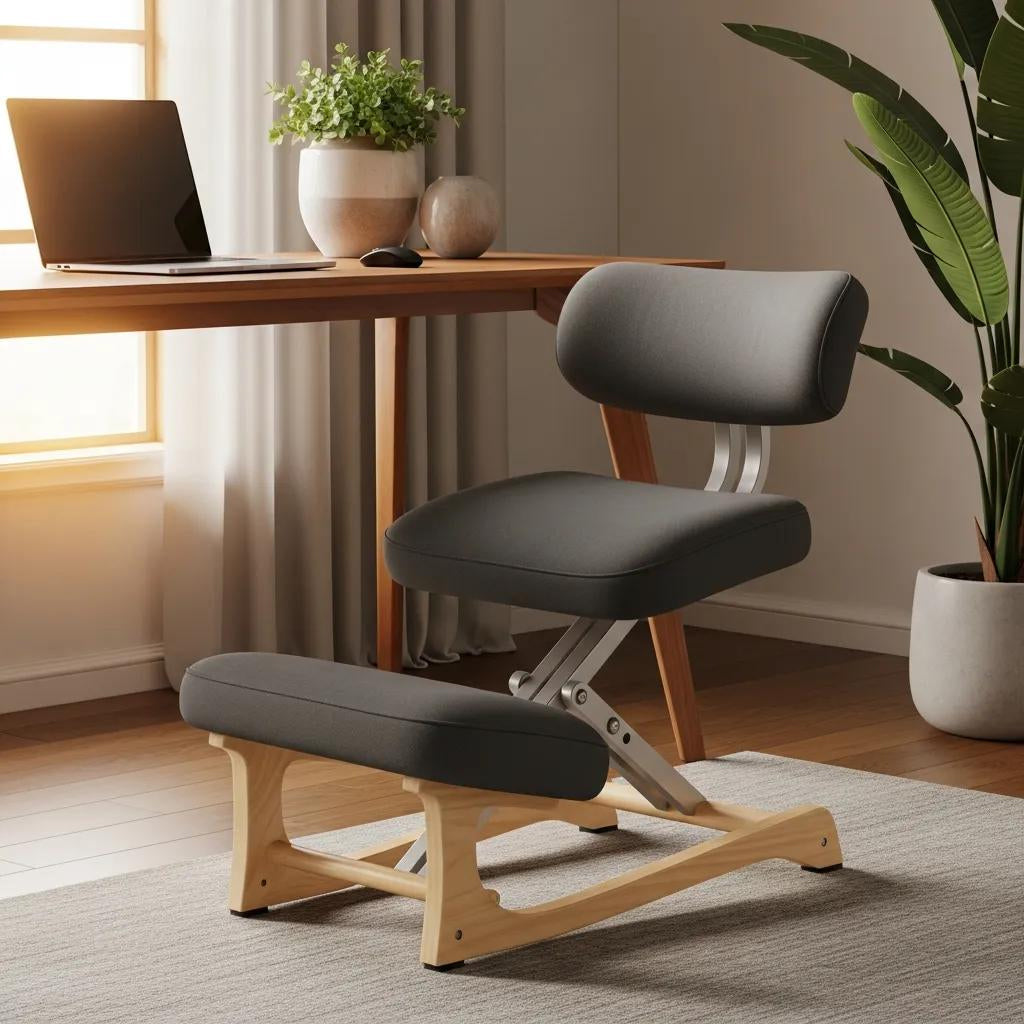
How ergonomic kneeling chairs improve posture and well-being
An ergonomic kneeling chair gently tilts your pelvis forward, distributing your weight evenly between your sit bones and shins. This opens up your hip angle and encourages a more neutral spine. Simply put: a small change to how you sit can help protect your posture, ease common aches, engage core muscles through active sitting, and even boost your concentration when working from home. Many people who switch between sitting and standing find that standard chairs can lead to slumping, stiffness, and mid-day energy dips – a kneeling chair offers a practical ergonomic alternative worth exploring.
At Terra Wellness, we craft natural and ergonomic accessories that support your everyday wellbeing. Our Ergonomic Kneeling Chair is a great example of how thoughtful design can promote healthier sitting. We focus on providing clear, actionable advice, exploring spinal biomechanics, lower-back relief, the benefits of active sitting for your core and circulation, how our chair fits into Australian home offices, and practical tips for buying and transitioning to home use.
How do kneeling chairs help posture and spinal alignment?
Kneeling chairs adjust your seat angle to gently tip your pelvis forward, which helps maintain your spine’s natural S‑curve and reduces the tendency to slump. Your weight shifts between your sit bones and knee rests, lowering pressure on your lower back and supporting a neutral head-and-neck position. By opening your hip angle and reducing posterior pelvic tilt, these chairs can also lessen forward head posture and strain on your discs and back muscles. The Terra Wellness Ergonomic Kneeling Chair combines a forward‑tilt seat with padded knee rests to encourage this alignment, all while fitting comfortably into typical home‑office layouts.
The table below highlights key design elements and their direct benefits for posture and spinal alignment.
| Design element | Attribute | Biomechanical benefit |
|---|---|---|
| Seat tilt | Forward‑angled seat surface | Encourages anterior pelvic tilt and helps preserve lumbar lordosis |
| Hip angle | Increased (open) hip angle | Reduces posterior pelvic rotation and slumping |
| Weight distribution | Sit bones + shin support | Reduces lumbar disc compression and balances muscle load |
Each design element creates a specific mechanical change that supports spinal health. Understanding these differences makes it easier to compare kneeling chairs with conventional seats and helps you decide which features are most important for you.
How to sit correctly on a kneeling chair
Start by adjusting the seat height so your thighs gently slope downward and your hips are slightly higher than your knees – this encourages the forward pelvic tilt you’re aiming for. Distribute your weight evenly between your sit bones and the padded knee rests to keep your spine long and neutral, and keep your head stacked over your shoulders to minimise neck strain. Remember to change your position gently every 20–30 minutes to avoid muscle fatigue. If you’re new to kneeling chairs, begin with short sessions and gradually increase your time as your muscles adapt, always focusing on maintaining neutral alignment.
How kneeling chairs support spinal alignment

Using a kneeling chair helps maintain your lumbar curve and reduces compressive load on your spinal discs by limiting excessive forward bending. This lessens passive strain on your posterior spinal ligaments and cuts down on the tendency to collapse into a rounded (kyphotic) posture, which is common with regular chairs. Over time, improved seated alignment can make it easier to maintain healthy habits and complement your movement and exercise routines that support spinal health. For many users, the open hip angle helps restore a more sustainable seated posture during desk tasks.
How can kneeling chairs help relieve lower back pain?
A kneeling chair can help reduce lower back pain for some people by lowering lumbar compression, improving pelvic tilt, and engaging the stabiliser muscles that support your spine. The process is straightforward: by changing how forces are distributed and encouraging a neutral spine, it reduces the repetitive stress often caused by prolonged slumped sitting. Expect gradual improvements when you combine sensible use – short sessions, regular breaks, and targeted stretching – rather than immediate cures. If your pain is persistent or severe, please seek personal clinical advice to ensure this approach is right for your specific condition.
Below are common causes of lower back pain and how a kneeling chair may help address each one.
- Poor slumped posture: An open hip angle reduces forward bending and supports your lumbar curve.
- Prolonged static sitting: Active sitting encourages small movements and weight shifts that relieve pressure.
- Weak core stabilisers: The chair promotes engagement of your abdominal and spinal stabilisers while you sit.
These pairings clarify the realistic benefits and highlight practical steps you can take alongside using your chair.
Combining a kneeling chair with simple stretches can also help ease muscular tightness that contributes to low‑back symptoms.
What commonly causes lower back pain — and how a kneeling chair can help
Lower back pain often stems from sustained poor posture, prolonged sitting with a rounded lower back, and weak stabilising muscles that leave the spine unevenly loaded. A kneeling chair limits posterior pelvic tilt and encourages a more extended spinal position, which can reduce pressure on your lumbar discs and posterior tissues. To get the most benefit, combine sitting sessions with targeted mobility and stretching – think hip‑flexor releases, gentle spinal rotations, and posterior‑chain mobility work – and gradually add movement and strengthening to complement the chair’s mechanical advantages.
Can kneeling chairs help sciatica and other back conditions?
Kneeling chairs may ease symptoms for some people with sciatica or mechanical back issues by reducing disc pressure and limiting nerve irritation caused by sustained flexed postures, but they aren’t a universal solution. How effective they are depends on the underlying cause – some nerve‑compression problems require specific clinical care – so try the chair cautiously and consult a clinician for persistent or severe symptoms. Monitor any changes closely and alternate your seating if symptoms increase. A measured trial (short sessions with regular breaks and exercises) will help you decide whether a kneeling chair fits your individual management plan.
Core engagement and active‑sitting benefits of kneeling chairs

Kneeling chairs encourage active sitting by prompting subtle postural adjustments and low‑level isometric engagement of your core muscles to maintain balance. This engages your transverse abdominis, obliques, and spinal erectors in sustained stabilising contractions that can improve functional spine support over time. Active sitting also promotes small movements that aid circulation and reduce stiffness, which can help you stay alert during long desk tasks. For even better long‑term results, combine brief seated core work with short standing breaks and targeted strength exercises.
| Muscle group | Mechanism of engagement | Functional benefit |
|---|---|---|
| Transverse abdominis | Isometric stabilisation while balancing | Improved trunk stability and reduced lumbar load |
| Spinal erectors | Low‑level tonic activation to maintain extension | Greater posture endurance during sitting |
| Hip flexors/glutes | Adjustments to hip angle and weight shifts | Coordinated pelvic control and less stiffness |
How sitting on a kneeling chair helps strengthen core muscles
Sitting on a kneeling chair creates low‑intensity, sustained contractions in your deep abdominal and back stabilisers, which improves neuromuscular control without heavy loading. These isometric actions train the muscles that keep your spine neutral, boosting endurance and reducing reliance on passive tissues like ligaments. To enhance strength gains, try adding short seated exercises – gentle pelvic tilts, seated marches, and controlled trunk rotations – in small sets throughout your day. Progress slowly: start with brief repetitions within your comfort limits and increase time or repetitions as your stabilisers adapt.
Circulation and energy benefits of active sitting
Active sitting on a kneeling chair encourages frequent micro‑movements and small shifts in muscle tension that improve venous return and reduce blood pooling in your legs. This helps ease stiffness and the common mid‑afternoon slump during long desk sessions. Simple habits – short breaks, ankle pumps, and seated weight shifts – further support circulation and your perceived alertness. Use these alongside your chair to maintain energy and reduce discomfort‑driven interruptions.
How kneeling chairs can boost focus and productivity in home offices
When physical discomfort and fatigue are reduced, your cognitive focus naturally improves because pain and stiffness no longer pull your attention away from tasks. A kneeling chair’s comfort and active‑sitting qualities can reduce the number of discomfort‑driven breaks, allowing you to work in longer, more focused blocks. For Australian home offices – where space and flooring can vary – the chair’s compact footprint and easy adjustments make it a convenient ergonomic option. Below are setup tips and examples for integrating a kneeling chair into a productive home workspace.
Three ways better seated comfort supports focused work:
- Fewer pain‑driven breaks: Less discomfort means longer productive sessions.
- More natural movement: Active sitting creates a gentle rhythm that supports attention.
- Steadier energy: Reduced stiffness helps maintain cognitive performance throughout the day.
Together, these points show how physical ergonomics translates to better workflow and concentration. Pairing a kneeling chair with timed work blocks can help you make the most of these benefits.
Why does improved comfort support better concentration
When pain is reduced, the cognitive resources that would otherwise be monitoring discomfort are freed up for task‑related thinking. The body‑mind link is simple: less discomfort means fewer distractions, while better circulation and posture support sustained attention. Structure your work into timed intervals (25–50 minutes) with short active breaks to capitalise on the chair’s comfort and boost your productivity rhythms.
Why kneeling chairs suit many Australian home offices
Kneeling chairs are typically compact, with a small footprint that fits well in many Australian homes where space might be limited, and desks vary in height. Flooring – whether hardwood, tile, or rugs – is easily managed with a protective mat to preserve your floors and improve stability. Make sure to match your chair height to your desk and check your screen and keyboard alignment to ensure the kneeling position supports tasks like focused writing or video calls. For concentrated solo work, kneeling chairs often perform best in focused blocks rather than back‑to‑back meetings.
What to consider when choosing an ergonomic kneeling chair
When choosing a kneeling chair, consider its adjustability, padding, frame stability, and footprint to ensure it suits your body and workspace. These factors influence your hip angle, long-term comfort, and whether the frame supports stable micro‑adjustments. If possible, try a chair out and review any return or trial policies to test how it fits your proportions and desk height. Maintenance and accessories – like mats or foot supports – also play a role in long‑term comfort and usability.
Here’s a practical checklist for evaluating kneeling chairs:
- Adjustability: Look for seat height and tilt range to fit your hip‑to‑knee ratio.
- Padding quality: Ensure durable cushioning on the seat and knee rests for sustained comfort.
- Frame stability: A solid base resists unwanted movement during micro‑adjustments.
- Footprint and portability: Choose a size that fits your home workspace without crowding.
- Compatibility with desk height: Ensures correct screen and keyboard alignment.
| Feature | Why it matters | Practical impact |
|---|---|---|
| Adjustability | Fits different body sizes and desks | Helps maintain a neutral spine and comfortable hip angle |
| Padding | Sustains comfort during longer sessions | Reduces pressure points and discomfort |
| Frame | Ensures reliable support and movement | Builds confidence in active sitting |
| Footprint | Determines fit in small spaces | Influences where the chair can be used at home |
What sets the Terra Wellness Ergonomic Kneeling Chair apart?
Our Ergonomic Kneeling Chair features an adjustable forward‑tilt seat, cushioned knee rests, and a durable frame designed specifically for everyday home‑office use. These design choices reflect the qualities we prioritise: adjustability for a great fit, cushioning for comfort, and a stable base for confident active sitting. The materials and compact footprint are well-suited to many Australian homes where flexibility and floor protection are important. We invite you to explore the Terra Wellness Ergonomic Kneeling Chair to see how these elements work together as a practical option for better posture and workplace wellbeing.
How to transition comfortably to a kneeling chair
Transition gradually to avoid overworking your muscles. Start with 20–30 minute sessions during focused work blocks in the first week, then add 10–15 minutes each week as your comfort allows. Alternate with a conventional ergonomic chair to prevent overload, and incorporate short stretches and core activation between sessions – hip‑flexor releases, gentle spinal rotations, and pelvic tilts can help reduce stiffness. If discomfort continues, shorten your sessions and consult a professional to refine your approach. Small, steady steps will help you create a balanced workspace that supports long‑term comfort.
If you’re ready to explore solutions, consider trying an ergonomic kneeling chair alongside protective floor mats and complementary Terra Wellness accessories to support your long‑term home‑office comfort. This is an invitation to learn more about enhancing your wellbeing, not a promise of specific clinical outcomes.