






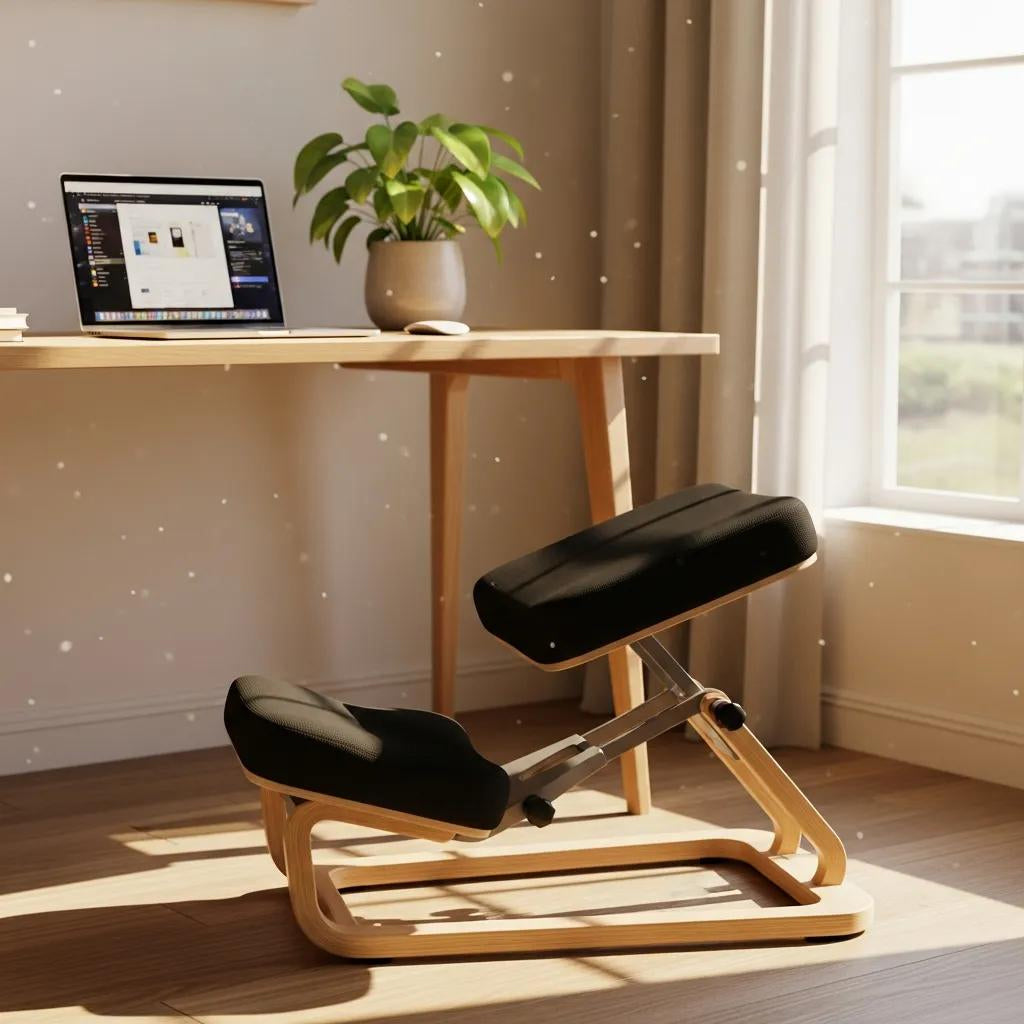
Are Kneeling Chairs Good for Your Health? Posture, Pain Relief and Everyday Wellbeing
A kneeling chair is an ergonomic seat that tilts the pelvis forward and opens the hip angle, encouraging a more neutral spine and less strain on the lower back. By sharing weight between the seat and knee rests, it helps the pelvis rotate forward, preserves the natural lumbar curve and reduces slouching. This article walks you through how kneeling chairs influence posture, back pain, core activation, circulation, digestion and focus, and offers practical advice for choosing and using one safely. You’ll read which kinds of back pain may improve, how “active sitting” can build core endurance over time, and sensible usage patterns to avoid overuse. We pair how they work with straightforward tips and comparison tools so you can decide whether a kneeling chair — or a hybrid ergonomic setup — fits your workspace and wellbeing goals.
How Does a Kneeling Chair Improve Posture and Spinal Alignment?
A kneeling chair nudges the pelvis forward and increases the hip angle, which helps the lumbar spine keep its natural curve and reduces the tendency for the upper back to round. The tilted seat and knee pads work together: the seat supports the pelvis while the knee rest shares some of your weight, preventing the posterior pelvic tilt that leads to slouching. Better alignment lowers strain on the back’s ligaments and encourages balanced use of the muscles that stabilise your spine, producing a more upright and energy-efficient sitting position. Let's look at the ergonomic features to prioritise and how they support your spinal curves.
Many people notice a clear change in their posture right away because the seat angle and redistributed pressure make slouching less comfortable. With the hips more open, the thoracic spine is less likely to collapse forward, so you can sustain an upright position with less conscious effort. That said, some users need an adaptation period or a mix of kneeling and conventional chairs while they build endurance.
What Ergonomic Features Support Natural Spinal Curves?

Key features — seat tilt, knee‑pad placement, a stable base and adjustability — work together to protect the spine’s curves and shift load away from the lumbar discs. A forward‑tilting seat (commonly 10–20°) encourages anterior pelvic rotation and supports lumbar lordosis. Proper knee‑pad positioning shares weight without forcing excessive knee flexion. A sturdy base prevents side‑to‑side wobble that causes compensatory postures, while height adjustment lets you set ergonomically appropriate hip and knee angles for your body. Together, these elements change pelvic mechanics and muscle activation to help maintain spinal alignment during desk work.
When you switch to a kneeling chair, expect altered proprioceptive cues — adjust seat height in small steps and check pelvis and thorax alignment often. Proper setup reduces pressure points and helps your body reach a neutral spine more reliably.
How Does Sitting in a Kneeling Chair Prevent Slouching?
Kneeling chairs reduce slouching by limiting posterior pelvic tilt and by increasing postural feedback through active sitting. The forward seat angle makes it harder for the pelvis to tip backward — the usual trigger for a rounded upper back — while the knee rest provides a gentle counterforce that stabilises the lower body without locking it. That creates a feedback loop: when the pelvis tilts backward, pressure shifts and prompts small corrections that restore alignment, so slouching becomes uncomfortable and less habitual. Over time, this mechanical support and sensory feedback can cut down how often and how long you slouch.
Simple checks — ears over shoulders, shoulders over hips — help reinforce the benefit and reduce upper‑back compensation. Regular microbreaks and short standing intervals complement the chair’s support and prevent fatigue‑related posture lapses.
- The kneeling chair reduces posterior pelvic tilt.
- The forward seat supports lumbar lordosis and a more upright thoracic posture.
- The knee rest shares load and increases postural awareness.
Combine a good setup with movement habits so you don’t trade one poor posture for another.
Can Kneeling Chairs Help Relieve and Prevent Back Pain?
Yes — for many people, a kneeling chair can reduce or prevent certain types of back pain by shifting load away from lumbar discs and lowering the sustained compressive forces that come with slouched sitting. By opening the hip angle and promoting anterior pelvic rotation, these chairs reduce posterior shear and compression on the lumbar spine — common drivers of mechanical lower‑back pain. That reduced load can decrease pain signals related to poor seated posture. Outcomes vary with the type and cause of pain, so anyone with complex, structural or nerve‑related spinal conditions should consult a healthcare professional before prolonged use.
The table below summarises common differences between kneeling and traditional office chairs for lumbar pressure, hip angle and core engagement, so you can weigh options before trying a kneeling chair yourself.
| Seating Option | Attribute | Typical Outcome |
|---|---|---|
| Kneeling chair | Lumbar pressure | Less posterior compression due to anterior pelvic tilt |
| Traditional office chair | Hip angle | Tighter hip angle; greater risk of posterior pelvic tilt and slouching |
| Kneeling chair | Core engagement | Low‑level activation that supports spinal stability |
This comparison highlights how kneeling chairs change mechanics linked to posture‑related pain, though they don’t guarantee relief for every person.
Which Types of Back Pain Are Alleviated by Kneeling Chairs?
Kneeling chairs are most useful for mechanical lower‑back pain and postural discomfort that comes from prolonged, slouched sitting — not for inflammatory conditions or nerve compression. Mechanical pain, often a dull ache made worse by poor posture or long sitting, tends to improve with interventions that restore neutral alignment and reduce compressive loads. If your symptoms stem from a herniated disc with nerve root compression, inflammatory spinal disease or advanced degeneration, seek personalised clinical advice: a kneeling chair may not address neural compression or systemic issues. Use a kneeling chair as one part of a broader approach that includes movement, targeted exercise and professional assessment.
Start with short sessions and monitor symptoms, gradually increasing time as your core endurance and comfort improve.
How Does Pressure Reduction on the Lumbar Spine Work?
Pressure reduction comes from mechanical realignment and changed force vectors: the forward‑tilted seat increases the hip angle and encourages anterior pelvic rotation, restoring lumbar lordosis and reducing posterior disc wedge compression. With a more open hip angle, the spine bears load in a better line with gravity, which lowers shear forces and eccentric loading on posterior structures like ligaments and facet joints. The knee rest shares vertical load, so less bodyweight is concentrated on the ischial tuberosities and lumbar discs. Together, these changes reduce sustained compressive stress and the local biochemical responses that can prolong pain.
To get these benefits safely, use graduated sessions — for example, 20–30 minutes at first — and combine sitting with core and mobility work to support long‑term spinal health.
In What Ways Do Kneeling Chairs Engage and Strengthen Core Muscles?
Kneeling chairs encourage “active sitting”: to stay balanced and upright, you use low‑level, sustained activation of deep abdominals and muscles that stabilise your spine rather than relying entirely on a backrest. Because the seat design limits full posterior pelvic tilt, you naturally recruit muscles like the transverse abdominis, multifidus and erector spinae to stabilise the spine during tasks. Over weeks and months, this repeated, low‑intensity activation can improve core endurance and postural control, helping reduce recurrence of posture‑related discomfort. Active sitting isn’t a substitute for exercise, but it provides a helpful, ongoing stimulus that complements targeted strengthening and therapy when needed.
How Does Active Sitting Activate Abdominal and Back Muscles?

Active sitting in a kneeling chair calls on stabilisers such as the transverse abdominis and multifidus through small, continuous adjustments to keep the torso upright. These muscles work isometrically and intermittently to control segmental alignment rather than create big movements, improving neuromuscular coordination over time. Use simple cues like “lift the ribcage, keep the pelvis neutral”, and limit sits to 20–40 minute blocks with standing breaks to encourage safe activation without fatigue. Pairing chair use with short daily core exercises — planks, bird‑dogs, pelvic tilts — speeds functional gains and helps transfer endurance into everyday movement.
What Are the Long-Term Benefits of Core Strength from Kneeling Chairs?
Over months, measured use of a kneeling chair can build core endurance that reduces how often posture‑related pain flares, increases tolerance for seated tasks and improves spinal control during movement. As your neuromuscular system adapts, you’ll likely rely less on conscious corrections and feel steadier during desk work. These gains also support safer transitions between sitting, standing and lifting, lowering cumulative strain across daily activities. Be realistic: improvements take time and are strongest when ergonomic seating is paired with targeted exercise and varied movement.
- Active sitting uses low‑level, sustained muscle activation.
- Regular, graduated use builds neuromuscular endurance and posture control.
- Combine ergonomic seating with targeted exercise for lasting benefits.
These practical points guide you toward balanced routines that support durable core strength.
How Do Kneeling Chairs Enhance Circulation and Digestion?
Kneeling chairs can help circulation and reduce abdominal compression by opening the hip angle and reducing forward flexion. This lowers pressure on the inguinal and pelvic regions and allows freer venous return from the legs. A larger hip angle eases occlusion beneath the thighs and pelvis, supporting arterial flow and venous drainage and often reducing numbness or pins‑and‑needles during long sitting periods. Less abdominal compression also reduces mechanical interference with digestive organs, which for some people means more comfort after meals and less reflux from slumped posture. These physiological effects are modest but meaningful for anyone sensitive to circulation‑related discomfort at their desk.
The subsections below explain hip‑angle mechanics for blood flow and how better perfusion supports digestion in clear terms.
What Is the Impact of Open Hip Angle on Blood Flow?
An open hip angle improves venous return and arterial perfusion to the legs by removing pressure points that can impede circulation during long sitting. When the hips are tightly flexed, femoral vessels and nearby tissues can be compressed, slowing venous return and increasing pooling; increasing the hip angle reduces that compression and supports capillary flow. The result is less leg heaviness, tingling or numbness for many users and greater comfort over multi‑hour sessions. Simple posture checks and occasional leg movements amplify these circulatory benefits.
These improvements also interact with metabolic and cognitive effects discussed next, since better perfusion supports oxygen delivery and sustained attention.
How Does Improved Circulation Support Organ Function?
Improved circulation from a more open hip angle indirectly helps organ function by improving oxygen and nutrient delivery to peripheral tissues and by reducing mechanical compression of abdominal organs that can slow motility. With less abdominal pressure, gastric emptying and bowel transit may face fewer posture‑related disruptions, easing after‑meal discomfort for some people. Kneeling chairs aren’t a treatment for digestive disorders, but the ergonomic reduction in abdominal pressure can add everyday comfort and steadier energy during work. If digestive symptoms are persistent or severe, seek medical advice.
Combining ergonomic seating with movement, hydration and regular meals helps you get the most digestive and circulatory benefit during the day.
| Feature | Attribute | Benefit |
|---|---|---|
| Open hip angle | Reduces femoral compression | Better venous return and increased lower‑limb comfort |
| Reduced abdominal pressure | Less visceral compression | Greater digestive comfort and lower reflux risk |
| Movement‑friendly design | Encourages microbreaks | Improved systemic circulation and alertness |
This table summarises how chair features translate into circulatory and visceral benefits; consider these along with movement and hydration strategies.
What Are the Cognitive and Productivity Advantages of Using a Kneeling Chair?
Greater physical comfort and improved circulation can mean fewer interruptions and better cognitive stamina, which supports productivity. Pain‑related repositioning, posture adjustments and short breaks fragment attention; by reducing those interruptions through better posture and circulation, kneeling chairs can help you stay focused. Improved venous return and oxygen delivery create a physiological backdrop for alertness, while the postural feedback of active sitting keeps you tuned into your alignment. The following sections unpack how comfort helps focus and how modest circulatory gains may support cognitive performance.
These benefits depend on context — combining ergonomic seating with microbreaks, movement and task variation gives the most reliable productivity gains.
How Does Physical Comfort Boost Focus and Alertness?
Feeling physically comfortable reduces the mental load of managing pain and posture, freeing attention for the task at hand and lowering task‑switching caused by discomfort. With fewer pain‑related interruptions, you can complete longer periods of concentrated work, improving output and quality. Seating that supports spinal alignment also cuts distraction from position‑related aches, letting thoughts stay clearer. Pair comfortable seating with scheduled short breaks to sustain alertness and reduce late‑day dips.
Practical tips: alternate between kneeling and conventional chairs during the day and use timed microbreaks to reset posture and circulation.
Can Better Oxygen Delivery Improve Workplace Productivity?
Improved oxygen delivery via better circulation can support cognitive processes like attention and working memory by keeping neurons well supplied. Seating alone won’t transform performance, but modest perfusion gains plus reduced pain distraction can boost task endurance and decision clarity. To make the most of this, combine ergonomic seating with short movement breaks, hydration and scheduling tasks to match your natural energy cycles.
That combined approach — ergonomic seating plus behavioural microbreaks — produces the most consistent and lasting productivity benefits.
- Alternate between seating modes to avoid fatigue.
- Use timed microbreaks to improve circulation and reset posture.
- Pair ergonomic seating with hydration and focused work blocks.
These simple habits help turn physiological advantages into everyday performance wins.
What Should You Consider When Choosing the Right Ergonomic Kneeling Chair?
Picking the right kneeling chair means checking comfort, adjustability, materials and the session lengths you plan to use. Prioritise seat tilt range, knee‑pad cushioning, base stability, height adjustability and breathable fabrics — these factors determine how well a chair supports spinal alignment while staying comfortable for repeated use. Try a chair in short bursts, test dynamic balance and make sure the knee rest doesn’t cause uncomfortable pressure at the front of the knees before committing to long sessions. The table and checklist below help you compare features and set priorities for your work style.
After these criteria, we explain specific features to look for and how Terra Wellness’s Ergonomic Kneeling Chair aligns with common buyer needs.
Which Features Ensure Comfort and Support?
Comfort and support come from a few interrelated design choices: a stable, low‑profile base to prevent wobble; quality padding on the seat and knee rest to avoid pressure points; and straightforward height and tilt adjustments for personalised setup. Breathable upholstery and resilient foam preserve comfort during multi‑hour sessions, and a modest range of angle adjustment lets you fine‑tune hip and knee geometry for your body. In‑store trials or measuring against your desk height help confirm the chair’s working range fits your workspace. Prefer chairs that allow incremental adjustments rather than fixed angles so you can adapt as tolerance and routines evolve.
Testing and small, gradual changes reduce the risk of discomfort and speed up successful integration into daily use.
| Feature | Attribute | Value |
|---|---|---|
| Comfort padding | Density and thickness | Medium‑firm foam for even pressure distribution |
| Adjustability | Height and tilt range | Adjustable seat height; modest forward tilt options |
| Suitability for long sessions | Breathability and cushion resilience | Breathable fabric; durable foam for multi‑hour use |
Checklist for choosing a kneeling chair:
- Confirm the chair has height and tilt adjustments to match your desk and leg length.
- Try the knee‑rest padding to avoid anterior knee pressure and ensure even load distribution.
- Choose a stable base and breathable materials to stay comfortable during longer sessions.
A chair that meets these checks shortens the learning curve and supports safer, more comfortable use.
How Does Terra Wellness’s Ergonomic Kneeling Chair Stand Out?
Terra Wellness’s Ergonomic Kneeling Chair, part of our Ergonomic Accessories range, focuses on the features people actually need: an adjustable forward‑tilt seat, supportive knee rests and a solid, stable base suitable for home and office. The design promotes neutral spinal alignment and even pressure distribution, matching the buyer criteria above without making clinical promises. We position this chair as one tool in a broader wellness approach — combine it with movement and core‑strengthening habits to support posture and comfort. Compare the chair’s specs to the checklist and feature table to see if it fits your workspace and routine.
- Check the seat tilt range and height against your desk before buying.
- Trial the knee‑rest padding for comfort during a short test sit.
- Use the chair as one element of a wider ergonomic strategy.
These steps help ensure your kneeling chair supports sustained comfort and better posture over time.
Conclusion
Incorporating a kneeling chair into your workspace can significantly enhance your posture, alleviate back pain, and promote core strength. By encouraging active sitting and improving circulation, these chairs contribute to overall well-being and productivity. To experience these benefits firsthand, consider trying a kneeling chair that suits your ergonomic needs. Explore our range of ergonomic solutions today to find the perfect fit for your health and comfort.