





Which features really matter in a rowing machine? A clear guide to choosing equipment that supports whole‑body wellness
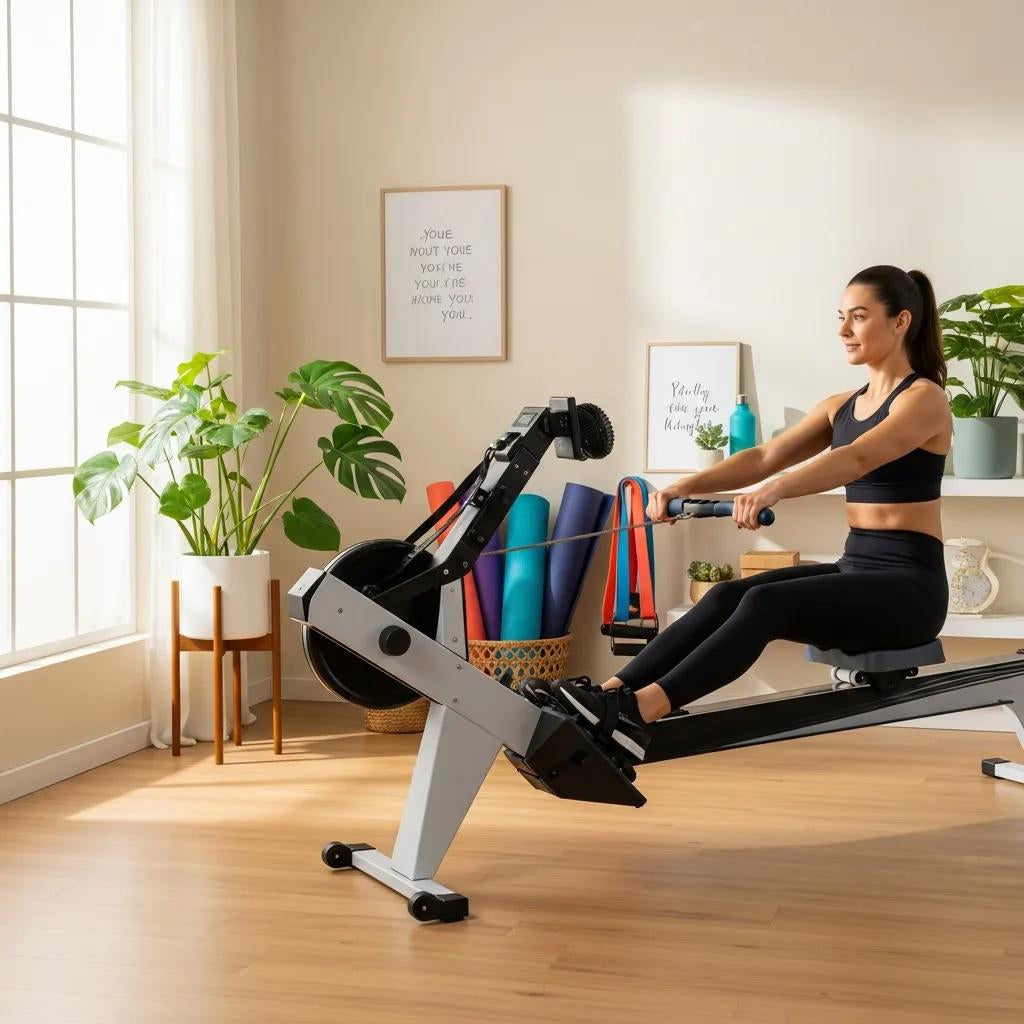
Rowers give you a low‑impact, full‑body workout: powerful leg drive, a stabilising core and an upper‑body pull all in one fluid motion. Because the stroke converts your effort into controllable resistance, these machines scale from gentle aerobic sessions to elite interval training — helping improve cardiovascular fitness and muscular endurance while being kinder on joints. In this guide, we’ll walk through the features that matter most, how each resistance type feels and performs, and which specs indicate long‑term durability and safety. You’ll also see how modern displays and smart features support progress, why ergonomics and noise are important at home, and when a foldable rower makes sense for smaller spaces. Finally, we’ll cover rowing’s role in holistic wellness — the physical and mental benefits plus practical recovery strategies — and how complementary Terra Wellness products can support your cooldown and relaxation. Read on for a practical approach to picking the right rower for your space, goals and recovery plan.
Which rowing resistance types deliver the best workout experience?

Resistance type defines the machine’s feel, responsiveness and suitability for your home — it’s the mechanism that turns each stroke into load and determines noise, upkeep and training fidelity. Air rowers use a fan: the harder and faster you pull, the more resistance you create, which gives immediate, dynamic feedback ideal for intervals and power work. Magnetic and water systems both offer smooth, reliable drag — magnetic is whisper‑quiet and low maintenance, while water provides a closer on‑water sensation. Hydraulic models are compact and more affordable, but they can feel less fluid during long, high‑intensity efforts. Your choice comes down to what matters most: sound level, space, maintenance tolerance and the type of training you want to do.
Here’s a practical comparison of the main resistance types across noise, smoothness, upkeep and best use case:
| Resistance Type | Noise / Smoothness | Maintenance / Initial Outlay | Best For |
|---|---|---|---|
| Air (fan) | Pronounced whoosh; very responsive | Low–moderate; simple wear parts, good long-term value | Athletes, interval work, gym environments |
| Magnetic | Very quiet; very smooth | Low maintenance; good value for money | Apartments, quiet home use |
| Water | Moderate sound; natural, fluid feel | Tank care required; often heavier, a solid investment | Rowing purists, realistic stroke feel seekers |
| Hydraulic | Relatively quiet; variable smoothness | More affordable but higher wear under heavy use | Small spaces, more budget-friendly buyers |
That side‑by‑side view highlights the trade‑offs so you can match resistance to your goals and living situation. Next, we’ll look closer at how air resistance behaves and who benefits most from it.
How does air resistance work — and who benefits most?
Air rowers create drag with a flywheel and fan: faster pulls move more air, so resistance increases naturally with effort. That makes them excellent for sprint intervals and power training because they reward strong, fast strokes with immediate feedback. The feel has some of the variability of water, but air rowers are typically louder because of the fan — something to consider if you share walls or live in an apartment. If you prioritise explosive power and precise watt/split feedback, an air rower paired with a performance monitor is often the right choice.
Air machines shine in gyms and dedicated training spaces where their dynamic load supports hard efforts. If quieter operation is a priority at home, magnetic or water systems are usually better choices, which brings us to the benefits and compromises of magnetic, water and hydraulic resistance.
What are the benefits of magnetic, water and hydraulic resistance?
Magnetic systems use adjustable magnets acting on a flywheel to create a very consistent, quiet resistance — ideal for steady aerobic work in shared spaces. Water systems use paddles in a tank to produce smooth, natural drag that many describe as closest to rowing on the water; tanks need occasional cleaning, and the units can be heavier. Hydraulic pistons make compact, more affordable rowers possible; they’re space‑efficient but often lack the long, fluid stroke that endurance rowers prefer. Each type has clear pros and cons depending on noise tolerance, storage and how you train.
- Magnetic: Whisper‑quiet, low upkeep — great for shared homes.
- Water: Natural, on‑water feel with pleasing aesthetics; moderate maintenance.
- Hydraulic: Portable and more budget-friendly; less suited to high‑volume training.
Use those trade‑offs to prioritise what matters day‑to‑day. Next, we’ll cover the other features that determine long‑term satisfaction.
What essential features should you look for in a home rowing machine?
Beyond resistance, a few core features shape how well you’ll train, track progress and stay comfortable. A clear performance monitor that shows stroke rate, split, distance and watts helps you follow structured plans. Ergonomics — seat comfort, rail length, handle shape and adjustable footplates — keeps your technique efficient and lowers injury risk. Practical factors like footprint, storage and noise determine how well the machine fits your home. Match features to your goals: power athletes need accurate watt metrics, while casual users may value comfort and quiet above all.
Here’s a compact checklist of must‑have features for home buyers:
- Display monitor with useful metrics: Stroke rate, split, distance and watts for tracking progress and connecting to apps.
- Comfortable seat and a long rail: Let you reach full leg extension and row longer without discomfort.
- Adjustable footplates with secure straps: Ensure safe, efficient force transfer for varied shoe sizes.
- Stable frame and adequate weight capacity: Prevents wobble during hard strokes and supports longevity.
- Quiet resistance options: Magnetic or water systems reduce disturbance in shared homes.
- Storage or foldability with wheels: Makes it easier to share living space or store between sessions.
- Bluetooth / ANT+ connectivity: Enables apps, guided classes and structured workouts.
- Durable after-sales support and replaceable parts: Protects your purchase and simplifies maintenance.
This checklist will help you narrow choices quickly. Below, we explain how displays and connectivity actually improve sessions and recovery.
The table below links each core feature to why it matters and how it affects your experience when training or recovering.
| Feature | Why it matters / Key benefit | User impact |
|---|---|---|
| Display Monitor | Shows stroke rate, split, watts and distance | Enables structured workouts, progress tracking and app coaching |
| Ergonomic Seat & Rail | Supports full leg drive and efficient posture | Reduces injury risk and improves stroke economy |
| Adjustable Footplates | Secure force transfer and comfort | Maintains consistent technique and reduces slippage |
| Noise Level | Determines suitability for shared spaces | Influences training times and household harmony |
| Connectivity | Bluetooth/ANT+ for apps and streaming | Boosts motivation through classes, challenges and logging |
Knowing these features helps you shortlist machines that match your training style and home constraints. When you test models, pay particular attention to ergonomics and display clarity — we cover both next.
How do display monitors and smart features improve your sessions?
Monitors translate your motion into actionable numbers: stroke rate shows cadence, split time measures 500m pace, watts quantify power and distance tracks total workload. Those metrics let you follow structured progressions, perform intervals and measure improvement objectively. Smart features like Bluetooth and app integration unlock guided workouts, virtual racing and automated logging — useful for anyone who benefits from coaching cues or social accountability. Beginners may be fine with basic stroke/time readouts; experienced rowers typically want watt‑based zones and workout import/export.
Connectivity also streamlines modern training: pairing with apps captures sessions automatically, enables remote coaching and connects you to community challenges that keep motivation high. A clear, legible display removes friction and helps you stay focused, which drives long‑term consistency and results.
Remember that tracking intensity also helps the timing of cooldowns and restorative practices. For post‑row recovery, Terra Wellness offers grounding mats, home saunas and targeted accessories designed to sit neatly in a cooldown routine and support relaxation after intense efforts.
Why are ergonomics and comfort so important for effective rowing?
Ergonomics — seat padding, rail length, handle shape and sturdy footplates — determine whether you can row with good technique and without pain. A short rail shortchanges leg extension and reduces stroke length, which limits power and feels uncomfortable for taller users. A rail that’s long enough for full leg drive supports correct sequencing and better muscle engagement. Handle shape and seat comfort matter for longer sessions, while rigid, adjustable footplates with secure straps prevent slippage. Poor ergonomics forces compensatory movements and raises the risk to the lower back, shoulders and knees.
When testing a machine, take a few full strokes at different intensities to check seat travel, handle return and footplate security. Those quick checks are strong predictors of whether the rower will support consistent, safe training. Next, we’ll look at space‑saving foldable options for tighter homes.
How can foldable rowing machines make home fitness easier?
Foldable and compact rowers shrink the footprint when not in use, trading some frame mass or fixed stability for convenience. Many models stand upright or fold the rail, which makes them suitable for multipurpose rooms, apartments and home offices. Choosing a foldable model means balancing portability with the need for a stable base during harder efforts — some compact designs flex more under heavy use. Measure your available floor space and think about your training intensity to decide whether foldability is a priority or a compromise.
Here are practical storage and use examples to consider when evaluating a compact rower:
- Upright storage: Stand the rower vertically in a corner or closet to free floor space.
- Fold‑and‑lean: Hinged rails fold to a smaller length for under‑bed or cupboard storage.
- Wheeled transport: Lightweight frames with wheels make it easy to move the unit between rooms.
Those options show how a foldable model can let you keep a routine without dedicating permanent floor space. Next, we cover the storage measurements to check before you buy.
What are the real advantages of foldability and compact storage?
Foldability frees up usable floor area and makes it realistic to keep a full workout routine in a multipurpose home. Full‑size rowers need clearance for the rail and sliding seat; foldable designs reduce that footprint and often stand under a metre wide when stored upright. Wheels and lighter frames make moving the unit for cleaning or switching rooms simple. Before buying, measure storage height, door widths and floor surfaces so the folded machine fits and can be manoeuvred without damage.
Plan placement and protect flooring to keep access straightforward and protect your home — these small checks make a big difference for long‑term use.
How does the noise level affect your home rowing experience?
Noise matters in shared living spaces and directly affects when you can train. Different resistance types have distinctive sound profiles: magnetic rowers are the quietest, producing little mechanical noise; air rowers create a broadband whoosh that rises with stroke speed and can be disruptive in apartments; water rowers make a softer slosh that many people find more pleasant. Simple mitigation — placing the rower on a dense mat, fitting rubber feet, or locating the unit away from shared walls — can noticeably lower perceived noise.
Choosing a quieter resistance type and applying basic sound‑absorption measures gives you more flexibility in training times and reduces friction with housemates or neighbours.
How does rowing support holistic wellness and recovery?
Rowing supports whole‑body wellness by combining cardiovascular conditioning, muscular endurance and low‑impact joint loading, while also offering mental benefits through rhythmic movement and paced breathing. Physically, rowing engages major muscle groups — quads, hamstrings, glutes, back and arms — improving posture and metabolic conditioning with relatively low joint stress. Mentally, the repetitive, focused nature of the stroke promotes stress reduction and can have a meditative effect that supports mood and concentration. For recovery, rowing’s low impact makes it suitable for active recovery days, while cooldowns and restorative modalities help manage inflammation and soreness after harder sessions.
Rowing’s key benefits at a glance:
- Full‑body conditioning: Engages legs, core and upper body for balanced strength and aerobic gains.
- Low‑impact cardio: Raises heart rate without the joint stress of running, supporting longevity.
- Mental well-being: Rhythmic movement and breath control reduce stress and sharpen focus.
These benefits guide recovery choices, so you preserve gains and lower injury risk. Below, we outline how Terra Wellness products can slot into a post‑row recovery routine.
What are the physical and mental health benefits of rowing?
Physically, rowing boosts cardiovascular capacity, builds muscular endurance across the posterior and anterior chains, and develops functional strength that transfers to everyday tasks. The coordinated leg drive and core stabilisation can improve posture and correct imbalances when programmed correctly. Because it’s low-impact, rowing is suitable across ages and fitness levels with less osteoarticular stress than many high‑impact options. Mentally, consistent rowing sessions relieve stress, lift mood and encourage breath awareness similar to mindful practice — all of which support better recovery and sleep.
Framing these benefits helps prioritise integrated recovery tools — active cooldowns, mobility work and restorative modalities — to maximise training adaptations while reducing overuse risk. The next section suggests how complementary wellness products can be used.
How can Terra Wellness products support post‑rowing recovery?
After intense or extended sessions, good recovery lowers sympathetic drive, eases muscle tension and helps circulation. Terra Wellness offers grounding mats, home saunas and recovery accessories that fit naturally into a cooldown routine. For example, a short sauna session can encourage peripheral vasodilation and help relax tight muscles; a grounding mat used during seated cooldown or stretching can support a calming ritual. Tools like foam rollers and massage devices target specific muscle groups for myofascial release and improved mobility. These products complement stretching, hydration and sleep routines to help athletes and recreational rowers stay consistent over time.
Used together, equipment and wellness practices support both physical repair and mental restoration after rowing workouts. Next, we’ll look at build quality factors that affect machine lifespan and safety.
What should you consider about build quality and durability in rowing machines?
Build quality determines how a rower performs under regular use and how safely it handles load; materials, weight capacity and after-sales support tell you what to expect for longevity and serviceability. A sturdy frame with corrosion‑resistant coating and quality bearings lasts longer than cheaper alternatives, while higher weight ratings increase stability and reduce wear on moving parts. After-sales support and access to replaceable components are practical signals of manufacturer confidence and future ownership considerations. Assessing these elements helps you match a rower to your usage and training demands.
When judging durability, inspect frame material, load ratings and after-sales support to predict long‑term performance. The table below summarises common components and what to look for.
| Component | Material / Max Load / After-sales Support | Durability / Safety Implication |
|---|---|---|
| Frame | Steel or aluminium; check max load | Steel offers strength; aluminium resists corrosion in humid environments |
| Seat & Rail | Precision bearings, longer rail length | Smoother seat travel reduces wear and improves comfort |
| Foot Pedals | Sturdy plates, adjustable straps | Secure grip lowers slippage and injury risk |
| Resistance Mechanism | Fan, magnets, water, pistons | Replaceability and moisture exposure affect maintenance needs |
Choosing a machine that fits your weight, training volume, and after-sales support expectations will deliver safer, more consistent performance. Next, we explain why weight capacity matters.
Why is weight capacity important for safety and performance?
Weight capacity affects stability, component wear and after-sales support; a sensible rule is to pick a rower with a maximum load at least 20% higher than your own weight plus typical clothing and accessories. Working near or above capacity increases stress on rails, bearings and the chassis, which can shorten component life and complicate after-sales support. Capacity also influences how confidently you can perform explosive movements and high‑intensity intervals without frame flex. Choosing a conservatively rated rower improves safety and protects performance over time.
Reading specs carefully and leaving a safety margin reduces maintenance headaches and matches your equipment to long‑term plans. The next section covers material trade‑offs and after-sales support considerations.
How do frame materials and after-sales support affect longevity?
Common frames use coated steel for strength and aluminium for corrosion resistance and lighter weight. Composite parts can lower initial outlay but may sacrifice stiffness under heavy load. After-sales support length and clarity are useful indicators of manufacturer confidence — check structural components, wear parts and electronics. Regular maintenance — wiping sweat from rails, checking fasteners and servicing resistance systems — extends lifespan regardless of material. Choosing durable materials and sensible after-sales support reduces long-term ownership considerations and supports consistent training over the years.
This completes the technical and recovery guidance to help you choose a rowing machine that supports both performance and whole‑body wellness goals.
- Measure your space and ceiling height before choosing a rower to ensure it fits and stores safely.
- Prioritise the resistance type that matches your training: air for power, magnetic for quiet, water for a realistic feel.
- Choose ergonomic features — long rail, comfortable seat, adjustable footplates — to protect technique and comfort.
These practical steps tie the guide together and help turn knowledge into a confident purchase. For recovery tools that pair well with rowing, consider Terra Wellness grounding mats, home saunas and specialised recovery accessories to include in your cooldown routine.