





Why pick a titanium chopping board over wood? Hygiene, durability and everyday benefits
Titanium chopping boards — made from titanium or titanium-finished alloys — offer a non-porous, corrosion-resistant alternative to traditional wood and plastic. In plain terms: they’re easier to keep clean, less likely to stain or hold odours, and built to last. This guide explains how those strengths translate to safer, more reliable kitchen routines. You’ll learn how titanium limits microbial hideouts, how it compares to wood for knife care and day-to-day use, and what cleaning and lifecycle practices suit Australian homes. We cover core benefits, a side-by-side performance view with wood, simple cleaning steps, sustainability and wellness considerations, tips for Australian kitchens, and quick answers to common buyer questions.
Key benefits of titanium chopping boards
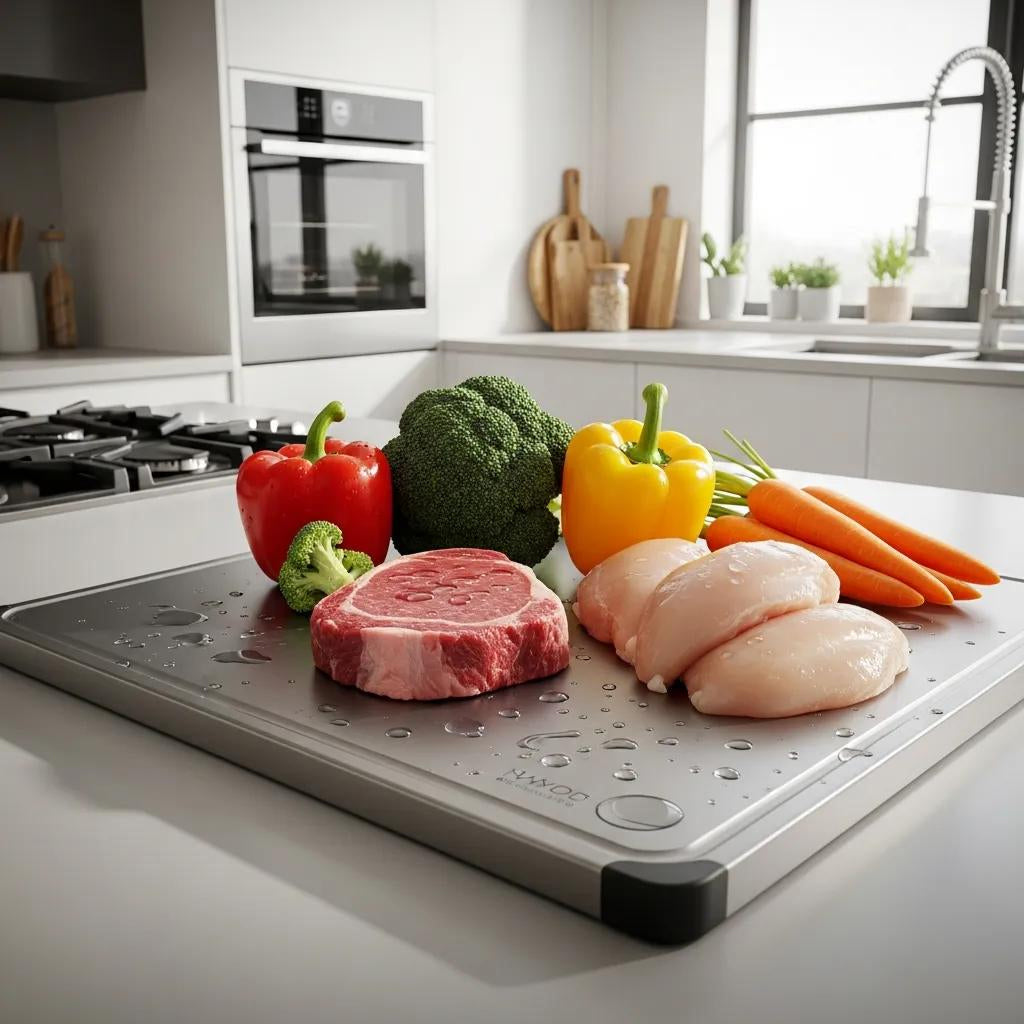
Titanium boards stand out because their surface doesn’t absorb liquids or form microscopic cracks the way porous materials do. That non-porous finish reduces bacteria retention and lingering smells, and the metal’s resistance to warping and cracking means the board keeps its shape even after repeated washing. Smooth, hard surfaces are easier to sanitise, which lowers cross-contamination risk and helps keep flavours clean.
They’re particularly handy for higher-risk tasks — think raw meat and seafood — because stains and microbial ingress are far less likely on a non-porous surface. Below is a quick list of the primary advantages to help when you’re comparing options.
Titanium chopping boards offer the following core benefits:
- Better hygiene: Non-porous surface makes bacteria, odours and stains easier to remove.
- Long-lasting: Resists warping, cracking and everyday wear.
- Low maintenance: Simple cleaning routines keep the surface hygienic.
- Safer food prep: Helps lower cross-contamination risk during busy prep.
- Wellness-friendly: Creates a cleaner, calmer cooking space.
These practical strengths make titanium an attractive choice for people who prioritise a long-lasting, food-safe cutting surface. You'll find many titanium cutting boards on the market that emphasise non-porous hygiene, resistance to odours and stains, dishwasher compatibility, and long-term durability. These products often frame material choice as a way to support a healthier, lower-stress kitchen routine.
How titanium compares to wood for cutting board performance

Titanium and wood differ in porosity, maintenance needs and how they interact with knives — and those differences shape everyday performance. Titanium’s non-porous face resists liquid absorption and microbial entry, while wood’s grain can trap moisture and residues unless it’s carefully treated and dried. Physically, titanium is harder and less forgiving than wood, which can affect knife-edge wear and the feel of cutting. In terms of care, titanium usually tolerates dishwasher cycles and stronger sanitisation better than untreated wood, which needs oiling, hand washing and controlled drying.
For a quick comparison, the table below summarises hygiene, durability, maintenance, knife impact and sustainability outcomes.
| Material | Attribute | Practical Outcome |
|---|---|---|
| Titanium | Porosity | Non-porous surface prevents liquid absorption and microbial ingress |
| Wood | Porosity | Porous grain can trap juices, odours and bacteria without proper care |
| Titanium | Durability | Resists warping, cracking and frequent dishwasher cycles |
| Wood | Durability | Can swell, split or need earlier replacement if mistreated |
| Titanium | Maintenance | Simple sanitisation; often dishwasher-safe and odour resistant |
| Wood | Maintenance | Requires hand washing, oiling and careful drying to last |
This snapshot shows how titanium’s chemistry and build translate into lower maintenance and improved hygiene. The sections below unpack hygiene details and the effect on knives.
Hygiene: titanium versus wood
Titanium’s smooth, non-porous finish reduces tiny pockets where bacteria can survive, so sanitising after high-risk tasks like cutting raw chicken is more predictable. Wood’s microscopic pores and grain channels can hold liquids and residues unless you clean and dry it thoroughly. With titanium, you typically rinse, wash with mild detergent and optionally run it through the dishwasher; with wood, you’ll want hand washing, upright drying and occasional food-safe oiling to help seal the grain. Many kitchens still use separate boards for raw meat and vegetables, but titanium lowers the cleaning burden thanks to its surface resistance.
These practical differences explain why some professional and wellness-minded kitchens prefer non-porous cutting surfaces.
Knife care: how each material affects sharpness
Titanium’s harder surface can speed edge wear if your blade repeatedly hits the board rather than slicing through food. Wood offers a bit of “give,” which is gentler on edges and can extend the time between sharpenings. To balance durability and blade care on a titanium board: use a controlled cutting technique, choose knives with good edge retention, keep a dedicated wooden or HDPE board for delicate slicing, and sharpen regularly. Simple technique changes — avoid dragging the blade across the board and slice with a clean motion — will also reduce dulling. Knowing these trade-offs helps you pick the right board for each task and protect your knives over time.
Why are titanium boards easy to clean and maintain

Titanium is straightforward to keep clean because it won’t absorb liquids or organic residues — detergents and heat can work directly on surface contaminants rather than chasing stains inside the material. Routine cleaning is therefore quicker and more effective: a rinse, a wash with dish soap and a thorough dry usually do the job, and many titanium boards handle household dishwasher cycles without damage. Because the surface resists odour and staining, you’ll need fewer deep-clean sessions, and common sanitising agents perform well on non-porous metal.
Below is a practical table comparing cleaning methods and typical outcomes for titanium and wood.
Practical cleaning methods and outcomes:
| Surface Type | Cleaning Method | Resistance / Outcome |
|---|---|---|
| Titanium | Hand wash with detergent | Removes food residue quickly; surface dries with minimal staining |
| Titanium | Dishwasher cycle | Generally safe; surface resists warping and odour retention |
| Titanium | Sanitiser (diluted bleach or food-safe sprays) | Effective; sanitiser contacts microbes directly without being absorbed |
| Wood | Hand wash + immediate drying | Cleans surface, but grain may retain micro-residue if not dried properly |
| Wood | Periodic oiling | Restores the surface barrier but does not fully prevent microbial ingress |
| Wood | Deep sanitise (requires careful drying) | Less predictable outcomes due to porosity |
To make cleaning simple, follow this short checklist tailored for titanium boards.
A simple cleaning checklist for titanium boards:
- Rinse straight after use to remove loose debris.
- Wash with warm soapy water and a soft sponge to clear residues.
- Use the dishwasher for deep cleaning only if the manufacturer confirms it’s safe.
- Sanitise occasionally with a food-safe product after high-risk tasks.
- Dry completely and store flat or upright in a dry spot to protect any non-metal parts.
Stick to these steps, and a titanium board stays hygienic with less effort than many wooden alternatives, ready for frequent use without persistent odours or stains.
Are titanium boards dishwasher-safe and odour-resistant?
Many titanium chopping boards are designed to handle household dishwasher cycles and strong detergents because titanium resists corrosion and dimensional change that can affect wood. Dishwasher compatibility can cut down on manual scrubbing after raw meat prep. Titanium’s odour resistance comes from its inability to trap volatile compounds in pores — food residues remain on the surface where heat and detergent remove them. Still, always follow the manufacturer’s guidance, especially to protect any bonded rubber feet, adhesives or non-metal components. After a dishwasher cycle, towel-dry or air-dry in a ventilated area to avoid water spots and keep the board ready to use.
Regular drying and occasional sanitisation preserve odour resistance and extend the usable life of the board in busy kitchens.
How non-porous titanium prevents bacteria and stains
A continuous, non-porous titanium surface doesn’t offer microscopic crevices for bacteria to colonise, so contaminants stay on the surface where cleaning agents can reach them. Staining is less likely because juices and pigments can’t sink into pores — liquids bead and wipe away more easily. Practically, this makes cross-contamination control more predictable: a disinfectant spray or dishwasher run contacts bacteria directly and reduces counts quickly. For high-risk tasks like raw poultry, that predictability can make a real difference in lowering residual contamination and keeping flavours clean.
In short, a non-porous barrier equals easier sanitisation — a key reason many health-focused kitchens favour these kinds of surfaces.
How choosing titanium ties into sustainable and wellness-minded kitchens
Picking a titanium chopping board can align with sustainability and wellness goals because a long-lived board means fewer replacements and less waste over time. Durable surfaces that resist cracking and staining avoid early disposal and the embodied carbon of repeatedly buying new boards. From a wellness point of view, a hygienic surface reduces everyday worry about food safety and simplifies cleaning rituals, which can make the kitchen a calmer space. For families, households cooking for older adults, or anyone prioritising food safety, these combined benefits can improve day-to-day quality of life.
The table below links lifecycle attributes to sustainability implications so you can weigh the trade-offs clearly.
| Entity | Lifecycle Attribute | Sustainability Implication |
|---|---|---|
| Titanium board | Long service life | Fewer replacements reduce material consumption and waste |
| Titanium board | High durability under cleaning cycles | Less frequent disposal due to wear or damage |
| Wood board | Shorter usable life if poorly maintained | More frequent replacement increases resource use |
| All boards | End-of-life recyclability | Metal components are often recyclable; composite parts can be harder to recycle |
| Usage patterns | Cleaning frequency & method | Careful cleaning reduces the need to replace boards due to staining or damage. |
This comparison frames titanium as an investment that can lower long-term waste while supporting a cleaner kitchen environment.
How titanium’s longevity supports eco-friendlier choices
Titanium resists structural wear from repeated washing and daily use, so a single board can remain functional for many years compared with boards that crack or split and need replacing. Fewer replacements mean less manufacturing and transport demand over time. When possible, choose boards with removable or separable parts (for example, detachable non-slip feet) to improve recycling options at end-of-life. Treating a cutting board as a durable kitchen tool rather than a disposable item reduces consumption and the associated environmental footprint.
This longevity case complements the hygiene and wellness benefits by keeping high-quality surfaces in use instead of cycling through cheaper, shorter-lived alternatives.
How a hygienic cutting surface contributes to overall well‑being
Having a hygienic board reduces the mental load and worry around food safety — especially important for households with children, older adults or immunocompromised members. Easier cleaning routines free time and reduce the stress of constant upkeep. Preventing cross-contamination also lowers household risk of foodborne illness, directly supporting family health. Framing kitchen hygiene as part of everyday wellness shifts the choice of surface from a purely practical decision to one that contributes to peace of mind and safer mealtimes.
This wellness perspective ties material properties (non-porous, durable) to benefits that go beyond the technical details.
What Australian consumers should know about titanium chopping boards?
Australian kitchens range from humid coastal homes to drier inland houses. Titanium performs well across these conditions because of its corrosion resistance and tolerance for dishwasher use. Still, local factors like high-temperature dishwashing, hard water minerals and storage in humid cupboards can affect finishes and non-metal accessories, so modest care adjustments are sensible. When buying locally, check material grade, surface finish and anti-slip features, and prefer sellers who clearly state construction and care instructions.
The sections below cover typical performance in Australian kitchens and where to find quality products.
Performance in Australian kitchen conditions
Titanium’s corrosion resistance and dimensional stability make it a good fit for humid coastal environments where wood might warp or absorb moisture. Frequent dishwasher use, common in many Australian homes, is generally compatible with titanium, but inspect non-metal parts such as bonded slip strips or adhesives for dishwasher compatibility. In humid interiors, dry boards thoroughly after cleaning and avoid storing them in closed, damp cupboards to prevent accessory wear. Following these simple steps helps titanium boards keep their hygienic properties and appearance even under heavy use.
Knowing how your appliances and local climate behave helps you get the best lifespan from the board.
Where to find quality titanium cutting boards in Australia
Quality titanium boards are available from specialist kitchenware stores, direct brand retailers with full product details, and selected online marketplaces that stock premium home-and-kitchen lines. When evaluating sellers, look for clear material descriptions (titanium or titanium finish), explicit cleaning guidance, and practical features like anti-slip pads or juice channels. Always check product specifications and care instructions before you buy to ensure it meets your needs.
Common questions about titanium vs wood cutting boards
People often ask about knife dulling, care routines, task suitability and whether titanium is practical for everyday use. Below are concise answers to the most frequent concerns, with simple mitigation steps where relevant.
Do titanium cutting boards dull knives more than wood?
Yes — titanium’s harder surface can dull blades faster than softer wood, though the extent depends on blade steel and cutting technique. To limit dulling: use knives with strong edge retention, sharpen on a regular schedule, avoid dragging the blade across the board, and consider a wooden or plastic board for delicate slicing. Many cooks use titanium for heavy-duty, high-risk prep (raw meat) and a softer board for fine slicing to get the best of both worlds.
These steps help you keep knife performance without giving up titanium’s hygiene advantages.
How to care properly for a titanium chopping board
Daily care is simple: rinse off debris, wash with warm soapy water or use the dishwasher if the manufacturer allows it, then dry thoroughly. For weekly or after high-risk use, sanitise with a food-safe disinfectant and check non-metal parts like rubber feet for wear. Avoid abrasive tools that could scratch any protective finish, and store the board in a dry place to protect bonded components. Immediate cleaning after raw meat prep plus occasional sanitisation keeps the surface safe and preserves appearance and function over the long term.
Following this routine minimises microbial risk and helps the board last in busy kitchens.