





Why choose a titanium cutting board: smart benefits for your kitchen
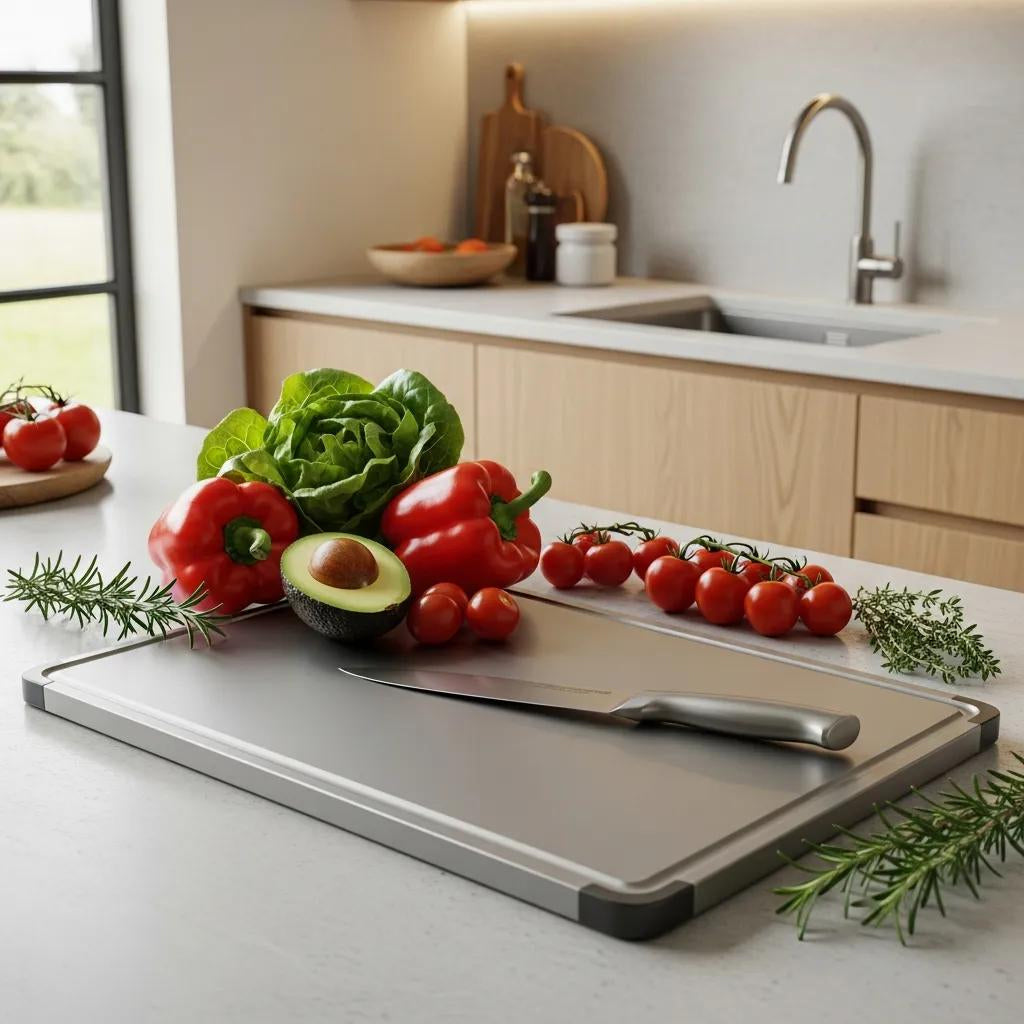
Titanium cutting boards offer a hygienic, long-lasting alternative to traditional wood or plastic. Their non-porous surface and corrosion resistance mean food particles and liquids can’t sink into tiny crevices. This helps reduce bacterial hiding places and stops lingering odours, making food prep feel cleaner and safer. We'll explore how titanium boards support kitchen hygiene, why they resist warping and staining, how they interact with your knives, and the simple upkeep that keeps them working day after day. If you’re concerned about microplastics, chemical leaching or replacing boards frequently, titanium can help by removing plastic shedding and lasting far longer under heavy use. Discover the straightforward advantages of choosing and caring for a titanium chopping board for all your everyday cooking.
What makes titanium cutting boards hygienic and safe for food prep?

The hygiene advantage of a titanium board comes from its non-porous surface and inert nature: liquids can’t be absorbed, bacteria have far fewer places to cling, and odours are less likely to build up. Simply put, without tiny pores to trap moisture and food debris, microbes have fewer hiding spots and sanitisers work on an exposed surface. Let's look at how titanium, wood and plastic behave in everyday kitchen use so you can see the practical differences and choose the right surface for safer, quicker clean-ups.
Because titanium doesn’t absorb residues, food and moisture stay on the surface, where dish soap or a sanitiser will remove them reliably. That makes the board quicker to dry and simpler to disinfect than a deeply scored plastic board or a split wooden board. When you prep raw meat then vegetables on the same surface, titanium’s behaviour helps reduce the chance of hidden contamination, which is why many health-minded households choose non-porous boards as part of their routine food safety.
Titanium also stacks up well against wood and plastic for odour, staining and microplastic risk. Wood can have some natural antimicrobial properties, but it remains porous and can trap juices; plastic boards can develop deep cuts and shed tiny particles over time that may end up in food. The table below summarises these hygiene attributes so you can match the surface to your cooking needs.
| Material | Surface Type | Hygiene Benefit |
|---|---|---|
| Titanium | Non-porous, smooth | Blocks fluid absorption and bacterial hiding spots; easy to sanitise |
| Wood | Porous, fibrous | Can absorb juices and trap microbes despite some natural antimicrobial compounds |
| Plastic | Becomes porous when scored | Can hold cut marks and shed microplastics; harder to sterilise fully |
This comparison shows why a non-porous, inert surface often gives clearer, more controllable hygiene outcomes in everyday cooking.
How does titanium’s non-porous surface prevent bacteria and odours?
A non-porous surface has no tiny cavities for liquids or organic matter to hide in, and titanium’s engineered finish delivers that consistently. Because residues sit on the surface rather than being drawn into the material, there are fewer places for bacteria to colonise, and persistent odours are less likely to form. Practically, a wiped and rinsed titanium board dries faster and responds better to sanitisers than a heavily scored plastic board or split wood. For home cooks, this means shorter cleaning routines and a lower risk of residual contamination after handling raw proteins or strong-smelling ingredients like garlic.
Why is a titanium cutting board better for kitchen hygiene than wood or plastic?
Titanium outperforms wood and plastic on hygiene mainly because it avoids both microscopic absorption and particle shedding, giving a stable surface that resists mechanical breakdown. Wood can initially slow bacterial growth in some cases, but its porous grain still lets fluids and spores settle over time. Plastic tends to score, creating niches that are harder to clean, and damaged plastic can shed micro-particles that mix with food. Metal surfaces don’t share that shedding issue, and titanium’s resistance to staining and odour absorption keeps what you see aligned with microbial safety. These differences matter during tasks like trimming raw meat or preparing acidic fruits, where a board’s long-term behaviour affects food-safety outcomes.
How does the durability of titanium boards benefit your kitchen investment?

Choosing a durable cutting board, such as one made from titanium, gives long-term value because it stays stable and functional through heavy use – so you don’t need to replace it often. Titanium’s high strength-to-weight ratio and corrosion resistance help it resist warping, cracking and stubborn staining that can shorten the life of other boards. For homeowners, that translates into less waste and fewer interruptions for replacement.
| Material | Wear Attribute | Typical Outcome |
|---|---|---|
| Titanium | Resistant to warping and cracking | Long service life in humid or high-use kitchens |
| Wood | Can warp with water exposure | Requires periodic sanding and eventual replacement |
| Plastic | Scores and deforms with heat | Visible cuts and potential microplastic shedding |
This summary explains why a long-lived surface can be a more sustainable choice.
What makes titanium resistant to warping, cracking and staining?
Titanium’s inherent strengths – its tensile strength, corrosion resistance and stable surface – give it stability in the humid and variable conditions of many Australian kitchens. Unlike wood, which swells and shrinks with moisture, or low-grade plastics that soften under heat and score under knives, titanium holds its shape and resists permanent surface change. Stains are less persistent because pigments can’t penetrate the surface, so discolouration is usually superficial and removable with simple cleaners. These behaviours mean heavy chopping and frequent washing are less likely to cause progressive degradation, reducing replacement frequency and household waste.
How does long-lasting durability support sustainable kitchenware choices?
Durable kitchenware reduces the resources used for repeated replacements and lowers household waste. A long-lasting titanium board fits a kitchen where robust investments replace short-lived items. This approach matches modern sustainability thinking: favour longevity over constant renewal. Choosing durable pieces in one area often encourages other household purchases toward the same mindset, multiplying environmental benefits across your home.
Do titanium cutting boards protect your knives and preserve blade sharpness?
Yes – titanium boards can be kinder to knives than glass or very hard steel surfaces because titanium offers a balance of structural resilience and a degree of forgiveness compared with extremely hard, knife-blunting materials. Titanium’s surface hardness is lower than tempered glass or some tool steels that quickly blunt edges, so titanium typically reduces edge wear while still providing a stable cutting plane. The short table below compares surface hardness and expected blade impact to help you choose the right pairing for your knife set.
| Surface | Hardness Characteristic | Blade Impact |
|---|---|---|
| Titanium | Moderately hard, slightly forgiving | Gentler edge wear than glass or stone |
| Glass | Extremely hard, brittle | Fast dulling and chipping risk |
| Stainless-steel slab | Very hard, unforgiving | Accelerated edge rounding and wear |
That comparison leads naturally to practical knife-care guidance when using a titanium board, which we cover next with clear, actionable steps.
How is titanium gentler on knife edges compared to glass or steel surfaces?
Titanium’s relative softness compared with hardened glass or some bench steels means knife edges meet a less abrasive surface and are less prone to micro-chipping when used correctly. The metal’s slight give spreads impact more evenly across the blade edge compared with brittle glass that concentrates force and dulls quickly. For home cooks, this usually means fewer sharpening cycles and a more consistent cutting feel than using glass or heavy steel slabs.
What are the best practices for knife care when using a titanium cutting board?
Adopt a few simple, repeatable habits to maximise blade life with a titanium board: use correct cutting technique, hone regularly and sharpen only when performance drops noticeably, and avoid twisting or levering motions that stress the edge. Hone after every few uses to realign the edge and schedule full sharpening as needed rather than on a fixed timetable. Pair the board with quality steel knives whose hardness you know, and avoid striking the blade tip against hard edges. These small routines help blades perform longer and make the titanium surface a reliable partner in daily prep.
Why is a titanium cutting board a healthier, non-toxic choice for your kitchen?
A titanium board is a non-toxic option because titanium is chemically inert in normal food-prep conditions and won’t leach microplastics or plasticisers the way damaged plastic boards can. That inertness reduces potential chemical exposure pathways and removes the microplastic contamination risk tied to scored plastics – a clear match for low-toxin household goals. Health advantages include cleaner surfaces, simpler sanitation and fewer unknown contaminants in your meals. Below, we explain how titanium removes common plastic-related concerns and supports a cleaner baseline for food safety.
Titanium cannot fragment into polymer micro-debris during cutting and washing the way plastics can when they’re repeatedly scored or heated. When plastic boards develop deep cuts, microscopic particles can detach and mix with food; titanium does not shed that way, so it removes one tangible source of dietary microplastic exposure. Choosing an inert metal surface therefore reduces a measurable contamination vector and supports safer handling of high-contact foods like minced meat or citrus.
The advantages of a chemical-free, microplastic-free cutting surface go beyond contamination avoidance: they also make daily cleaning simpler and support a low-tox lifestyle. Key benefits include:
- Reduced exposure: Removes a known source of microplastic and chemical migration into food.
- Simpler cleaning: Non-porous surfaces respond predictably to everyday detergents and sanitisers.
- Consistent performance: Durable surfaces maintain low-toxic behaviour over long use.
These points make titanium a practical choice for households prioritising low-tox kitchens and for cooks who want fewer unknowns in meal prep.
How easy is it to clean and maintain your titanium cutting board?
Keeping your titanium cutting board clean is straightforward because its non-porous surface reacts predictably to common household cleaning and occasional sanitising. Start with routine washing using a soft cloth or sponge and mild detergent, rinse thoroughly and dry promptly to protect the finish – these steps work because residues don’t sink in. For periodic sanitising, a short contact with a diluted sanitiser or mild vinegar rinse removes lingering microbes without aggressive abrasion, helping the board keep its structural integrity. Below, we give a clear, step-by-step routine designed for everyday use to support both hygiene and longevity.
Daily washing and occasional sanitising follow simple sequences anyone can adopt.
- Rinse and wipe: Remove loose debris under warm running water and wash with mild dish detergent.
- Sanitise occasionally: Use a diluted sanitiser or a vinegar rinse after raw meat prep for extra assurance.
- Dry and store: Dry completely and store upright or flat in a dry spot to avoid condensation.
- Avoid abrasives: Skip aggressive scouring pads that can alter the finish; soft, non-scratch cleaners are enough.
Following these steps reduces microbial risk while preserving the board’s surface and keeps stains and odours from settling in.
What cleaning methods ensure hygiene and longevity?
A gentle, consistent cleaning routine delivers both hygiene and longevity: start with a warm rinse and mild detergent, use an occasional sanitising rinse after high-risk tasks, then dry thoroughly to prevent retained moisture. Because the surface is non-porous, these simple measures remove most residues and microbes and make frequent deep-cleans unnecessary. If stronger disinfection is needed, short contact times with diluted sanitisers usually work and preserve the surface when rinsed off properly. Regular drying and avoiding harsh abrasives will keep the board both hygienic and looking clean over time.
Is the titanium cutting board dishwasher-safe and stain-resistant?
Many titanium kitchen items tolerate dishwasher conditions well thanks to the metal’s corrosion resistance. In everyday use, titanium resists staining because pigments don’t penetrate the surface; most discolouration is superficial and comes off with the cleaning methods above. For stubborn marks, a non-abrasive cleaner or a gentle baking soda and water paste can lift residues without harming the surface. Always refer to the product's specific care instructions for best results and to preserve its finish and longevity.
What design features make titanium cutting boards ideal for modern Australian kitchens?
Titanium cutting boards marry practical ergonomics with a minimalist look, which fits well with contemporary Australian kitchens that prioritise bench space, durability and easy upkeep. Lightweight yet strong, a titanium board is easy to move between bench and outdoor prep areas – useful for the alfresco cooking many Australians enjoy. Its sleek, low-profile surface works with a range of benchtop materials and cabinetry colours while offering the practical benefit of fewer crevices for debris. Below, we cover portability and aesthetic fit and how those features translate into everyday convenience in local kitchens.
Choices such as weight, edge shape and finish affect portability and storage in small or multifunctional kitchens. A lightweight titanium board reduces strain when moving prep from the bench to the grill and fits neatly in compact cupboards or slotted board racks. This portability supports alfresco meals, barbecues and multi-station cooking where you move a board between areas. Considering ergonomics alongside surface performance clarifies why titanium boards are a good match for kitchens that value both style and function.
How does lightweight construction enhance portability and convenience?
Being lightweight makes a board easier to move while prepping, serving or cleaning – especially handy for households that shift between indoor and outdoor cooking spaces. Easier handling also benefits people with limited upper-body strength and kitchens with tight layouts where manoeuvring bulky boards is difficult. With a balanced profile and optional cut-out handles or edges, a lightweight titanium board becomes a versatile tool for dining tables, picnics or barbecues. These ergonomic gains complement the board’s hygiene and durability to create a practical everyday advantage.
Why does a sleek, minimalist aesthetic complement contemporary kitchen styles?
A clean, minimalist design pairs effortlessly with modern cabinetry, neutral benchtops and open-plan layouts popular in Australian homes, adding a subtle metallic accent without clutter. Fewer crevices and simple lines reduce cleaning effort and suit a design approach that prefers surfaces you can keep tidy with a quick wipe. Placed alongside engineered stone or timber, a titanium board can serve as both a practical tool and a refined design element. That balance of form and function helps the board feel like an intentional part of the kitchen, not an afterthought.
Conclusion
Investing in a titanium cutting board enhances kitchen hygiene, durability, and knife care, making it a smart choice for any home cook. Its non-porous surface reduces bacterial growth and odours while ensuring long-lasting performance, ultimately supporting a healthier cooking environment. By choosing titanium, you not only elevate your food prep experience but also contribute to a more sustainable kitchen. Discover our range of premium titanium cutting boards today and transform your culinary routine.