





Why choose titanium cutting boards over wood? Hygiene, durability and practical benefits
Titanium cutting boards are solid, non‑porous surfaces made from titanium alloy. They offer a modern alternative to traditional wooden boards by pairing strong hygiene performance with a long life. In this guide, we'll explore why titanium is a fantastic choice for your kitchen, covering everything from its amazing hygiene benefits and durability to how it compares with traditional wooden boards, what it means for your knives, and how easy it is to look after. Many home cooks and professional kitchens struggle with stains, odours, and microbes on porous boards — but titanium tackles those problems head-on with an inert, easy-to-clean finish that helps preserve flavour and appearance. We've kept the comparisons concise and included checklists to help you decide quickly.
What are the key benefits of titanium cutting boards?
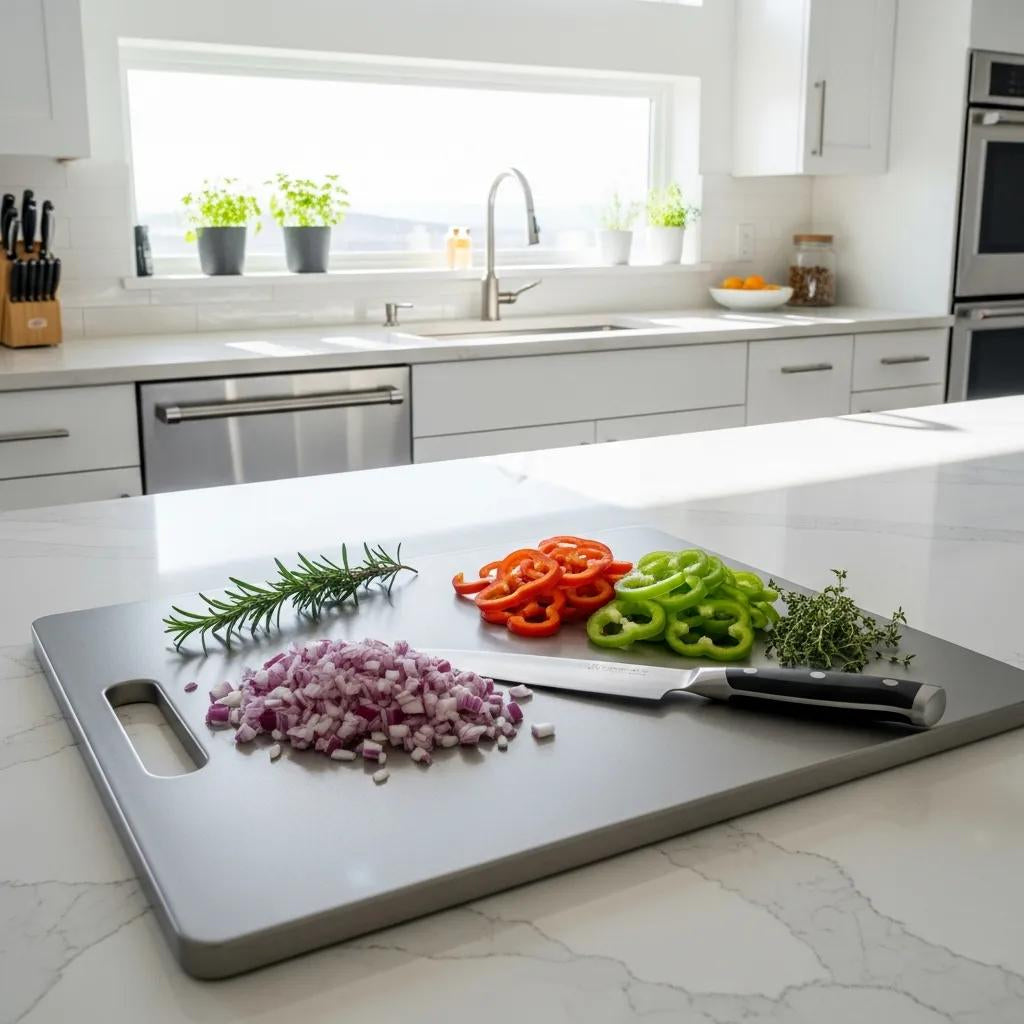
A titanium cutting board combines a non‑porous surface with high material strength to deliver hygiene, durability and low maintenance in one kitchen tool. Because the surface resists micro‑crevices and stains, it’s less likely to harbour bacteria. Its corrosion and warp resistance mean it lasts for ages — good for safety and for reducing waste. Titanium boards also support plastic‑free and allergy‑friendly kitchens since the inert surface doesn’t leach chemicals or trap allergens and odours. Add in a sleek, modern look and practical design details like juice grooves and non‑slip feet, and you have a board that suits contemporary food prep.
Titanium provides several clear, user‑focused advantages:
- Non‑porous hygiene: A sealed titanium surface keeps fluids and bacteria on the surface where they can be cleaned away.
- Long‑lasting durability: Aerospace‑grade titanium resists warping, chipping and corrosion.
- Low maintenance: Simple to wipe down and often compatible with machine washing when the manufacturer allows.
- Plastic‑free and allergy-friendly: The inert surface reduces the risk of chemical exposure and microplastics.
- Contemporary look: A clean, minimal finish that fits modern kitchens.
Practically, these benefits mean you won't need to replace it often, easier sanitisation after raw meat prep, and a stable work surface for busy cooks. For example, the Terra Wellness Titanium Cutting Board — Cut Bacteria, Preserve Flavour — highlights non‑porous hygiene, aerospace‑grade construction and low‑maintenance cleaning as everyday advantages.
How does titanium provide superior hygiene and food safety?
Titanium’s hygiene advantage comes from being non‑porous: there are no microscopic pores for fluids, food particles or bacteria to hide in. Instead, residues stay on the surface and can be removed with ordinary cleaning, rather than being absorbed into the material where microbes can grow. That same non‑absorbent quality helps prevent lingering odours and stains after handling raw meat or strong vegetables, making cross‑contamination easier to control with basic sanitisation.
In everyday kitchens, a simple routine — wash with detergent, rinse, and use a dishwasher cycle if the board allows — will remove most residues and keep things super clean more effectively than cleaning porous boards. Since long‑term hygiene depends on a board that stays intact, titanium’s surface durability ties directly into its safety advantages.
Why is the titanium cutting board unmatched?
Titanium’s strength comes from high tensile strength, corrosion resistance and dimensional stability when exposed to repeated use and moisture. Unlike wood, which can warp, crack or need resurfacing, a well‑made titanium board keeps its shape and function through many cutting cycles and kitchen humidity. That durability means you won't need to replace it often.
That durability translates into a board that lasts for ages — a titanium board keeps both its appearance and performance, which saves you money and reduces waste in the long run compared with materials that need frequent replacement. Framing durability as a sustainability advantage sets up a direct comparison with wood on hygiene, upkeep and knife impact.
How do titanium and wood cutting boards compare?

Titanium and wood differ across five key attributes: hygiene, durability, knife friendliness, maintenance and environmental footprint. Titanium’s non‑porous metal surface wins for hygiene and is low maintenance, but it’s harder and needs attention to blade care. Wood feels gentler under the blade and can have natural antimicrobial properties in some species, yet it’s porous and requires regular oiling and careful cleaning to avoid odours and stains. Your choice comes down to priorities: choose titanium to minimise bacterial risk and maintenance; choose wood if blade preservation and tactile feel matter most.
The table below summarises the main differences for quick comparison.
| Material | Hygiene | Durability | Maintenance | Knife Impact |
|---|---|---|---|---|
| Titanium | Non‑porous, straightforward to sanitise | Very high — resists warping and corrosion | Low — wipes clean; some models dishwasher‑compatible | Harder surface — may increase edge wear without proper care |
| Wood | Some woods are naturally bacteriostatic, but wood is porous | Moderate — can warp, crack or need resurfacing | Higher — requires oiling and careful drying | Gentler on edges — absorbs some cutting impact |
| Plastic | Non‑porous but prone to deep scratches | Variable — scratches can harbour bacteria | Moderate — replace when scored | Moderate — softer than titanium, harder than wood |
The table highlights titanium’s strengths in hygiene and longevity while noting knife impact as the main trade‑off. Products like the Terra Wellness Titanium Cutting Board — Cut Bacteria, Preserve Flavour — are designed to show how these attributes work in everyday kitchens.
What are the hygiene differences between titanium and wood boards?
The main hygiene gap comes down to porosity and upkeep. Titanium’s sealed metal surface keeps fluids and bacteria on top, where cleaning removes them easily; wood’s cellular structure can trap tiny particles and needs routine oiling and careful drying to limit bacterial growth, although some hardwoods have antimicrobial characteristics. Regardless of material, use separate boards for raw meat and produce, sanitise after high‑risk tasks, and check boards for deep grooves where microbes might hide.
How does durability differ between titanium and wood?
Durability shows up in different ways. Titanium resists bending, rot and moisture‑driven warping; its main wear is surface scratching or heavy mechanical damage. Wood — even high‑quality hardwood — can crack, split or need resurfacing after heavy use or repeated wet/dry cycles, which means more upkeep and replacing it more often. From a lifecycle view, titanium’s robustness typically means fewer replacements, while wood’s sustainability relies on responsible sourcing and good care.
Are titanium cutting boards knife‑friendly? Understanding blade care
When we talk about knife friendliness, we mean how a surface affects edge retention and what habits protect blades on harder boards. Titanium is much harder than wood, so it can wear an edge faster over time. It’s still less abrasive than glass or ceramic, and with sensible technique and maintenance, you can manage the added wear. Choosing good knives, honing regularly, and adapting chopping habits make titanium practical for many cooks who value hygiene and durability. Below are clear steps to reduce blade wear.
- Use appropriate cutting technique: Prefer slicing motions instead of forcing or levering the blade into the board.
- Select compatible knives: High‑quality stainless or carbon‑steel blades tend to hold an edge better.
- Hone regularly: Short, frequent honing sessions keep the edge aligned between sharpenings.
- Rotate surfaces: Use a softer wooden or composite board for heavy chopping and reserve titanium for prep where hygiene matters.
Do titanium boards dull knives faster than wood?
Titanium can contribute to faster edge wear than wood because a harder surface increases micro‑abrasion on the blade during cutting. Over time, repeated contact removes microscopic metal from the edge, especially with heavy chopping, twisting or levering. Compared with glass or ceramic, titanium is more forgiving; compared with many plastics, it may be similar or slightly harsher depending on finish. For most home cooks who hone regularly and avoid aggressive blade actions, the extra dulling is manageable and may be outweighed by titanium’s hygiene and lifespan benefits.
What knife care tips help preserve blades on titanium boards?
Protect your knives with technique and routine care. Use slicing motions and avoid levering or twisting the blade in the board. Hone often — short, frequent strokes keep edges aligned and delay sharpening. Rotate heavy chopping tasks to a wooden or composite board, and sharpen only as needed based on use rather than a fixed schedule. These practices preserve edge life while letting you enjoy titanium’s hygiene advantages.
What makes Terra Wellness titanium cutting boards unique for Australian kitchens?

Terra Wellness offers a titanium cutting board built for home cooks who prioritise hygiene, durability and clean design. The product messaging focuses on a non‑porous surface to cut bacteria and preserve flavour, aerospace‑grade material for lasting for ages, and practical details like juice grooves and non‑slip feet that suit busy Australian kitchens. We position the board within a broader commitment to natural living and low‑tox households, promoting plastic‑free kitchenware that lasts.
Key product highlights:
- Non‑porous titanium surface for easier sanitisation and less odour retention.
- Exceptional durability from aerospace‑grade construction that resists warping.
- Low maintenance — designed to fit into daily cleaning routines.
Which features enhance usability and safety?
Good usability starts with a stable, contained work area. Non‑slip feet keep the board steady while chopping; juice grooves capture liquids from meat or fruits to protect benchtops; and a sensible weight and size make lifting and manoeuvring straightforward. A brushed or polished finish balances grip for cutting with easy cleaning. For Australian kitchens that juggle wet and dry prep, these features make the board both safer and more convenient.
How does Terra Wellness ensure quality and sustainability?
We emphasise durable materials and thoughtful design to mean you won't need to replace it often — viewing longevity as part of sustainable practice. The board is positioned as plastic‑free and inert, which supports allergy‑sensitive homes and reduces concerns about chemical leaching from some plastics. Quality comes from selecting robust alloys and finishes that keep the product functional and attractive over time, which reduces waste over its lifetime and aligns with a practical approach to sustainability.
How easy is it to maintain a titanium cutting board?
Titanium boards are intentionally low-maintenance. Their non‑porous surface usually removes food residues with detergent and warm water, and many models tolerate dishwasher cycles — but always check the manufacturer’s care guidance for finishes and attached parts like non‑slip feet. Regular rinsing after use, sanitising after raw meat prep, and prompt drying will keep the board looking good and functioning safely. The table below summarises common cleaning approaches and expected results.
| Cleaning Method | Frequency | Result |
|---|---|---|
| Hand wash with dish soap and warm water | After each use | Removes residues and protects the finish |
| Dishwasher (if manufacturer permits) | Regular or weekly | Efficient sanitisation — follow care guidance |
| Food‑safe sanitiser or dilute bleach rinse | After raw meat prep | Quickly reduces microbial load |
| Periodic polish or non‑abrasive surface care | Occasional | Maintains finish — avoid harsh abrasives |
Are titanium boards dishwasher safe and low maintenance?
Many titanium boards are marketed as low-maintenance and may be dishwasher‑compatible, but dishwasher safety depends on the surface finish and any attached components. The core titanium surface handles high temperatures and detergents better than porous materials, making machine cleaning attractive for busy households. Still, avoid abrasive pads and strong chemical cleaners that can dull the finish or damage non‑metal parts; gentle detergents and routine rinsing are usually enough. Follow the product’s care instructions to preserve hygiene and appearance.
What are the best practices for caring for your titanium cutting board?
Follow this short checklist to keep your board sanitary and in good condition.
- Rinse and wash after each use with a soft cloth or sponge and mild detergent to prevent residue build‑up.
- Sanitise promptly after raw meat or seafood prep using a food‑safe method, then dry thoroughly to avoid trapped moisture around non‑metal attachments.
- Avoid heavy abrasive cleaners or steel wool that can scratch the surface and create micro‑grooves; use non‑abrasive cleaners or a gentle polish if needed.
- Store the board flat in a dry place, and consider rotating heavy chopping to a softer wood board to balance hygiene and blade care.
Why is choosing titanium cutting boards a smart, eco‑friendly kitchen upgrade?
Viewed across a product’s life, a titanium cutting board can be an eco‑friendly choice. A long‑lived, non‑plastic board means you won't need to replace it often, reducing overall waste. Titanium’s durability means fewer boards end up in landfill compared with plastic boards that are often replaced when scored or wood boards that can fail from moisture or cracking. The inert, recyclable nature of titanium also avoids microplastic shedding and chemical leaching concerns, which matters for low‑tox and allergy‑sensitive homes. The environmental benefit comes from durability and reduced turnover, not just the raw material.
Key environmental advantages include:
- Fewer replacements: A long lifespan lowers manufacturing and disposal impacts.
- Plastic‑free option: Avoids microplastics and chemical migration linked to some synthetics.
- Lower cumulative waste: Durable products reduce landfill contributions over time.
How does titanium support a plastic‑free and sustainable lifestyle?
Titanium provides an inert, recyclable alternative to disposable or synthetic boards, helping households reduce reliance on plastic kitchenware. A single durable board that lasts many years means fewer repeat purchases and less packaging waste. Because the metal is inert, there’s less concern about chemical migration into food — a meaningful benefit for allergy‑sensitive homes or people aiming for low‑tox living. Choosing durable, well‑made kitchenware, therefore, fits with practical sustainability and mindful consumption.
What are the environmental advantages of wood and plastic boards?
Compared with plastic boards that are often replaced when scored, and wood boards that can fail from moisture or cracking, titanium’s main environmental advantage is longevity. Fewer replacements mean less resource use and waste over time. That said, responsibly sourced wood can be sustainable, so the outcome depends on sourcing and how long the product is used. The strongest eco argument is simple: choose materials that last, and you reduce the volume of discarded kitchenware over years of use — a compelling case for durable titanium boards in households focused on consuming less.
- Choose long‑lived products: Durability beats disposability for sustainability.
- Consider lifecycle: Recyclability and replacement frequency matter more than raw composition alone.
- Match material to task: Use titanium where hygiene and longevity matter, and wood where blade gentleness is essential.
These final points connect the sustainability case back to everyday kitchen decisions, helping you decide where a titanium cutting board fits in your home.