





Why Titanium Kitchen Essentials Belong in Your Home Today — Health, Durability and Everyday Ease (Australia)
Titanium cooking essentials — from boards to pans and utensils — combine food-safe surfaces, long life and lightweight handling for everyday meal prep. We'll show you why more Australians are choosing titanium, covering its non-toxic properties, toughness, ergonomic benefits and practical buying tips. Titanium helps address common kitchen concerns: it’s chemically stable, corrosion-resistant and strong for its weight. Discover how titanium helps reduce chemical exposure, outlasts many alternatives, makes cooking easier on your hands, and which titanium pieces to prioritise for a healthier kitchen. We'll also share practical durability notes comparing it with stainless steel and aluminium, along with cleaning and shopping checklists. Plus, we'll highlight a fantastic product – the Terra Wellness Titanium Cutting Board – perfect for Australian homes.
What Are the Key Health Benefits of Titanium Cookware in Australia?
Titanium supports healthier cooking because the metal is highly inert — it doesn’t react easily with acidic or alkaline foods and is unlikely to leach metals into your meals. That chemical stability lowers the risk of contamination and makes titanium an appealing choice when you want to avoid coated surfaces that can release certain compounds. Titanium finishes are also less likely to develop pits and tiny scratches that trap bacteria, which makes cleaning simpler and keeps your prep areas more hygienic. These practical health benefits explain why many Australians choose titanium for low-reactivity, food-safe tools.
Titanium is also known for its strong corrosion resistance and generally low toxicity compared with some common cooking materials.
Titanium brings four practical health advantages in typical kitchen use:
- Non-reactive surface: Titanium resists chemical reactions with acidic foods, preventing off-flavours and metal transfer.
- Avoids synthetic coatings: Choosing titanium reduces reliance on synthetic non-stick layers that may contain persistent chemicals.
- Easier hygiene: Smooth, durable surfaces are less likely to form crevices that harbour bacteria and are simpler to clean.
- Biocompatible: Trusted in medical applications, titanium is known as a safe metal for food-contact uses.
These health points show how titanium’s chemistry makes it a low-risk option for routine food prep.
How Does Titanium Support Non-Toxic and Healthy Cooking?
Titanium helps keep cooking non-toxic because it forms a stable oxide layer that prevents active metal ions from entering food, even with acidic ingredients like tomatoes or vinegar. Unlike some reactive metals that can alter flavours or leach trace elements over time, titanium keeps taste and safety intact. Practically, using titanium pans or utensils for acidic dishes reduces metallic aftertaste and removes the need for heavy coatings that can wear away. Understanding this makes it easier to choose materials that support a chemical-free, flavour-first kitchen approach.
Titanium’s inert behaviour also helps reduce concerns about cumulative exposure to unwanted compounds, which naturally connects to its role in overall kitchen food-safety practices.
Why Is Titanium Ideal for Food Safety and Chemical-Free Kitchens?
Titanium’s material properties support food safety by reducing cross-contamination risk and enabling simple cleaning routines that keep surfaces hygienic. Because titanium resists corrosion and surface breakdown, it forms fewer micro-crevices where bacteria can hide — an important advantage when handling raw proteins and fresh produce. In everyday practice, titanium cutting boards, utensils and pans fit neatly into cleaning protocols that rely on hot water, mild detergent and thorough drying rather than aggressive chemical sanitisers. These practical benefits make titanium a sensible option for households aiming to limit chemical exposure and keep meal prep straightforward and safe.
These hygiene strengths also reinforce titanium’s durability: a surface that stays intact for years supports ongoing food-safety performance.
| Material | Health Attribute | Practical Impact |
|---|---|---|
| Titanium | Chemically inert surface | Minimises metal leaching and flavour change during cooking |
| Stainless steel | Generally inert but can corrode in harsh conditions | Good for most uses, but may develop pits over time that trap bacteria |
| Aluminium | Reactive with acidic foods unless anodised or coated | May require coatings or anodisation to prevent metal transfer |
This comparison highlights titanium’s distinct non-reactive profile and the practical advantage it offers to people who want durable, chemical-free kitchenware. Use these points to guide cleaning habits and product choices for a healthier kitchen environment.
How Does Titanium Ensure Durability and Longevity in Kitchen Tools?
Titanium delivers durability and longevity through a high strength-to-weight ratio, a stable passive oxide film and strong resistance to corrosion and fatigue. These properties reduce deformation and surface wear under common kitchen stresses like cutting, scraping and thermal changes. The outcome is kitchenware that keeps its shape and smooth finish for longer, reducing replacement frequency and offering excellent long-term value for Australian households. Prioritising these benefits helps you choose tools that balance everyday performance with lasting worth.
| Material | Durability Attribute | Practical Value |
|---|---|---|
| Titanium | Stable oxide layer and high tensile strength | Resists corrosion, reduces pitting and lasts longer under mechanical stress |
| Stainless steel | Tough and corrosion-resistant when the passive layer is intact | Durable but heavier; can micro-pit over long-term use |
| Aluminium | Lightweight but softer and more prone to scratching | May deform or need protective coatings for longevity |
This table shows why titanium is often recommended for long-lasting kitchen essentials, and how greater durability can reduce waste and the need for frequent replacements.
What Makes Titanium Resistant to Scratches and Corrosion?
Titanium’s scratch and corrosion resistance come from a thin, self-healing titanium dioxide film that forms almost instantly when the metal meets air. That oxide layer blocks oxygen and moisture, preventing deeper corrosion and limiting micro-pitting that traps food residue or bacteria. Combined with the titanium alloys’ high specific strength, surfaces are less likely to deform under impact or abrasion than softer metals. In everyday use, that means fewer surface flaws and a longer period during which the tool remains hygienic and reliable.
Because scratch resistance reduces tiny crevices where contamination starts, titanium is both durable and safer over long-term use.
How Is Titanium a Long-Term Choice for Australian Kitchens?
Choosing titanium for the long term means considering its lasting quality and environmental impact together: a tool that lasts years rather than months lowers replacement frequency and waste. Titanium’s longevity keeps knives, boards and utensils smooth and structurally sound, reducing the chance that worn materials will cause food-safety issues. Well-maintained titanium pieces often offer excellent quality and align with sustainable buying choices. Thinking about the full lifecycle helps households choose fewer, better-made items instead of many short-lived ones.
For instance, a titanium cutting board from Terra Wellness’s Home and Kitchen range shows how durable materials can deliver long-term hygiene benefits.
Why Are Lightweight Titanium Cooking Essentials Easier to Use Daily?
Titanium’s excellent strength-to-weight ratio makes tools noticeably lighter than comparable stainless steel while keeping them strong. Lighter pans and utensils reduce wrist and arm fatigue during stirring, flipping and plating, and they’re simpler to manoeuvre for precise tasks. For families, older cooks or anyone with less upper-body strength, titanium’s low weight makes everyday cooking more comfortable and enjoyable. These ergonomic wins highlight why many people prioritise practical, user-friendly titanium cookware.
Lighter cookware can reduce physical strain and improve the cooking experience over time.
| Material | Weight (relative) | Use-Case Benefit |
|---|---|---|
| Titanium | Low | Easier handling, reduced fatigue during repeated tasks |
| Stainless steel | Medium | Good heat retention, but heavier to lift and toss |
| Aluminium | Low | Lightweight but less durable without treatment |
Knowing the weight advantages points to clear ergonomic improvements, and that lighter feel translates to everyday comfort and better technique.
How Does Titanium’s Lightweight Design Improve Kitchen Comfort?
Titanium’s low mass eases repetitive actions like stirring, tossing salads or plating meals, reducing cumulative strain on wrists and shoulders. That helps cooks who prepare multiple courses or spend long periods at the stove. The lighter feel also supports finer wrist motions for delicate tasks, giving better control for finishing touches and lowering the risk of spills. These ergonomic benefits make titanium attractive for anyone managing aches, carers preparing meals, and busy households that value ease of use.
Better handling naturally leads to thinking about cleaning and maintenance, since everyday-friendly tools must also be easy to keep hygienic and functional.
What Makes Titanium Kitchen Tools Easy to Clean and Maintain?
Titanium surfaces are typically smooth, stain-resistant and less likely to develop pitting that traps food, so they clean easily with warm water and mild detergent. Avoiding abrasive pads and harsh chemicals preserves the oxide layer and keeps the finish looking good; most residue comes off with a soft cloth or sponge. Many titanium items tolerate dishwasher use, but following the manufacturer's instructions helps protect the finish and extend life. Simple care routines plus titanium’s resistance to stains and corrosion mean less time spent on maintenance and longer usable life.
These cleaning benefits make titanium a practical daily choice and help you prioritise which specific pieces to bring into your kitchen first.
What Specific Titanium Products Should You Have in Your Kitchen Today?
Start with titanium items that deliver the biggest day-to-day gains in safety and usability. A short, curated list helps you prioritise purchases based on common needs: cutting boards and essential utensils provide broad benefits across meal prep. Try one or two high-quality titanium pieces first to experience the ergonomic and hygiene improvements before expanding to pans or specialist tools. This approach helps Australians identify the most useful titanium items to begin with.
- Titanium cutting board: A hygienic, non-reactive surface for chopping that reduces flavour transfer.
- Titanium pans: Lightweight, inert contact for sautéing and frying.
- Titanium utensils: Sturdy spoons, tongs and spatulas that resist bending and feel comfortable to use.
- Titanium tongs and scoops: Precise handling tools that combine heat resistance with light weight.
These categories form a practical roadmap for adding titanium to everyday cooking. We highlight a Terra Wellness product that makes a good first purchase.
Why Choose the Terra Wellness Titanium Cutting Board for Healthy Cooking?
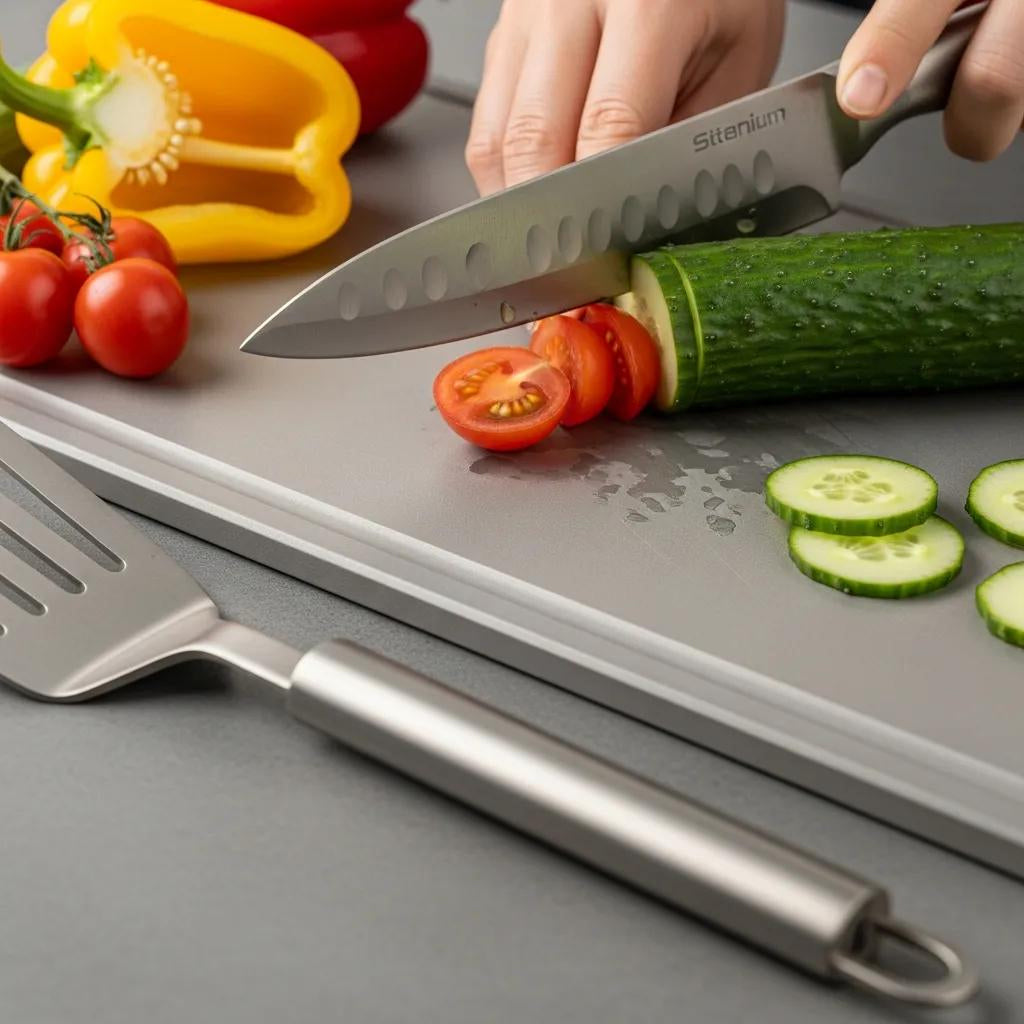
The Terra Wellness Titanium Cutting Board is a great example of how titanium can support a healthier kitchen: it offers a non-reactive, easy-to-clean surface for meal prep. As part of Terra Wellness’s Home and Kitchen range, this cutting board helps reduce cross-contamination risk and preserves flavours when you work with acidic or strongly flavoured foods. For cooks who prioritise chemical-free prep and low-maintenance cleaning, a titanium cutting board is a smart first buy that demonstrates the material’s hygiene and durability advantages.
How Do Titanium Pans and Utensils Complement Your Kitchen Essentials?
Titanium pans and utensils extend the advantages of cutting boards into active cooking: they’re non-reactive, light to handle and durable. Titanium pans maintain flavour integrity and are less likely to develop surface defects that harm hygiene, while titanium utensils give reliable ergonomics and long service life for stirring and serving. Pair a titanium cutting board for prep with a titanium pan for low-reactivity cooking and titanium utensils for handling — together they form a cohesive, low-maintenance set that reduces the need for frequent replacements.
How Does Titanium Compare to Traditional Cookware Materials?
Titanium compares well with stainless steel and aluminium across weight, chemical reactivity and corrosion resistance, though it differs in heat conductivity and may represent a considered initial purchase. Titanium is lighter than stainless steel and more inert than untreated aluminium, making it a strong option if you prioritise non-reactive surfaces and ergonomics. Stainless steel still offers familiar heat behaviour and wide availability, while aluminium gives excellent raw heat distribution but usually needs coatings or anodisation to avoid reactivity. Balance these trade-offs against your cooking style and priorities.
- Titanium — Pros: Lightweight, non-reactive and corrosion-resistant for long-term hygiene.
- Stainless steel — Pros: Durable, widely available and preferred for searing and high-heat cooking.
- Aluminium — Pros: Excellent heat conductivity and typically affordable when treated or coated.
These comparison points help you choose the material that best suits your techniques and daily needs.
What Are the Advantages of Titanium Over Stainless Steel and Aluminium?
Titanium’s main benefits are lighter weight than stainless steel, greater inertness than untreated aluminium, and resistance to corrosion that keeps surfaces intact longer. These features translate into easier handling, lower risk of chemical interaction with food, and fewer surface defects that can trap bacteria — important factors for family kitchens. While stainless steel remains a solid all-rounder and aluminium excels at heat spread, titanium uniquely blends lightness and chemical stability for cooks prioritising health, comfort and longevity. It's a highly recommended choice for modern kitchens.
These benefits come with a few practical considerations.
Are There Any Disadvantages of Titanium Cookware to Consider?
There are a few trade-offs to be aware of: titanium’s raw thermal conductivity is lower than aluminium, so you may need small adjustments to heat settings or cooking technique; some titanium items may be a more considered initial purchase than basic alternatives; and certain specialised titanium pieces may heat differently from familiar pans. These issues are usually manageable with minor technique changes and careful selection, and are often offset by titanium’s durability and hygiene advantages. Knowing these trade-offs helps you make informed choices and avoid surprises when switching to titanium tools.
Being clear about trade-offs makes it easier to evaluate product details and seller information.
How Can You Make the Smart Choice for Titanium Kitchen Tools?
Smart titanium buying starts with a simple checklist: prioritise transparent material descriptions, high-quality finishes, ergonomic design and reputable sellers, focusing on overall quality. Check that product pages clearly state titanium content, surface finish and care instructions, and choose items that suit your typical household use — family meals, professional cooking or elder care. Align purchases with lifecycle thinking: fewer, better-made items often deliver the best sustainability and long-term health benefits. This buyer-centred approach helps Australian shoppers evaluate long-lasting kitchen essentials with confidence.
- Look for clear material descriptions and manufacturing details.
- Prioritise smooth finishes and easy-care designs over decorative coatings.
- Choose ergonomic forms that suit your main cooking tasks and strengths.
- Prefer reputable sellers with transparent product information and sensible return options.
This checklist helps you compare options clearly and leads to the final note on sustainability and health alignment for titanium choices.
What Should Australian Consumers Look for When Buying Titanium Cookware?
Australian buyers should look for explicit information on material composition, surface finish and recommended care to ensure the item meets expectations for durability and hygiene. Check user-focused details like handle ergonomics, weight balance and compatibility with your stovetop or oven. Red flags include vague material claims and unclear cleaning instructions — those make long-term performance harder to predict. Focusing on these practical attributes helps you choose titanium kitchenware that supports safe cooking and long service life.
How Does Choosing Titanium Align with Sustainable and Healthy Living?
Opting for titanium supports sustainable living by favouring durable, repairable items that reduce replacement frequency and waste compared with short-lived alternatives. Titanium’s longevity means fewer disposables and less manufacturing turnover over time, while its non-reactive nature helps maintain a chemical-free kitchen aligned with wellness goals. For households that prioritise both environmental impact and food safety, titanium is a strong option that encourages reduced consumption and healthier preparation habits. This sustainability fit reinforces the practical and wellness reasons to bring titanium essentials into the modern Australian kitchen.
Next steps: introduce titanium gradually — start with a cutting board or a favourite utensil to trial the benefits in your cooking. For an example product, consider the Terra Wellness Titanium Cutting Board from our Home and Kitchen range – it truly reflects the hygiene and durability qualities we've discussed.
Frequently Asked Questions
1. How does titanium cookware compare in price to other materials?
Titanium cookware often comes with a higher initial price tag compared to traditional materials like stainless steel and aluminium. This is primarily due to the advanced manufacturing processes and the inherent properties of titanium, which contribute to its durability and longevity. However, when considering the lifespan and reduced need for replacements, titanium can be more cost-effective in the long run. Investing in titanium cookware means fewer purchases over time, making it a wise choice for budget-conscious consumers looking for quality.
2. Are there any health concerns associated with titanium cookware?
Generally, titanium cookware is considered safe and non-toxic for cooking. It is biocompatible and does not leach harmful chemicals into food, making it a preferred choice for health-conscious individuals. Unlike some non-stick coatings that may release toxic substances when heated, titanium's inert nature ensures that it remains stable even at high temperatures. However, as with any cookware, it is essential to follow care instructions to maintain its integrity and safety over time.
3. What types of cooking techniques are best suited for titanium cookware?
Titanium cookware is versatile and can be used for various cooking techniques, including sautéing, frying, and baking. Its excellent heat retention allows for even cooking, making it suitable for both high-heat methods and slow cooking. However, due to its lower thermal conductivity, it may require slight adjustments in cooking times or temperatures compared to other materials. Experimenting with your specific cooking style will help you maximise the benefits of titanium cookware.
4. Can titanium cookware be repaired if damaged?
While titanium cookware is highly durable, it can still be scratched or dented under extreme conditions. However, repairing titanium cookware is not typically feasible due to the nature of the material. Instead, it is advisable to focus on proper care and maintenance to prevent damage. If significant wear occurs, it may be more practical to replace the item rather than attempt repairs, as titanium's longevity often justifies the investment in new pieces.
5. Is titanium cookware suitable for outdoor cooking?
Yes, titanium cookware is an excellent choice for outdoor cooking due to its lightweight and durable nature. It is resistant to corrosion and can withstand various weather conditions, making it ideal for camping, hiking, or barbecuing. Its ability to heat evenly and retain heat also enhances outdoor cooking experiences. Just ensure that you follow the same care guidelines as you would for indoor use to maintain its performance and longevity.
6. How does the weight of titanium cookware impact cooking performance?
The lightweight nature of titanium cookware significantly enhances cooking performance, especially for tasks that require frequent lifting or stirring. This ergonomic advantage reduces fatigue, making it easier to handle during extended cooking sessions. Additionally, the low weight allows for better control and precision when performing delicate tasks, such as flipping or plating. Overall, the weight of titanium cookware contributes to a more enjoyable and comfortable cooking experience.
7. What should I consider when transitioning to titanium cookware?
When transitioning to titanium cookware, consider your cooking habits and the types of dishes you prepare most often. Start by selecting a few essential pieces, such as a cutting board and a pan, to experience the benefits firsthand. Familiarise yourself with the care instructions, as titanium requires specific maintenance to preserve its finish. Lastly, be open to adjusting your cooking techniques, as titanium may behave differently than other materials, particularly in terms of heat distribution and cooking times.
1. Can titanium cookware be used on all types of stovetops?
Yes, titanium cookware is generally compatible with all stovetop types, including gas, electric, and induction. However, it's essential to check the manufacturer's specifications for each product, as some titanium cookware may have specific requirements or limitations. Induction stovetops require cookware with magnetic properties, so ensure that the titanium cookware you choose is designed for induction use if you have this type of stove. Overall, titanium's versatility makes it a practical choice for various cooking methods.
2. How does the quality of titanium cookware compare to other materials?
Titanium cookware offers exceptional quality and longevity compared to traditional materials like stainless steel or aluminium. While the initial purchase may be considered one, titanium products typically last much longer and require fewer replacements. When considering the long-term benefits, titanium can be a very sensible choice over time due to its resistance to wear and corrosion. Therefore, while the upfront consideration may be higher, the overall quality and lifespan can be greater when factoring in performance.
3. Are there any specific care instructions for titanium cookware?
To maintain the quality of titanium cookware, it is recommended to clean it with warm water and mild detergent, avoiding abrasive pads that could damage the surface. While many titanium items are dishwasher safe, following the manufacturer's care instructions is crucial to preserving the finish. Additionally, avoid using very high heat settings, as titanium can conduct heat differently than other materials. Proper care will ensure that your titanium cookware remains in excellent condition for years to come.
4. Is titanium cookware safe for cooking acidic foods?
Yes, titanium cookware is highly safe for cooking acidic foods. Its non-reactive surface prevents any leaching of metals into the food, which can occur with other materials like aluminium. This characteristic makes titanium an excellent choice for preparing dishes that include tomatoes, vinegar, or citrus, as it maintains the integrity of the flavours without altering them. This safety feature is one of the key reasons many health-conscious cooks prefer titanium for their kitchen essentials.
5. How does titanium cookware affect cooking times compared to other materials?
Titanium cookware may require slight adjustments in cooking times compared to traditional materials like stainless steel or aluminium. While titanium has a lower thermal conductivity, meaning it may take longer to heat up, it retains heat exceptionally well once heated. This property can lead to more even cooking and potentially lower energy consumption over time. Cooks may need to experiment with heat settings to find the optimal balance for their specific cooking style.
6. Can titanium cookware be used in the oven?
Most titanium cookware is oven-safe, but it is essential to check the manufacturer's guidelines for specific temperature limits. Titanium's high resistance to heat makes it suitable for oven use, allowing for versatile cooking methods such as baking and roasting. However, if the cookware has non-titanium components, such as plastic handles, those may have lower heat tolerances. Always refer to the product specifications to ensure safe oven use and to avoid damaging your cookware.
7. What are the environmental benefits of using titanium cookware?
Using titanium cookware offers several environmental benefits, primarily due to its durability and longevity. Titanium is a highly sustainable material that reduces the need for frequent replacements, leading to less waste. Its non-reactive nature also means it does not leach harmful chemicals into food, promoting a healthier cooking environment. By choosing titanium, consumers can support sustainable living practices while enjoying high-quality kitchen tools that align with their health and environmental values.
Conclusion
Choosing titanium kitchen essentials offers numerous benefits, including enhanced food safety, durability, and ergonomic ease for everyday cooking. By choosing titanium, you can enjoy a non-reactive, lightweight, and long-lasting solution that simplifies meal preparation while promoting a healthier kitchen environment. Start your journey towards a more sustainable and efficient cooking experience by exploring our range of premium titanium products. Discover the difference titanium can make in your kitchen today!