






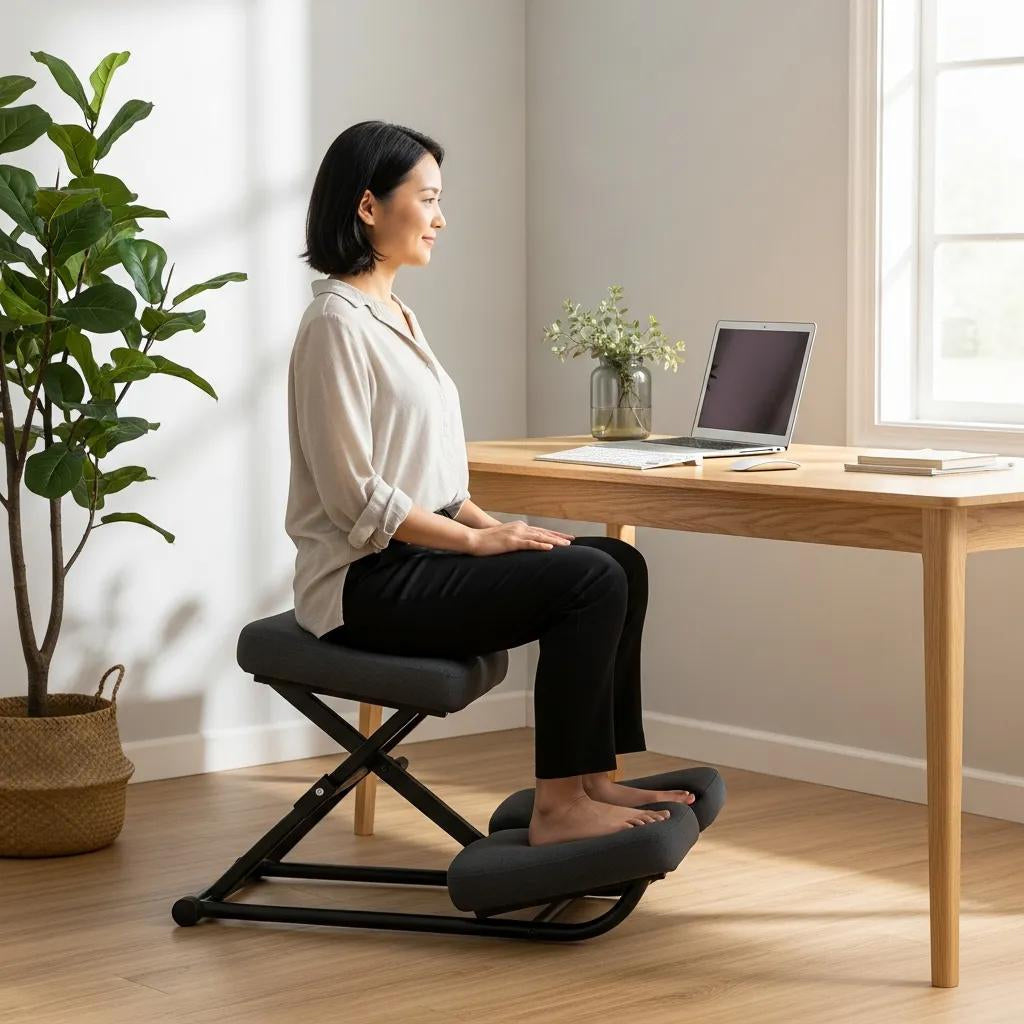
Why switch to a kneeling chair today — better posture, less back pain and steadier core strength
A kneeling chair is an ergonomic alternative that tilts the seat forward and uses knee pads to create an open hip angle and a more neutral pelvis. That setup helps your spine keep its natural S-curve. This guide explains how the design tackles common problems caused by standard office chairs, how it can ease back pain and gently activate core muscles, and how to choose and get used to a kneeling chair in Australia. Many people spend long hours seated and suffer from slumped posture, lower‑back strain and low energy — switching to a kneeling chair is a practical step toward more active, comfortable sitting. Read on to learn what a kneeling chair is, how it helps reduce pressure on your lower back, its role in gentle core engagement and alertness, how to pick the right model locally, and a step‑by‑step plan to switch without discomfort.
What is an ergonomic kneeling chair, and how does it improve posture?
An ergonomic kneeling chair tilts the seat forward and supports some body weight through knee pads so your pelvis tips slightly forward and your lower back keeps a more neutral curve. That shift reduces slumped posture and forward head carriage. The design pairs a sloped seat with a stable base that allows small movements — promoting active sitting and lowering sustained spinal loading. This is different from traditional 90‑degree chairs that can encourage a rounded lower back, which might increase disc pressure and muscle strain over long periods. Understanding how it works makes it easier to see why many users notice quicker postural improvements after they try a kneeling chair. The section below explains exactly how the tilted seat helps align your spine.
How does a kneeling chair promote natural spine alignment?

By creating a slight forward pelvic tilt, a kneeling chair helps preserve the natural curve in your lower back and brings your upper back and neck into better alignment. When your pelvis tilts forward, your lower back vertebrae return to their natural curve, which encourages your shoulders to sit back and your head to balance over your torso — reducing neck strain. People often describe feeling taller and more upright because the alignment from pelvis to neck needs less conscious effort. Think of your spine as stacked blocks: the tilted seat helps the lower blocks sit as intended rather than collapsing. Better alignment reduces the constant need for muscular bracing and leads to how an open hip angle supports small movements and reduced pressure on your discs.
What role does an open hip angle play in active sitting?
The open hip angle of a kneeling chair increases the torso‑to‑thigh angle compared with a standard 90‑degree seat. That change redistributes load away from your lower back discs and encourages frequent small postural adjustments. With your pelvis free to rotate forward, your lower back can maintain its natural curve and avoid prolonged compressive forces. The position also supports active sitting — tiny movements that boost circulation and keep muscles engaged instead of sitting rigidly still. By cutting continuous loading and encouraging movement, an open hip angle improves both comfort and how well your body handles sitting during a typical work session.
Key benefits of using a kneeling chair for back pain relief
A kneeling chair can lower lower‑back strain, support a more upright posture and reduce muscle tension by redistributing weight and encouraging a neutral pelvis — often translating into greater comfort for people with posture‑related aches. The main ways it works are by reducing lower back compression through pelvic tilt, less static loading thanks to micro‑movements, and clearer postural cues that reduce forward head posture. Expect an adaptation period as muscles adjust; many people notice less slumping and better posture within days to weeks. The list below summarises the main benefits, followed by a table linking features to how they help.
- Reduced lower back strain: A forward‑tilted seat promotes a neutral lower back curve and reduces pressure on the lower spine.
- Improved posture: An open hip angle helps line up the shoulders and neck, easing forward head tension.
- Active sitting: Regular micro‑movements keep muscles active and prevent the stiffness of prolonged static sitting.
Together, these effects can offer meaningful relief from posture‑related discomfort. The table below explains how specific chair features create those benefits.
Different kneeling chair features produce noticeable effects that explain perceived benefits.
| Feature | How it works | Benefit |
|---|---|---|
| Tilted seat | Helps your pelvis tilt forward, and your spine keep its natural curve | Lower lower back pressure and more upright posture |
| Open hip angle | Opens up your hip angle and lets you move a bit | Less sustained disc loading and improved circulation |
| Knee pads/support | Shares some bodyweight with shins while avoiding excess pressure | Reduced load on the sit bones and less slumping |
This shows how design elements translate into reduced back strain; next, we look at how those features can ease lower‑back pain in practice.
How does a kneeling chair reduce lower back pain?
Kneeling chairs ease lower‑back pain mainly by shifting pelvic position so your lower back can keep its natural curve, lowering pressure on the discs and reducing muscle tension that can build up. By supporting a more upright trunk and limiting forward bending, these chairs cut the continuous strain that contributes to chronic discomfort and fatigue. Many users report noticeable posture improvements and less aching within days to weeks; full muscular adaptation usually takes a few weeks of consistent, moderate use. If pain persists or is severe, it's always best to chat with a qualified health professional to make sure your seating fits your treatment plan.
Can kneeling chairs help circulation and digestion?
Improved posture and active sitting can produce modest gains in circulation and reduce abdominal compression, which may aid digestion and reduce mid‑afternoon sluggishness. An open hip angle and regular micro‑movements lower sustained pressure on abdominal organs and free up space for deeper breathing, supporting better blood flow and oxygenation. These effects are supportive — not a cure — and work best when combined with regular movement breaks and adequate hydration. Track changes over several weeks while alternating positions to see whether a kneeling chair complements your individual needs.
How sitting on a kneeling chair can strengthen your core and boost energy.
Sitting on a kneeling chair encourages low‑level core activation and subtle postural corrections that maintain muscle tone without replacing formal exercise. These gentle activations can help you feel more alert during long periods of sedentary work. The tilted seat and shifted weight distribution engage stabiliser muscles — like your deep tummy muscles, obliques and spinal erectors — to support balance and uprightness in a low-intensity way. Over time, frequent low‑load activity builds endurance in postural muscles, improving stamina for seated tasks and reducing fatigue. The table below shows which sitting activities target which muscle groups and offers practical tips to make those activations more effective.
| Activity | Muscle group engaged | Practical tip |
|---|---|---|
| Upright alignment with slight pelvic forward tilt | Deep tummy muscles and back muscles | Sit tall and breathe into your diaphragm to feel gentle engagement |
| Gentle micro‑rocking or weight shifts | Side tummy muscles and lateral stabilisers | Make small shifts every 5–10 minutes to avoid static loading |
| Alternating kneel‑to‑sit or brief stand breaks | Bottom and hip muscles | Stand and walk for 1–2 minutes each hour to reset posture |
Use this table to turn active sitting into simple habits that strengthen stabilising muscles and help you stay energised while working.
What is core engagement and why does it matter?
In seated work, core engagement means softly activating deep stabilisers — like your transversus abdominis, multifidus and pelvic floor — to support your spine without over‑bracing. Kneeling chairs promote this low‑level activation because your body balances on a forward‑tilted surface, prompting continuous micro‑adjustments rather than passive slumping. This steady engagement boosts postural muscle endurance, reduces neck and shoulder compensation, and helps sustain productivity. Simple cues — breathe into your belly, imagine a gentle ‘zip’ of the lower abdomen, and check in regularly to avoid holding a tight brace — make core work comfortable and sustainable.
How does active sitting improve focus and productivity?

Active sitting supports focus by keeping circulation and mental alertness higher than completely static sitting, which helps mental clarity and sustained attention. Micro‑movements and occasional position changes prevent the energy dip that often follows long immobile periods and maintain steady blood flow to the brain. Structure work with alternation routines — short kneeling chair intervals mixed with standing or a standard chair — to build productive rhythms and reduce fatigue. Pair this with simple time‑management tools like short timers or focused work blocks to make improved posture translate into better concentration and output.
How to choose the right ergonomic kneeling chair in Australia
Picking the right kneeling chair means prioritising adjustability, breathable, durable padding, a stable base and compatibility with your desk height and body proportions so the chair reliably produces the desired pelvic tilt and open hip angle. Consider Australian conditions — breathable fabrics for warmer rooms, solid local support and helpful customer service so you can test the fit. The checklist below lists top features to prioritise, followed by a compact comparison table that links attributes to what to check and why it matters.
- Adjustability: Look for seat angle and height options so the chair fits desks and different body sizes.
- Padding and breathability: Quality foam and breathable covers help prevent heat build‑up in long sessions.
- Stable base: A wide, sturdy frame reduces tipping during micro‑movements and builds confidence in active sitting.
Choosing a chair that ticks these boxes increases the chance of a smooth transition and long‑term use. The table below helps you compare typical model attributes.
| Model attribute | What to check | Why it matters |
|---|---|---|
| Adjustability | How much can you adjust the seat tilt and height | Helps your pelvis tilt forward and fits your desk |
| Padding type | How firm the foam is, and if the cover breathes | Keeps you comfy and cool for longer |
| Base & frame | How sturdy and well-made it is | Stops wobbles and makes it last longer |
This comparison helps buyers weigh comfort, fit and durability when choosing a kneeling chair for an Australian home or office.
What features should you look for in a kneeling chair?
Use this practical checklist to identify attributes that deliver ergonomic value and everyday comfort. Priority features are adjustable seat height and tilt to suit desks and body sizes, quality knee pads and seat foam to spread pressure evenly, and a stable frame that supports movement without wobble. Breathable upholstery and materials suited to warmer climates reduce discomfort during long sessions, while helpful customer support makes testing and fine‑tuning easier. Evaluating these features together improves the odds of choosing a chair that supports posture, core activation and lasting comfort.
How to find a kneeling chair that stands out
When looking for a quality kneeling chair, consider models that offer a holistic approach to workspace wellness. Look for adjustable features, supportive knee pads, breathable padding, and compatibility with common ergonomic accessories for home offices. A good chair should be described in an informational, helpful way, focusing on how it fits into a balanced, health-focused workspace. If you're seeking a natural-health aligned option that fits an active sitting routine, a well-designed model with these features could be a great fit.
Practical tips for making the switch to a kneeling chair
Switching to a kneeling chair works best with a gradual plan, careful fit checks and regular alternation to avoid overloading any one muscle group. Start with short periods, learn the adjustments, and combine kneeling‑chair time with standing breaks and standard seating to balance load. The simple numbered plan below outlines a staged approach; later paragraphs add adjustment steps and alternation routines to keep you comfortable and productive.
- Start small: Try the kneeling chair for 10–15-minute intervals on your first day.
- Gradually increase: Add 5–10 minutes each day as your muscles adapt.
- Alternate regularly: Mix kneeling‑chair time with a standard chair or standing breaks every 30–60 minutes.
This paced schedule helps avoid overload and lets you discover comfortable durations. The next subsection outlines recommended daily timings and signs to watch for during adaptation.
How long should you sit in a kneeling chair each day?
Adopt a conservative progression so your body adapts safely: start with several short sessions totalling 30–60 minutes in week one, then increase time gradually over 2–4 weeks while monitoring comfort and posture. Always alternate with standing or a standard chair every 30–60 minutes and take short movement breaks to prevent localised pressure and stiffness. Reduce time if you notice persistent knee pain, numbness or sharp back pain — pause use and consult a health professional if needed. Keeping a short log of how you feel each day helps you find a personalised, sustainable routine that complements your wider activity levels.
How to adjust and alternate positions for maximum comfort
Start by setting the seat tilt and height so your pelvis tips slightly forward and the knee pads sit comfortably below your shin without pinching. Check that your forearms align naturally with your desk to avoid elevated shoulders.
Alternate positions in short cycles — for example: 30 minutes on the kneeling chair, 30 minutes on a standard chair, then a 5‑minute standing break — to spread loading across muscle groups and reduce pressure. Add micro‑movements like gentle weight shifts and shallow hip rotations every 5–10 minutes to boost circulation and keep stabilisers active. If discomfort appears, re‑check the fit, cut back on kneeling time and increase standing or walking breaks until you adapt.
Many ergonomic chairs come with helpful setup and usage guidance, including practical notes that match the staged progression described here. Always check the information provided with your chair for specific adjustment tips.
Are kneeling chairs suitable for everyone? Common concerns answered
Kneeling chairs can be very helpful, but they’re not the perfect fit for everyone. Understand the potential downsides and sensible precautions to decide whether this seating style suits your health and daily needs. Common worries include knee pressure, discomfort during long uninterrupted sessions and fit challenges for certain body shapes. Many of these can be managed with the right padding, gradual adaptation and frequent alternation. The list below summarises typical disadvantages and practical ways to address them, followed by guidance on who should seek professional advice.
- Knee discomfort: Direct pressure on the shins can cause soreness if the padding or fit is poor.
- Not for continuous use: Extended uninterrupted sessions may lead to discomfort — alternation is important.
- Sizing and fit: Very tall or short users may need extra adjustments to achieve neutral posture.
Most downsides respond well to a correct fit, a gradual build‑up and regular alternation. Read on for advice about when to consult a health professional before trying a kneeling chair.
What are the potential disadvantages of kneeling chairs?
Kneeling chairs can focus pressure on the knees and shins, particularly if the padding is thin or the seat angle doesn’t match your proportions, which may cause soreness early on. They’re not intended for all‑day continuous use; without alternation and movement, users risk localised fatigue in postural muscles and joint discomfort. Fit issues, such as mismatched desk height or very tall/short proportions, can reduce the postural benefits and lead to compensations. Practical steps include choosing quality padding, following a progressive usage plan and alternating regularly with other seating options.
Who should avoid or use kneeling chairs with caution?
Anyone with pre‑existing knee conditions, recent lower‑limb injuries or mobility limitations should approach kneeling chairs cautiously and get personalised advice from a health professional before switching.
Pregnant people and those with circulatory concerns should trial the chair under guidance and prioritise frequent alternation and movement to reduce pressure‑related risks. A short supervised trial and watching for symptoms — pain, numbness or swelling — are sensible ways to test suitability; if adverse signs appear, stop and consult a clinician.
Good ergonomic guidance often recommends a gradual trial and combining a kneeling chair with complementary ergonomic accessories to support a balanced workspace. For specific setup tips and accessory ideas, always consult the usage notes that align with a staged transition.
Frequently Asked Questions
1. How long does it take to adjust to using a kneeling chair?
Adjusting to a kneeling chair typically takes a few weeks. Initially, users should start with short sessions of about 10 to 15 minutes, gradually increasing the duration as their muscles adapt. It's important to listen to your body and monitor comfort levels. Many people notice improvements in posture and reduced discomfort within days, but full adaptation may require consistent use over several weeks. Regular alternation with a standard chair can also help ease the transition.
2. Can kneeling chairs be used for long periods?
Kneeling chairs are not designed for continuous use over long periods. Extended sitting can lead to discomfort, particularly in the knees and shins. To maximise comfort and benefits, it's recommended to alternate between the kneeling chair and a standard chair every 30 to 60 minutes. Incorporating standing breaks and gentle movements can also help prevent stiffness and maintain circulation, ensuring a more comfortable experience during prolonged work sessions.
3. Are there specific exercises to complement the use of a kneeling chair?
Yes, incorporating specific exercises can enhance the benefits of using a kneeling chair. Focus on core-strengthening activities, such as planks or pelvic tilts, to support the stabilising muscles engaged while sitting. Additionally, stretching the hip flexors and lower back can alleviate tension. Regular movement breaks, such as standing or walking for a few minutes every hour, can also help maintain flexibility and reduce muscle fatigue during long periods of sitting.
4. What should I do if I experience discomfort while using a kneeling chair?
If you experience discomfort while using a kneeling chair, it's essential to reassess your setup. Ensure that the chair is properly adjusted to your height and that the knee pads are positioned comfortably. Gradually reduce the time spent in the chair and increase the frequency of breaks. If discomfort persists, consider consulting a health professional for personalised advice and to rule out any underlying issues that may be exacerbated by the chair.
5. Can children use kneeling chairs for studying or homework?
Yes, children can use kneeling chairs for studying or homework, provided the chair is appropriately sized for their height and body proportions. It's crucial to ensure that the chair supports their posture and allows for comfortable positioning at their desk. However, children should also alternate between different seating options and take regular breaks to prevent fatigue and maintain focus during study sessions.
6. How do I clean and maintain my kneeling chair?
Cleaning and maintaining your kneeling chair is essential for longevity and hygiene. Regularly wipe down the chair with a damp cloth to remove dust and spills. For fabric upholstery, check the manufacturer's care instructions for specific cleaning methods. Ensure that the knee pads and seat foam are in good condition, replacing them if they show signs of wear. Periodically check the chair's adjustments and mechanisms to ensure they function smoothly and safely.
7. Are there any specific brands or models recommended for kneeling chairs?
While there are many brands and models available, it's essential to choose one that prioritises adjustability, comfort, and durability. Look for chairs with quality padding, a stable base, and features that suit your body size and desk height. Brands like Varier, Flash Furniture, and Everlasting Comfort are often recommended for their ergonomic designs. Always read reviews and consider trying out a chair before purchasing to ensure it meets your needs.