





Compact Home Gym Equipment Australia: Space‑Smart Solutions for Small Apartments
Small living doesn’t have to mean small results. Space‑saving gym kit combines clever design with practical features so you can move more, train effectively and recover well in Aussie apartments and studio homes. This guide shows which compact cardio and strength options work best in tight spaces, how they deliver results without taking over your living room, and how to layer in recovery tools to support sleep and stress. You’ll find clear comparisons, simple checklists and step‑by‑step setup tips to create a functional, sustainable home gym that actually fits your day‑to‑day life.
With homes getting smaller in many cities, practical, space-efficient solutions are more useful than ever.
Which Compact Fitness Options Work Best for Home Workouts in Australia?
Compact fitness gear focuses on a small footprint, quiet operation and easy storage while still delivering meaningful workouts. These products either maximise mechanical efficiency or use bodyweight and bands to create a strong training effect per square metre — ideal for apartments where noise, storage and multipurpose rooms are real constraints. Top categories to consider are under‑desk walking pads for daily movement; folding treadmills for short runs and intervals; compact foldable or upright exercise bikes for seated cardio; and narrow rowing machines for full‑body sessions. Knowing the strengths and trade‑offs of each category helps you pick equipment that matches your goals, building rules and storage options.
| Equipment | Typical Footprint (folded/stored) | Noise Level | Best Use‑Case |
|---|---|---|---|
| Walking pad | Very small — fits under desks or sofas | Low | Active desk workers, NEAT boost |
| Folding treadmill | Moderate — vertical fold saves floor space | Medium | Short runs, interval training with easy storage |
| Folding exercise bike | Small — compact footprint when in use | Low | Low‑impact cardio and rehab |
| Compact rowing machine | Narrow — stores upright | Low–Medium | Full‑body HIIT and endurance work |
Walking pads and compact bikes are the easiest to use every day, while rowers deliver a bigger full‑body stimulus in a slim profile. Below, we compare efficiency per square metre and list pros and cons for typical Aussie homes.
Which Small‑Space Machines Give the Best Return on Floor Area?
Machines that combine a tiny storage footprint with broad muscle engagement or frequent daily use offer the best value in tight spaces. Walking pads convert sitting time into steady low‑intensity movement without a dedicated exercise zone. Rowers, though longer in use, work the whole body and often stand upright for storage, replacing separate cardio and strength sessions. When comparing options, look at calories per minute, which muscle groups are engaged, and realistic storage plans — vertical fold or under‑furniture storage will keep equipment in regular use. These trade‑offs help you match kit to goals and housing constraints.
How Do Folding Treadmills Make Home Workouts Easier?
Folding treadmills free up living space: use them for higher‑intensity intervals or short runs, then fold them away to reclaim the room. Their hinges or vertical‑storage designs suit narrow Aussie homes and small corners. Key safety and comfort features — safety keys, speed governors and shock absorption — reduce impact and limit noise transfer. The main trade‑off is motor capacity: compact models usually handle walking to jogging and interval bursts rather than sustained high‑speed running, so choose motor specs that match how you actually train.
Folding treadmill checklist:
- A motor powerful enough for your target intensity and weight.
- A secure folding hinge with a reliable locking mechanism.
- Deck cushioning to reduce impact and neighbour noise.
- Clear weight limits and designed for lasting performance.
This checklist makes it easier to compare compact treadmills and leads naturally into the daily‑use option: under‑desk walking pads.
How Can Under‑Desk Walking Pads Improve Your Daily Routine?
Under‑desk walking pads are low‑speed treadmills that turn sitting time into gentle activity, raising NEAT (non‑exercise activity thermogenesis) and improving circulation without interrupting work. They work best with a standing desk or a dedicated low desk adapter, allowing steady, low-speed movement while you focus. Regular use supports circulation, modest calorie burn and reduced stiffness, and many people report better mood and focus when they weave short walking breaks into the day. Below, we outline the health benefits and the features Aussie buyers should prioritise.
What Health Benefits Can a Walking Pad Deliver?
Using a walking pad increases daily steps, reduces prolonged sitting and boosts peripheral circulation. Short bouts of walking help glucose uptake and limit blood pooling after meals; behaviourally, they create micro‑breaks that can lower stress and sharpen attention. Paired with an ergonomic setup to protect posture, walking pads are a low‑friction way to improve daily movement without scheduling separate workouts.
Which Features Matter for an Under‑Desk Walking Pad (Australia)?
When choosing a walking pad, prioritise quiet operation, compact folding dimensions, a motor and speed range suited to desk walking (commonly up to 6 km/h) and a weight capacity that fits household users. Useful extras include app tracking, a remote for quick speed changes and good customer support and straightforward return options. Avoid very thin decks without cushioning or motors that vibrate — these increase noise and reduce longevity.
Quick features checklist for walking pads:
- Quiet motor designed for low‑noise use during work.
- Compact foldable size that stores under furniture.
- Maximum walking speed with a stable, cushioned deck.
- Built for lasting performance with helpful customer support.
Use this list to narrow options before moving on to compact strength tools.
What Strength Equipment Works Best in Tight Spaces?
Compact strength gear aims to deliver progressive overload and exercise variety without a bulky rack. Good options include adjustable dumbbells that replace multiple plates, resistance bands for portable variable tension, foldable benches for pressing and rows, and suspension trainers that attach to doors for bodyweight work. These tools let you build a balanced strength plan with minimal storage and can be combined into short, effective circuits for busy schedules.
Fitness tech keeps shrinking: some innovations now bring near‑gym functionality into the home in a much smaller footprint.
| Equipment | Storage Footprint | Versatility | Progressive Overload Capability |
|---|---|---|---|
| Adjustable dumbbells | Very small — a single pair of stores on a shelf | High — covers most free‑weight moves | Excellent — selector or plate systems allow gradual loading |
| Resistance bands | Extremely small — rollable | High — variable tension and rehab-friendly | Moderate — depends on band set and anchors |
| Compact bench | Foldable — stores upright | Medium — supports presses, rows and step‑ups | Moderate — works with bodyweight and dumbbells |
The table shows how resistance tools fit compact setups and helps shape practical workout options.
How Do Adjustable Dumbbells and Bands Work Together?
Adjustable dumbbells replace a full rack with one compact unit, supporting presses, rows and single‑leg work needed for real strength progress. Resistance bands add variable tension, assist or resist bodyweight moves and extend eccentric or mobility work. A space‑efficient routine pairs dumbbells for primary lifts and bands for accessory work and warm‑ups — storage is minimal, and training can focus on compound movements to maximise results in a limited time.
Why Choose a Compact Bench for Home Use?
A foldable bench gives a stable platform for pressing, unilateral leg work and rows while storing upright when not needed. Look for adjustable positions (incline/flat/decline), solid construction with sensible load ratings and an easy fold mechanism that suits small spaces. A compact bench also doubles as a step‑up or support for split‑squats, expanding exercise options without extra equipment. Paired with adjustable dumbbells and bands, a foldable bench supports a near‑complete strength program in a small apartment.
How Do Portable Home Saunas Fit a Compact Wellness Plan?
Portable sauna tents are compact, foldable recovery tools that offer controlled heat sessions without permanent installation. They usually include a small heater and fold away when not in use. Heat exposure can help relaxation and circulation, easing muscle tension and supporting sleep for some users when used sensibly. In small homes, they serve as an add‑on to training rather than a replacement for exercise — they’re best used occasionally to aid recovery and relaxation.
| Recovery Modality | Typical Session Time | Key Benefits | Space Requirement |
|---|---|---|---|
| Sauna tent | 10–30 minutes | Relaxation, improved circulation, perceived recovery | Small — folds away |
| Grounding mat | 20–60 minutes | Reported sleep and stress benefits | Very small — fits under a pillow or mat |
| Contrast therapy (home) | 5–15 minutes | Circulation and inflammation management | Minimal — needs basic water access |
Use this comparison to match recovery tools to your goals and available space.
What Wellness Benefits Can a Home Sauna Provide?
Short, regular sauna sessions encourage vasodilation and a mild cardiovascular response similar to light activity, which many people find helps relaxation and sleep. Heat can loosen tight muscles and promote a parasympathetic wind‑down during the cool‑down. While individual experiences vary, saunas are a fantastic complementary practice: keep sessions moderate, stay hydrated and prioritise safety if you have medical conditions.
How to Use a Sauna Sensibly After Training
Most people use saunas after a proper cool‑down and rehydration — aim for 10–20 minutes at moderate temperatures to promote relaxation without overtaxing the body. Do mobility work or gentle stretching first, then follow with the sauna as part of an evening wind‑down if that suits your routine. Avoid alcohol before heat exposure, monitor how you feel and allow a gradual cool‑down afterwards.
Sauna integration checklist:
- Cool down and rehydrate before entering the sauna tent.
- Start with 10–20 minute sessions and adjust by tolerance.
- Avoid using the sauna immediately after very long, intense endurance efforts without cooling first.
- Use sauna sessions as part of an evening wind‑down to support sleep routines.
These simple steps make sauna use safer and more effective as part of a compact recovery plan.
How Do Grounding Mats Fit a Home Recovery Routine?
Grounding (earthing) mats are conductive surfaces that aim to simulate direct contact with the earth indoors. Many users find grounding can help regulate circadian rhythms, lower stress and improve sleep. Grounding mats are extremely space‑efficient — they sit under a pillow, on a chair or on a relaxation mat — making them easy to try in apartment settings as a low‑risk adjunct to better sleep hygiene.
Other technologies, such as PEMF, are also appearing in home wellness toolkits for users exploring recovery options.
What Is Earthing and How Might It Help Stress and Sleep?
Earthing is the idea of re‑establishing a steady electrical connection between your body and the earth, either outdoors or via a conductive indoor mat. Many users find grounding can help reduce stress and improve sleep. For apartment dwellers, grounding mats can be a convenient, low‑risk way to experiment with improved sleep routines and calmer evenings.
How to Use a Grounding Mat After Workouts
A simple post‑workout grounding routine starts with a brief cool‑down and stretching session, then 20–40 minutes of relaxed grounding while seated or lying on the mat, paired with hydration and slow breathing to boost relaxation. Grounding can be used daily or on heavier training days, depending on personal response. Keep mats clean, follow manufacturer instructions and avoid placing them near electrical hazards.
How to Choose and Set Up Your Compact Home Gym
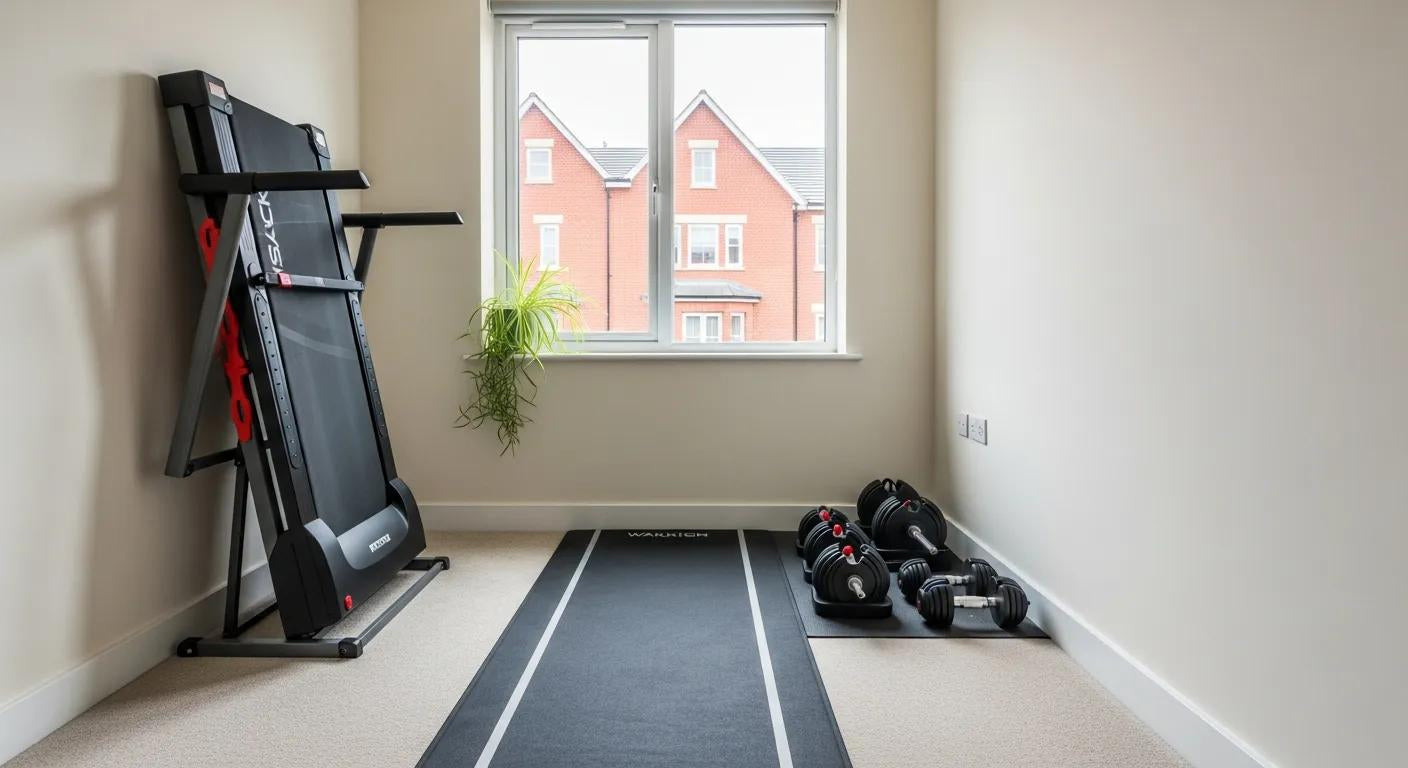
Start with a space audit and clear goals: measure the area you can use, check noise limits and building rules, and decide whether you want daily movement, strength progression or recovery to be your main focus. Choose multi‑purpose items — adjustable dumbbells, foldable benches and walking pads typically offer more utility per square metre than single‑purpose machines. Plan vertical storage and fold‑away solutions to keep living areas tidy and reduce friction to use. Map a small, safe workout zone, add a mat for floor work and assign storage spots so equipment is always ready.
Compact home gym buying checklist:
- Measure your intended workout area and clearance requirements.
- Set primary goals: NEAT, cardio, strength or recovery.
- Pick a foldable or stowable kit built for lasting performance.
- Use vertical storage and multi‑use furniture to save floor space.
This checklist turns measurements and goals into practical buys; the sections below cover selection factors and layout tips to finish planning.
Which Factors Should Guide Your Machine Selection?
Balance available space, training goals, noise constraints, budget and maintenance needs when choosing machines. If your usable area is under two square metres, favour walking pads or upright compact bikes; if you want full‑body conditioning, consider a narrow rower plus adjustable dumbbells that store upright. Prioritise low‑decibel motors and consider anti‑vibration mats to reduce neighbour disturbance. Also factor in ease of assembly and good customer support, and straightforward return options to avoid costly mistakes and ensure products will be used long-term.
Practical Tips for Building a Holistic Wellness Zone at Home
Design a small wellness zone that’s easy to use and calming to be in. Rely on good lighting, neat storage and a short routine rather than big, infrequent workouts. Use vertical shelving, foldable benches and stackable mats to reclaim floor area, and schedule micro‑sessions — short, frequent movement breaks — that fit your day. Add one recovery tool that suits your habits, such as a sauna tent or grounding mat, and keep water and simple supplies nearby to remove barriers to use. Small tweaks to layout and habit make compact gear into lasting daily practices.
Terra Wellness, an Aussie company focused on holistic health, offers compact categories aligned with these small‑space strategies: walking pads, folding and exercise bikes, rowing machines, home sauna tents and grounding mats. Their products emphasise durability and practical recovery features, backed by customer-focused policies to ensure you're happy with your choice. Choosing well‑matched Terra Wellness items can simplify decisions while keeping the focus on space, goals and routine.
Final setup tips summary:
- Start small: a walking pad or compact bike plus adjustable dumbbells is a versatile core.
- Prioritise storage and noise control to keep household harmony.
- Add one recovery modality that suits your routine — sauna tent or grounding mat.
- Iterate slowly: adjust equipment and layout based on what you actually use.
With focused choices and simple, repeatable routines, a compact home gym can deliver real results and sit comfortably within Aussie apartment life.