


How Titanium Cutting Boards Handle Bacteria Better Than Traditional Boards
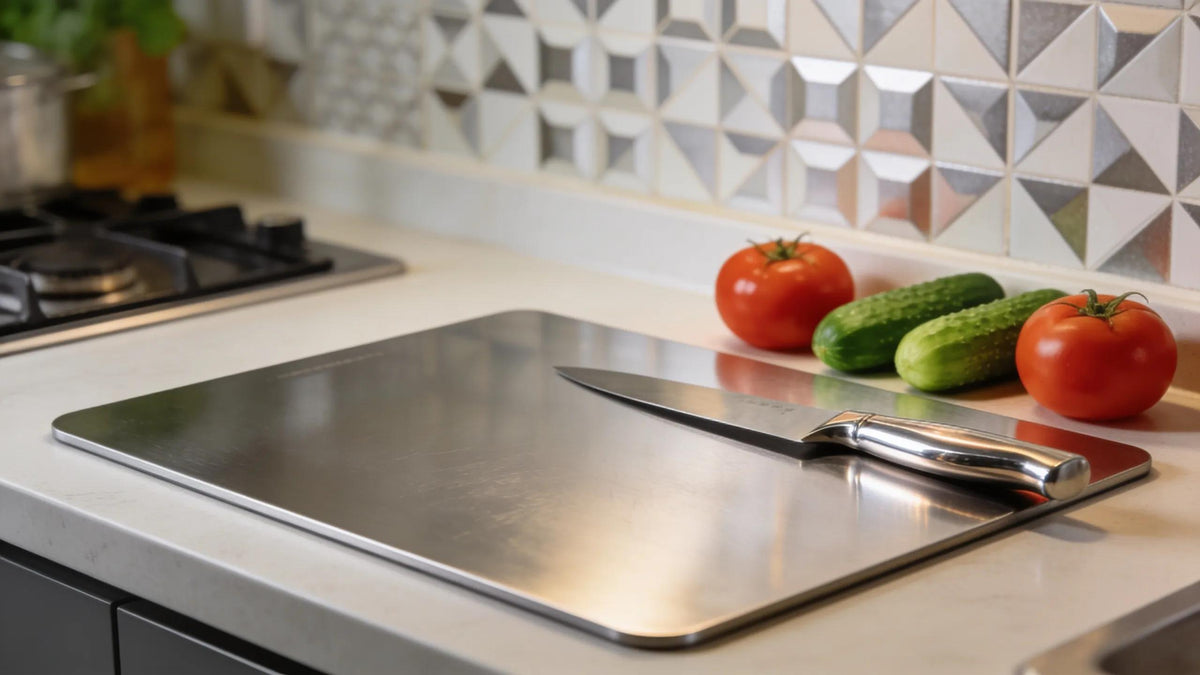
A smooth, non-porous cutting surface can be easier to rinse and inspect than a damaged or deeply scored board. That does not mean titanium automatically kills bacteria or replaces proper cleaning. Food safety still depends on washing, sanitising when appropriate, drying and preventing cross-contamination.
Non-Porous Does Not Mean Self-Sanitising
Titanium does not absorb moisture in the way an untreated porous material can. On a smooth board, food residue remains on the surface where it can be removed. However, bacteria can survive on many surfaces when residue is left behind, so a titanium board should never be described as maintenance-free or relied on as an antimicrobial treatment.
Food Safety Depends on Cleaning Practice
Wash the board promptly with warm water and dishwashing liquid, rinse it thoroughly and dry it before storage. After preparing raw meat, poultry or seafood, follow appropriate sanitising guidance and clean knives, hands and nearby surfaces. Use separate boards for raw animal products and ready-to-eat foods where practical.
Comparing Titanium, Wood and Plastic
Wood cutting boards
Wood can provide a stable, knife-friendly surface, but it needs care. Hand-wash it, avoid soaking and dry it upright. Condition it with a food-safe product if the manufacturer recommends this. Replace a wooden board if cracks, splitting or deep damage prevent effective cleaning.
Plastic cutting boards
Plastic is lightweight and often easy to wash. Deep knife grooves, warping and cracks can make residue harder to remove, so inspect the board regularly and replace it when it can no longer be cleaned thoroughly. Dishwasher suitability depends on the specific product.
Whatever the material, no board remains hygienic without correct handling. The most important controls are separating raw and ready-to-eat foods, cleaning after every task and replacing damaged equipment.
Maintaining the Terra Wellness Titanium Cutting Board
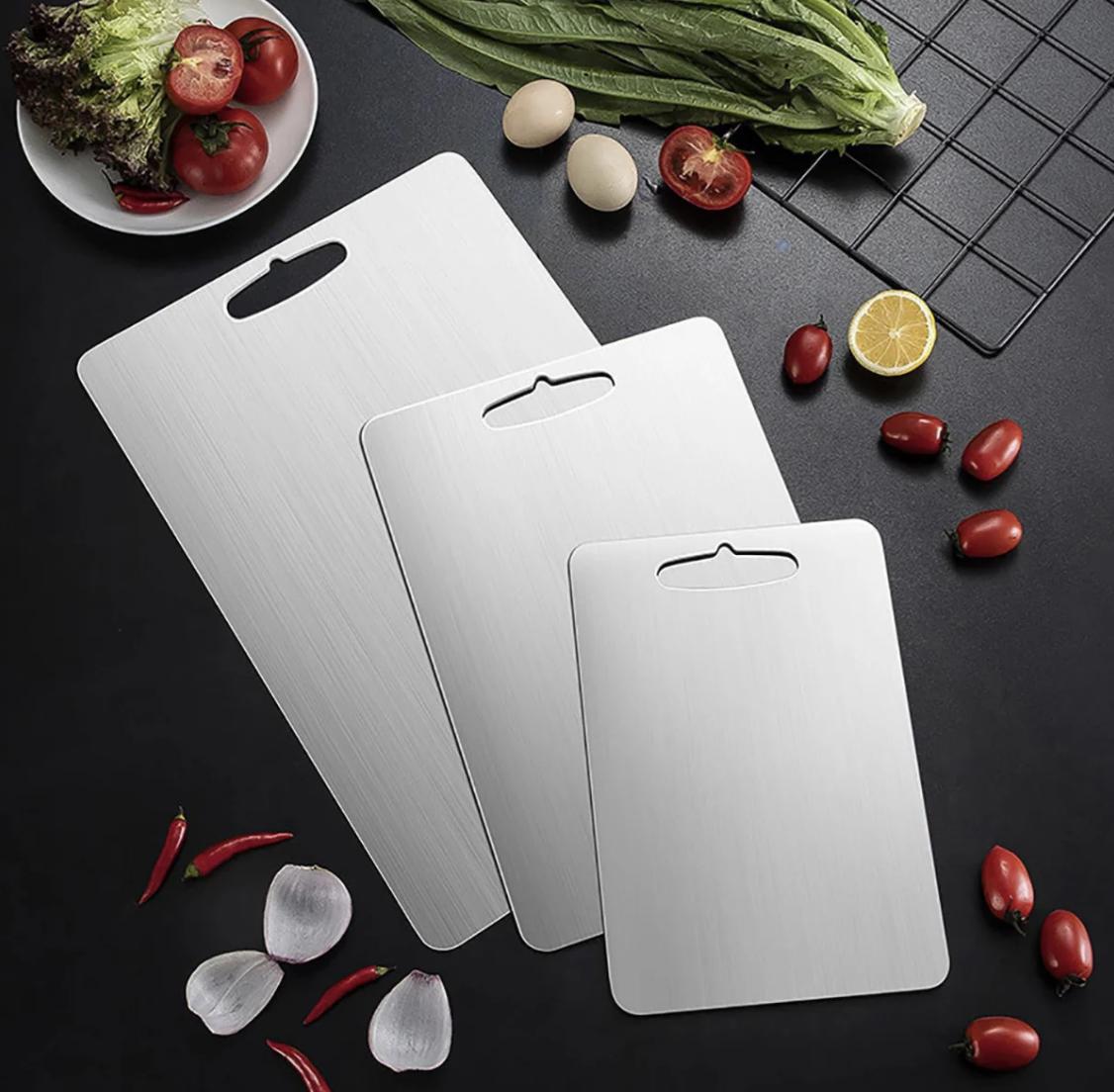
Terra Wellness markets its Titanium Cutting Board as a non-porous, easy-to-clean preparation surface. It is available in S (29 × 20 cm), M (34 × 23 cm), L (39 × 28 cm) and XL (46 × 30 cm). Choose a size that gives you enough room to work safely.
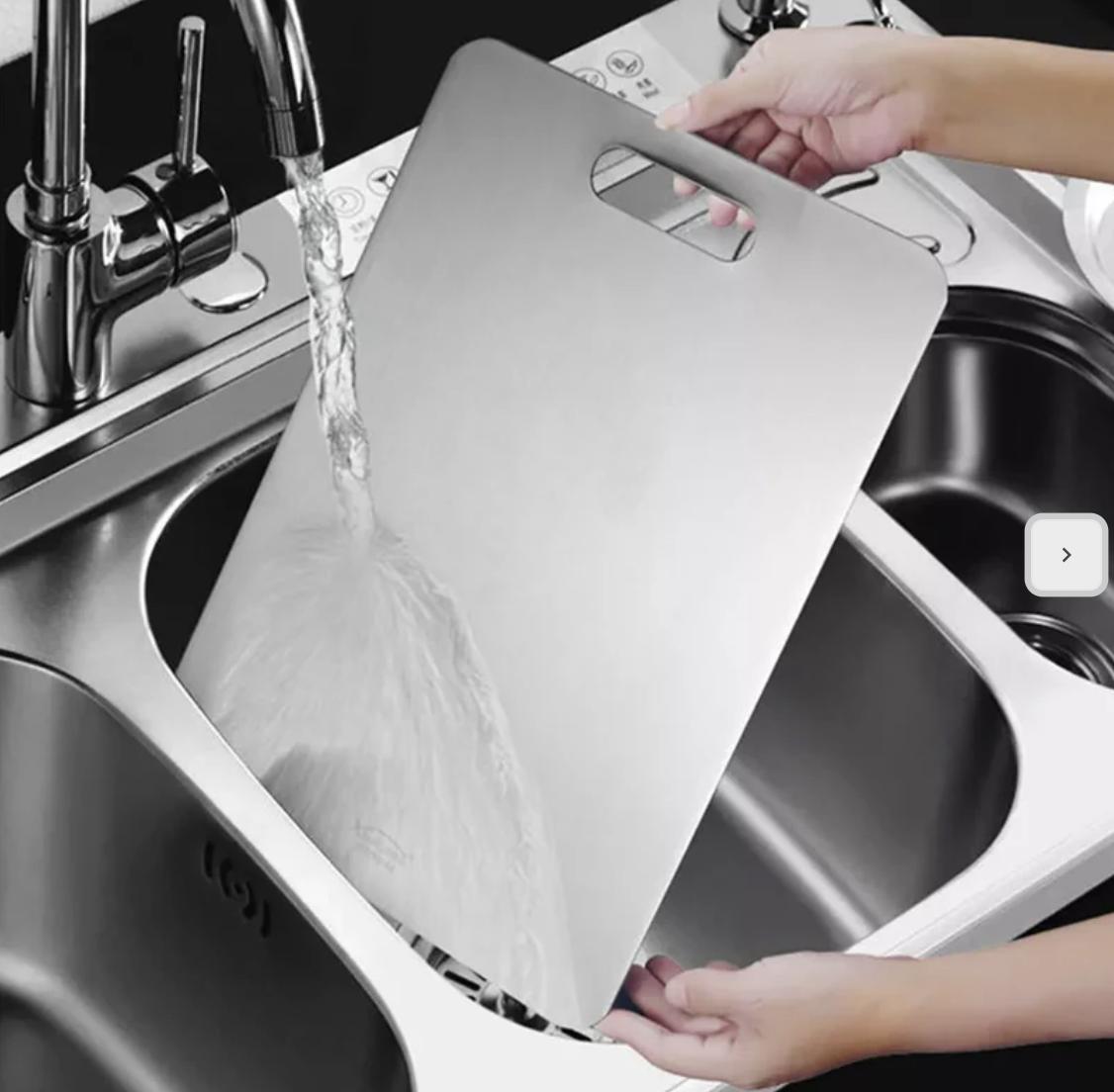
Clean and dry the board after each use and follow the care instructions supplied with it. Because titanium is a hard cutting surface, knife edges may need more frequent honing or sharpening than they would on softer wood or plastic. The practical benefit is a smooth, non-porous surface—not a guarantee that bacteria will be eliminated without cleaning.