






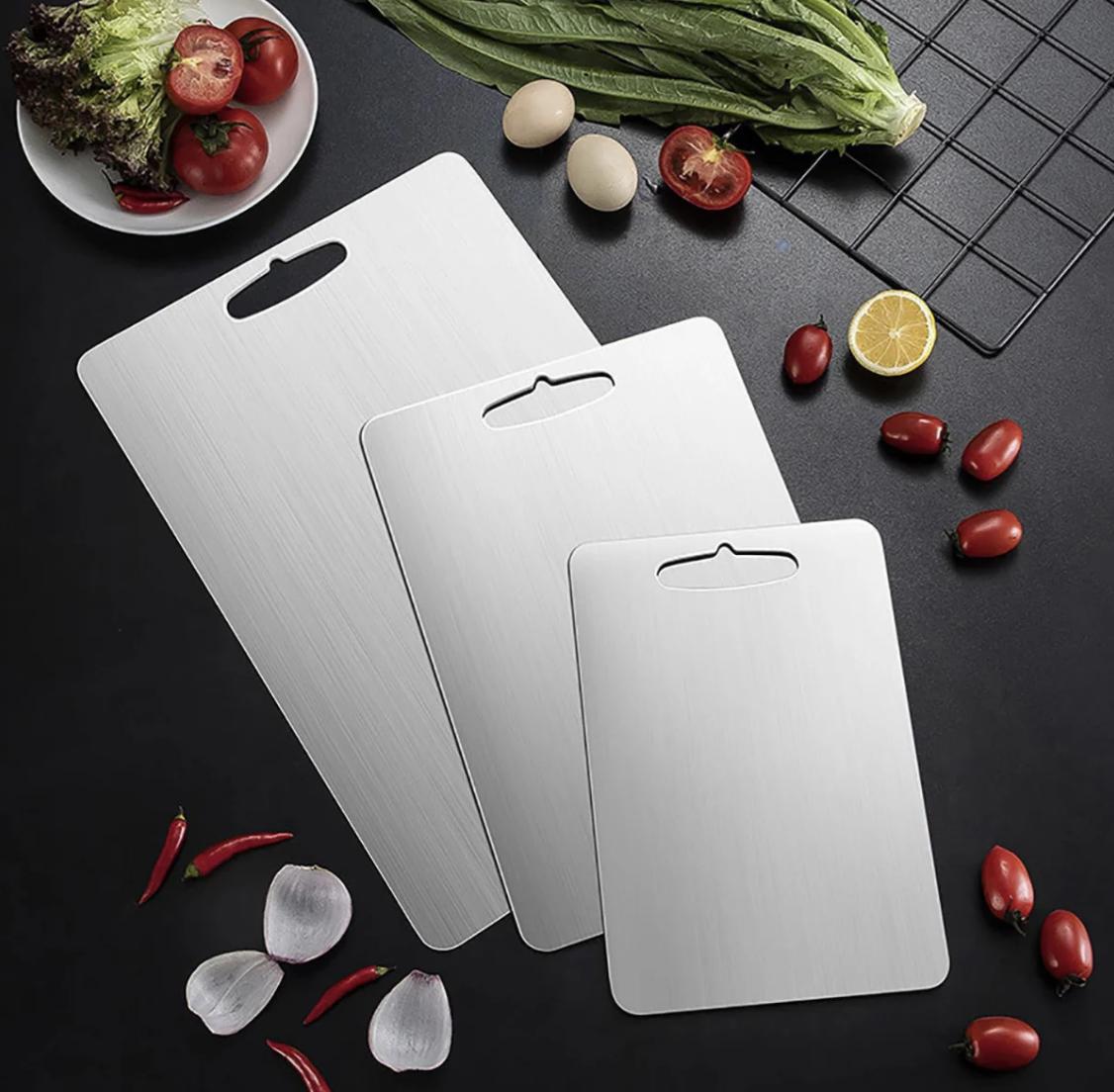
How to Preserve Food Flavour: Comparing Cutting Board Materials for Best Results
A clean cutting board should not add flavour to food. Unwanted taste and odour transfer usually comes from food residue, moisture, deep damage or using the same board for strongly flavoured ingredients without thorough cleaning. The right board is therefore the one you can clean, dry and maintain consistently.

How Cutting Boards Affect Flavour
Materials differ in porosity, surface hardness and care requirements. These features can influence whether odours linger and how easily residue is removed, but no board material automatically improves the taste of meat or vegetables. Good cleaning habits matter more than marketing claims.
Titanium, Wood, Plastic and Bamboo Compared
Titanium
A smooth titanium board is non-porous and easy to rinse, so it is less likely to retain moisture or odours when cleaned promptly. Its hard surface may dull knife edges faster than wood or plastic, so regular knife maintenance is part of the trade-off.
Wood
Wood is comfortable to cut on and generally gentle on knife edges. It should be hand-washed, dried promptly and conditioned with a food-safe product when the maker recommends it. Avoid soaking or leaving a wooden board damp.
Plastic
Plastic boards are lightweight and often easy to clean. Deep knife grooves can become harder to wash effectively, so heavily scored, warped or cracked boards should be replaced. Dishwasher suitability depends on the manufacturer’s instructions.
Bamboo
Bamboo boards are light and firm. Like timber boards, they should be washed by hand unless the maker states otherwise, dried upright and checked for splitting. Their relatively hard surface can also affect knife-edge wear.
Food Safety and Cross-Contamination
Separate raw and ready-to-eat foods
Use separate boards for raw meat, poultry or seafood and for foods that will be eaten without further cooking. If you use one board, wash and sanitise it thoroughly between tasks and clean knives, hands and nearby surfaces as well.
Replace boards that cannot be cleaned properly
No material remains hygienic without care. Replace a board when deep cuts, cracks, delamination or warping make effective cleaning difficult. A board should be fully dry before storage.
Cleaning Practices That Protect Flavour
Remove food promptly, wash with warm water and dishwashing liquid, rinse thoroughly and dry. Follow the board maker’s sanitising instructions after contact with raw animal products. Strong ingredients such as garlic, onion and chilli should be cleaned away before the next preparation task.
Caring for Wood and Bamboo
Do not leave wood or bamboo soaking in water. Dry the board on its edge so air can circulate, and use only a food-safe conditioner recommended for the material. If odours persist after proper cleaning, dedicate that board to savoury ingredients or replace it.
Caring for Titanium and Plastic
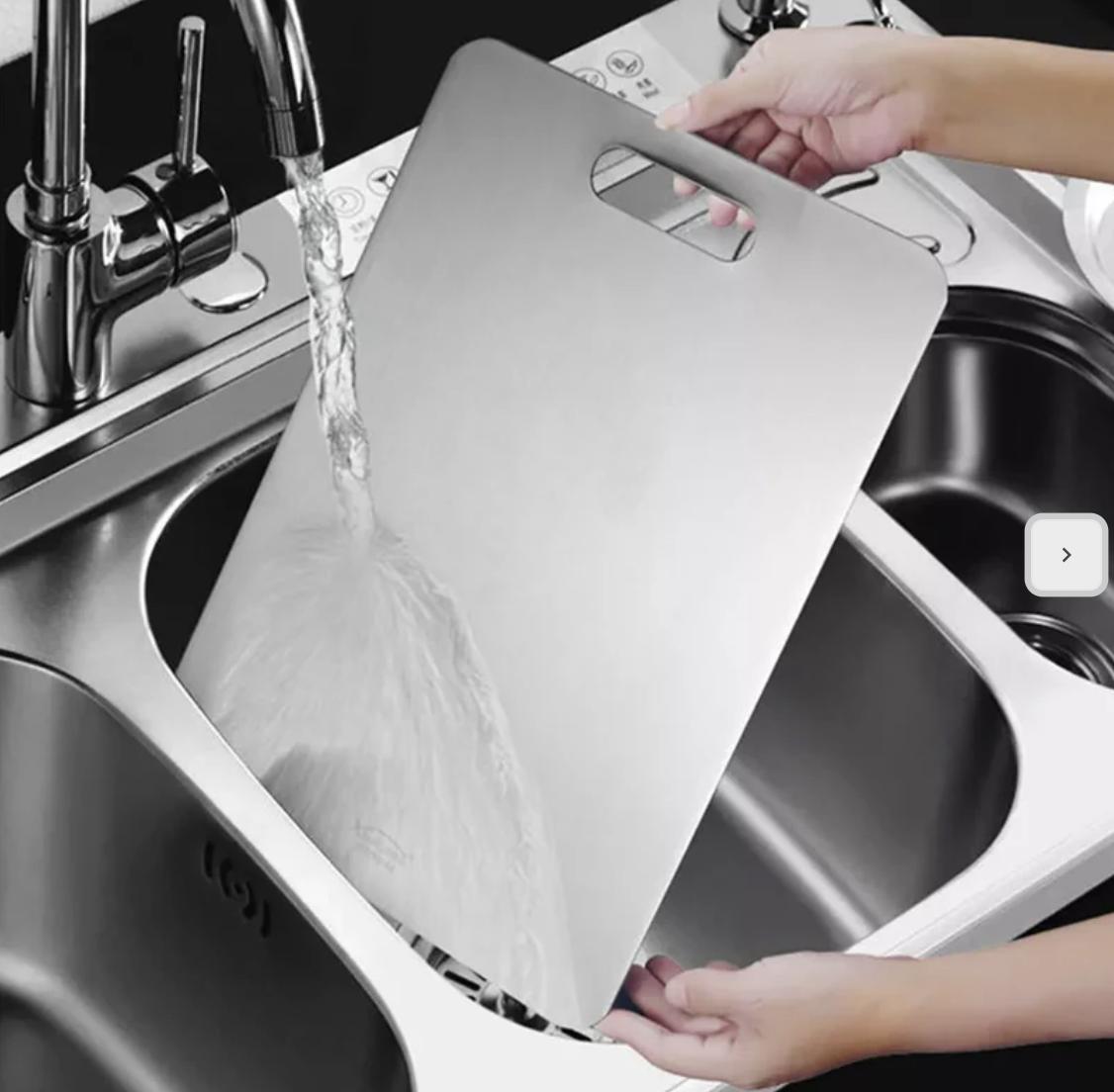
Wash smooth, non-porous surfaces after every use and inspect joints, scratches and grooves where residue may remain. Avoid abrasive products unless the manufacturer permits them. Follow the stated dishwasher guidance rather than assuming every titanium or plastic board is dishwasher-safe.
Knife Wear and Preparation Comfort
Harder surfaces and blade maintenance
Hard boards offer less cushioning under a knife. Titanium and some bamboo boards may therefore require more frequent honing or sharpening than softer wood or plastic. Use controlled pressure and maintain a stable, non-slip work surface.
The Terra Wellness Titanium Cutting Board
Available sizes and practical fit
Terra Wellness offers its Titanium Cutting Board in S (29 × 20 cm), M (34 × 23 cm), L (39 × 28 cm) and XL (46 × 30 cm). It is marketed as a non-porous, easy-to-clean preparation surface. Choose a size that fits your bench and leaves enough room to work safely.
Choosing the Best Board for Your Kitchen
Choose according to the foods you prepare, your cleaning routine, knife-care preferences and available space. Whatever the material, keep it clean and dry, separate high-risk preparation tasks and replace it when damage prevents thorough cleaning. Those habits do more to protect flavour and food safety than any single board material.