






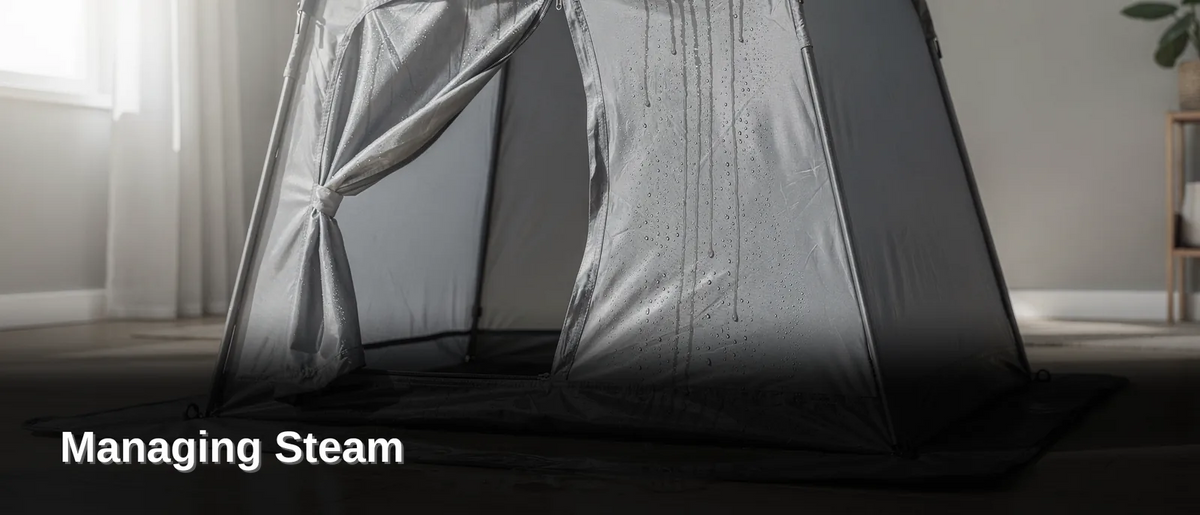
Managing Steam and Condensation in Your Sauna Tent
Condensation control around a home sauna tent depends on airflow, placement, and surface protection. Positioning the Terra Wellness sauna tent on a waterproof mat and away from walls helps reduce moisture transfer. Opening a window or
Key Takeaways
Moisture damages homes severely; proper ventilation prevents water leaks and structural deterioration behind walls.
Regular maintenance keeps sauna tents functional and extends their lifespan significantly with minimal effort.
Adequate airflow around a sauna tent helps reduce lingering humidity.
Why Does Condensation Build Up In A Sauna Tent?
Trapped steam condenses the moment it meets cooler surfaces inside a sauna tent, leaving moisture on walls, seams, and flooring beneath the unit. Moisture ranks among the toughest threats to a safe, healthy home environment, capable of weakening nearby structures and degrading indoor air quality when left unmanaged. For anyone running a home sauna in a garage or on a balcony, this isn't a minor nuisance. It's a maintenance issue that deserves the same attention bathroom renovators give to water-proofing.
Who Handles Sauna Tent Setup And Ventilation?
Owners should follow the product instructions for placement and ventilation. If moisture is affecting walls, flooring or electrical areas, consult a suitably qualified building professional.
Several practical steps can help reduce moisture build-up. A few principles help reduce build-up:
Position the tent away from walls and soft furnishings to allow airflow.
Use a tray or waterproof mat beneath the unit.
Open vents between sessions to let trapped steam escape.
Wipe down interior surfaces after each use.
Thoughtful sauna ventilation habits, paired with sensible placement, keep moisture from settling where it shouldn't. Terra Wellness positions its home sauna offering within a broader Home & Kitchen range, reflecting the same quality standard applied across its home wellness products.
How Should You Set Up Sauna Ventilation?
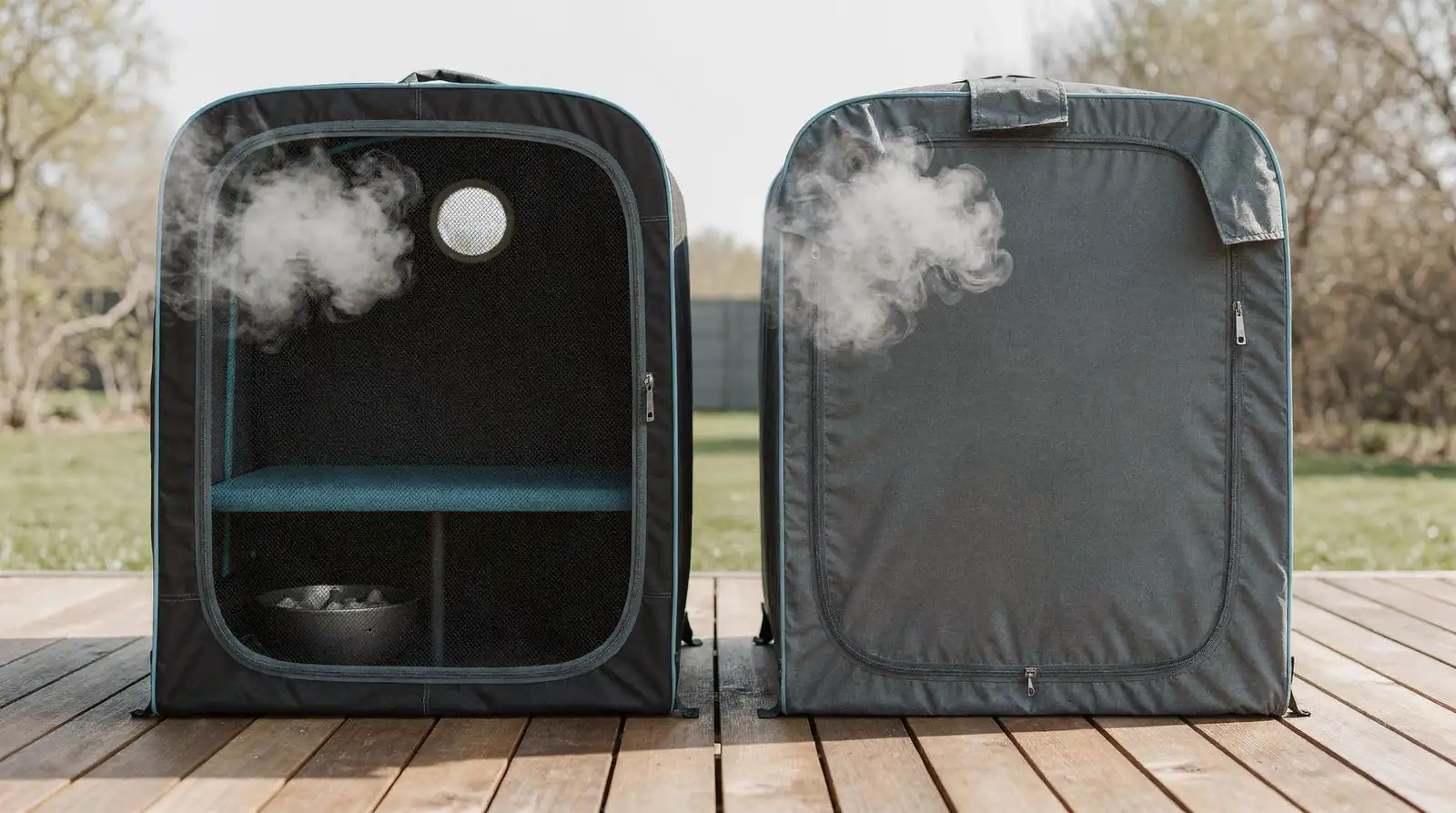
Good airflow separates a safe sauna tent setup from a stuffy, uncomfortable one. Fresh air needs an entry point and a stale-air exit point, positioned. Steam circulates rather than pools in one corner. Without that cross-flow, heat builds unevenly and the fabric interior stays damp longer than it should.
Owners placing a home sauna in a garage or on a balcony face different airflow conditions than those setting up indoors in a closed room. Garages often have natural gaps around doors that assist circulation, while balconies benefit from open-air exposure. Indoor setups require more deliberate planning, since a closed bedroom or living space traps humidity against walls and furnishings.
Proper sauna ventilation also protects the investment between sessions. Regular upkeep keeps a portable sauna tent functional and inviting, preserving the fabric and zippers long after the first use. Owners in Penshurst, Victoria, and other parts of Australia can benefit from making airflow checks part of standard maintenance.
Setup questions don't need to go unanswered. Terra Wellness offers text message support Monday to Friday, 10 am to 5 pm AEST, plus email assistance at support@terrawellness.com.au for anyone troubleshooting placement or airflow issues.
What Keeps A Sauna Tent Dry Long-Term?
Routine drying habits help keep a sauna tent fresh and reduce the chance of persistent moisture or odours. Consistent care after each session helps protect the fabric, zippers and surrounding area.
A dependable drying routine rests on a few simple actions repeated after each use:
Unzip and open all panels fully once the session ends, letting trapped humidity escape immediately.
Wipe down interior surfaces to remove condensation before it settles into seams or flooring.
Allow the tent to air out completely before folding or storing it away.
Does a sauna tent setup need daily maintenance?
Daily maintenance isn't required, but the drying routine should follow each session. Owners managing a sauna tent setup in tighter spaces, like a garage corner or balcony nook, benefit most from consistency since airflow is naturally more limited there.
Who can advise on drying and ventilation questions?
Terra Wellness, founded by Sarah and Dylan, curates home wellness products with everyday usability in mind, including sauna tents built for Australian households. Owners seeking guidance on drying routines or broader home sauna care can reach the team Monday to Friday, 10 am to 5 pm AEST, when questions about long-term upkeep are best addressed directly.
FAQ
Why does condensation build up in a sauna tent?
Trapped steam condenses when it meets cooler surfaces inside the tent, leaving moisture on walls, seams, and the flooring beneath the unit. Unmanaged moisture weakens nearby structures and degrades indoor air quality.
Who is responsible for sauna tent ventilation and setup?
Owners should follow the product instructions for placement and airflow. Positioning the tent correctly and using a waterproof mat beneath it can help reduce moisture build-up.
How should airflow be arranged for a sauna tent?
Fresh air needs an entry point and a stale-air exit point so steam circulates instead of pooling in one corner. Use a dry, sheltered location with appropriate ventilation, such as an openable window or suitable exhaust fan, while following the product instructions.
Conclusion
In closing, managing steam and condensation around your home sauna tent transforms the experience from potentially problematic to genuinely restorative. By implementing proper ventilation, strategic moisture control, and routine maintenance, you create an environment where wellness thrives rather than deteriorates. These practical measures protect your investment whilst ensuring every session delivers the comfort and health benefits you seek. A well-maintained sauna space becomes a sanctuary for relaxation and vitality, a cornerstone of your holistic wellbeing routine.