





Titanium Chopping Board vs Wood, Plastic and Bamboo: Which Wins for Australian Kitchens?
There is no single chopping-board material that wins every comparison. Titanium, wood, plastic and bamboo differ in surface hardness, care, weight and how they respond to wear. The best choice is the board you can use safely, clean thoroughly and maintain consistently.
Comparing the Four Materials
Titanium
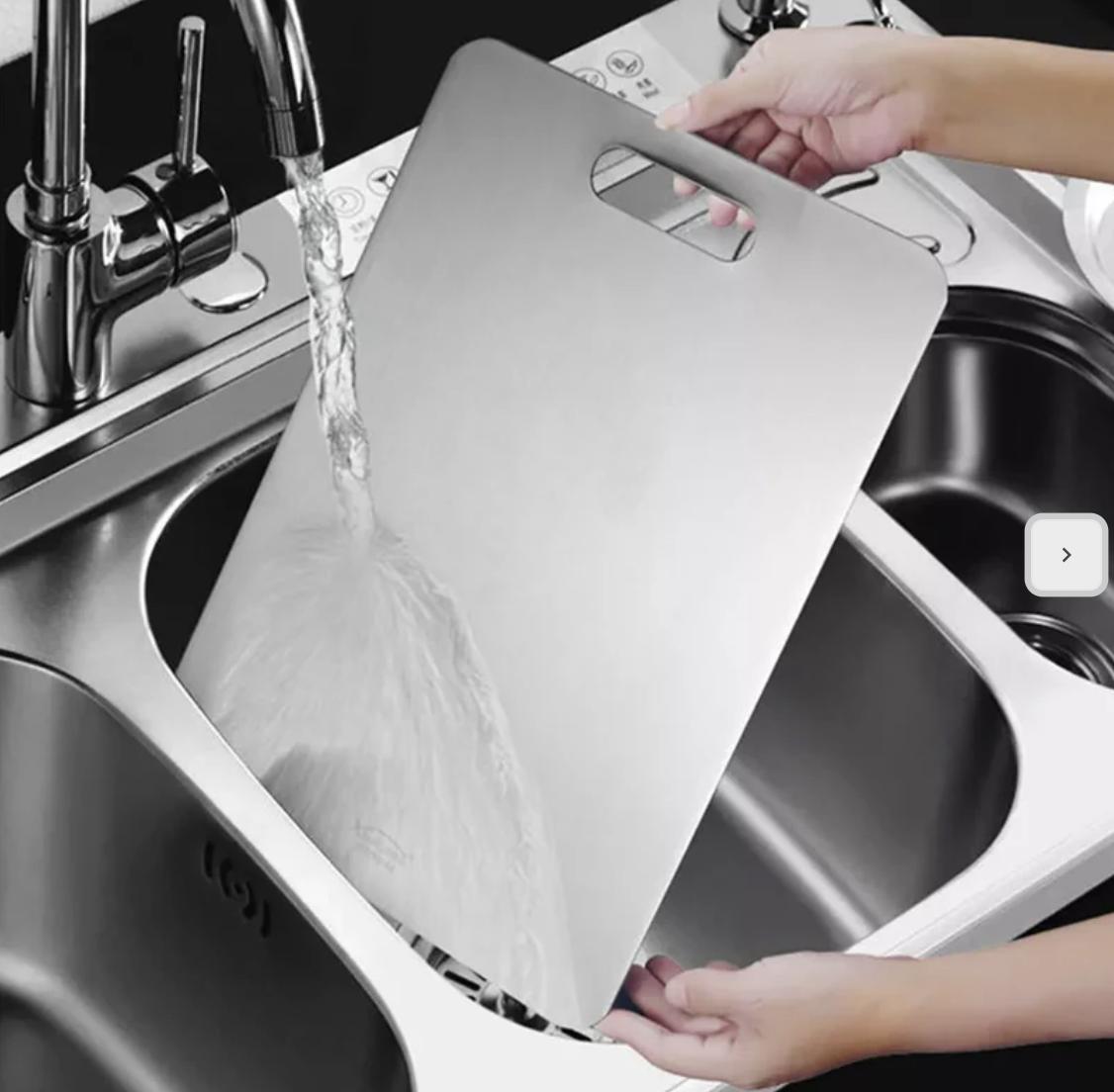
Titanium provides a smooth, non-porous and corrosion-resistant surface. It is easy to rinse and does not absorb moisture, but its hardness can dull knife edges faster than softer wood or plastic. It still requires proper washing and does not sanitise itself.
Wood
A well-made wooden board offers a stable surface and is generally gentle on knives. It requires hand-washing, prompt drying and occasional conditioning when recommended. Cracks or deep damage can make cleaning difficult.
Plastic
Plastic boards are light, affordable and often easy to clean. Deep scoring, warping or cracks are signs that replacement may be needed. Dishwasher suitability varies, so follow the manufacturer’s instructions.
Bamboo
Bamboo is light and firm. It is commonly cared for in a similar way to wood: avoid soaking, dry it upright and condition it if the maker recommends this. Its relatively hard surface can affect knife-edge wear.
Hygiene Depends on More Than Material
Preventing cross-contamination
A non-porous board can be straightforward to clean, but no material automatically prevents bacterial contamination. Use separate boards for raw meat, poultry or seafood and foods that will be eaten without further cooking. Wash and sanitise as appropriate, clean hands and knives, and allow boards to dry fully.
Knife Edge Care
Hard surfaces offer less cushioning under a knife. Titanium and some bamboo boards may require more frequent honing or sharpening, while wood and many plastics are gentler on blade edges. Use controlled pressure and keep the board stable while cutting.
Cleaning a Titanium Board
Remove residue promptly, wash with warm water and dishwashing liquid, rinse and dry. Follow the product’s care instructions for sanitising and dishwasher use. Avoid claiming that a quick wipe is sufficient after raw food preparation.
Caring for Wood and Bamboo
Hand-wash unless the maker states otherwise, do not soak and dry the board on its edge. Use only a food-safe conditioner appropriate to the material. Replace the board if splitting or delamination prevents effective cleaning.
Caring for Plastic
Clean plastic after every use and inspect knife grooves closely. Replace a board when cuts are too deep to clean, when it warps or when cracks appear. A dedicated board for raw animal products can make task separation easier.

Durability and Replacement
Durability depends on construction, thickness, use and care. Titanium resists moisture and corrosion, while a quality timber board can last for years when maintained. Plastic and bamboo also vary widely. Replace any board when damage compromises stability or cleaning.
Environmental Claims Need Context
A material is not automatically sustainable because it is natural or long-lasting. Sourcing, adhesives, manufacturing, transport, expected lifespan and local disposal or recycling options all affect environmental impact. Look for specific, verifiable information rather than broad “eco-friendly” labels.
Match the Board to Your Cooking
Consider bench space, the foods you prepare, cleaning routine, knife-care preferences and storage. Some cooks use a wood or plastic board for frequent knife work and a separate non-porous board for selected tasks. More than one board can also help reduce cross-contamination.
The Terra Wellness Option
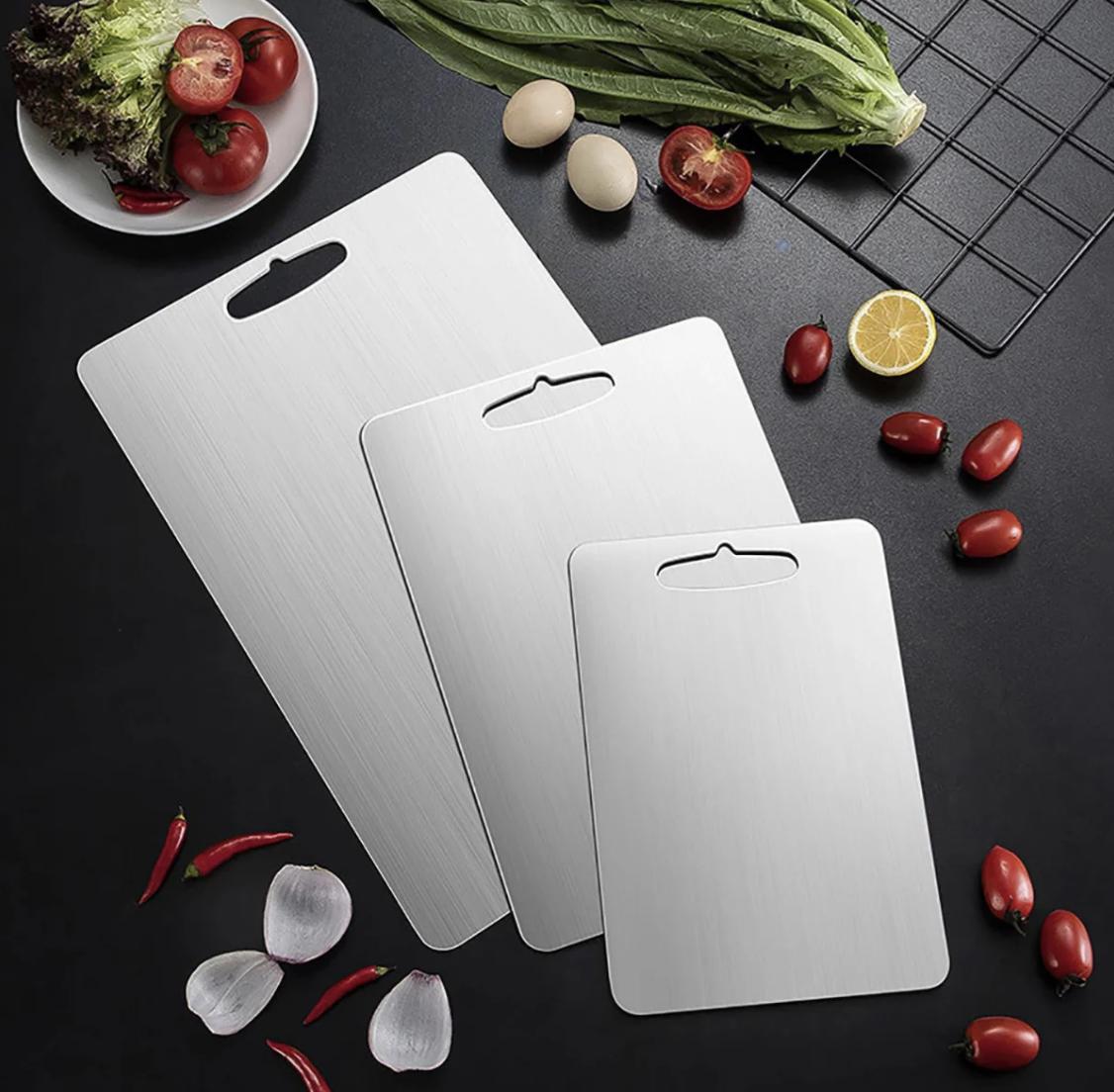
Terra Wellness offers a Titanium Cutting Board in S (29 × 20 cm), M (34 × 23 cm), L (39 × 28 cm) and XL (46 × 30 cm). It is marketed as a non-porous, easy-to-clean preparation surface. Choose a size that gives you enough room to work while fitting your bench and storage area.
Which Material Wins?
Titanium suits cooks who prioritise a smooth, non-porous surface and accept the knife-care trade-off. Wood offers a comfortable cutting feel but needs regular care. Plastic is convenient and economical but should be replaced when deeply scored, while bamboo is light and firm but also needs careful drying. The safest choice is a sound board paired with good hygiene and maintenance.