





Titanium Cutting Board: The Must-Have Durable and Non-Toxic Kitchen Tool for Every Chef
Titanium cutting boards change how kitchens manage hygiene and food safety. They combine antibacterial benefits with toughness that often outperform wood and plastic. This article reviews their health and hygiene advantages, compares them to other materials, explains why chefs use them, and offers simple care tips to keep them performing well.
What Are the Key Health and Hygiene Benefits of Titanium Cutting Boards?
Titanium boards provide clear health and hygiene advantages. Their antibacterial surface reduces cross-contamination risk. Unlike wood or plastic, titanium won’t harbour bacteria and resists stains and odours, keeping your prep area cleaner and safer.
How Does Titanium Provide Antibacterial and Non-Toxic Properties?
Titanium's molecular structure helps limit bacterial growth. Titanium surfaces can inhibit harmful bacteria, lowering contamination risk from raw meats and other high-risk foods.
This antimicrobial surface is a great way to improve food safety in your kitchen.
Why Is Kitchen Hygiene Improved with Titanium Cutting Boards?
Titanium boards improve hygiene by reducing cross-contamination opportunities. Their smooth, non-porous surface is quick to clean and simple to sanitise. Kitchens using titanium surfaces can have noticeably fewer bacteria on work areas.
How Durable Are Titanium Cutting Boards Compared to Other Materials?
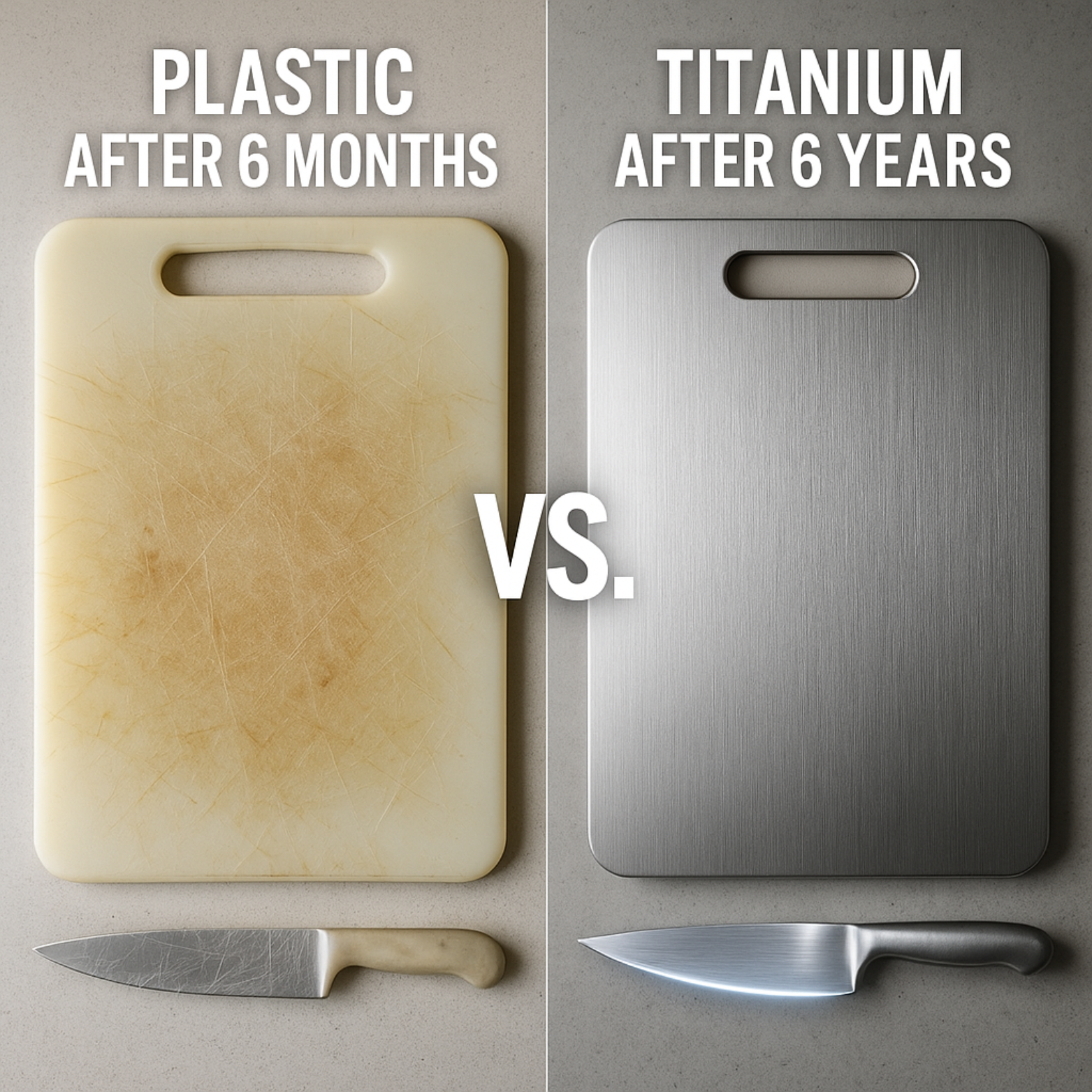
Titanium boards outlast many wooden and plastic options. They resist warping, cracking and heavy wear, so they remain reliable with regular use. That durability makes them a sensible long-term kitchen investment.
This durability comes from titanium's unique material properties used across many industries.
What Makes Titanium Cutting Boards More Durable Than Wood or Plastic?
Titanium's strength and dimensional stability make it more durable than wood or plastic. Wood can absorb moisture and trap bacteria; plastic can scratch and degrade. Titanium resists these problems and does not retain food particles or odours.
By comparison, traditional board materials face clear hygiene and longevity challenges.
How Should You Maintain and Clean a Titanium Cutting Board?
Care is straightforward: wash with warm, soapy water and a soft sponge. Avoid abrasive cleaners and scouring pads. For tougher stains or odours, a vinegar and baking-soda paste works well. Regular cleaning keeps the board in top condition.
Why Are Titanium Cutting Boards the Best Choice for Professional Chefs?
Chefs choose titanium boards for a practical mix of durability, hygiene and handling. They are lightweight yet sturdy, easy to move, and their surface is gentle on knives while remaining dependable for heavy use.
What Features Make Titanium Cutting Boards Ideal for Chef Use?
Titanium boards offer chefs tangible benefits: non-slip surfaces for stability, resistance to stains and odours, and a light design that simplifies transport and storage during busy service.
What Do Chefs Say About Using Titanium Cutting Boards?
Chefs report titanium boards perform consistently and last a long time. They appreciate easy cleaning and a uniform surface that speeds prep and supports good hygiene practices.
How Do Titanium Cutting Boards Compare to Other Cutting Board Materials?
Compared with wood and plastic, titanium has distinct pros and some trade-offs. Wood is traditional but requires more care and can trap bacteria. Plastic is inexpensive and easy to clean, but it scratches and wears down. Titanium delivers superior hygiene and longevity but typically involves a higher initial investment.
What Are the Advantages and Disadvantages of Wood, Plastic, and Titanium Boards?
- Hygiene: Titanium is non-porous and resistant to bacteria, while wood can absorb moisture, and plastic can scratch.
- Durability: Titanium boards do not warp or crack, unlike wood and plastic, which can degrade over time.
- Maintenance: Titanium requires minimal maintenance compared to wood, which needs regular oiling, and plastic, which can stain.
While titanium boards may cost more initially, their long lifespan often makes them a worthwhile choice.
Which Cutting Board Material Is Best for Health-Conscious Users?
For health-conscious cooks, titanium is a compelling choice. Its non-toxic, antibacterial surface lowers contamination risk, and its durability means the board remains safe and effective for many years.
Frequently Asked Questions
What are the environmental benefits of using titanium cutting boards?
Titanium cutting boards are environmentally friendly due to their durability and recyclability. Unlike plastic boards that contribute to landfill waste, titanium boards can last for many years, reducing the need for frequent replacements. Additionally, titanium is a recyclable material, which means that at the end of its life, it can be processed and reused, minimising environmental impact. Choosing titanium helps promote sustainability in the kitchen while ensuring a long-lasting product.
How do titanium cutting boards compare in price to other materials?
While titanium cutting boards typically have a higher upfront cost compared to wood and plastic options, their long lifespan and durability often make them a more economical choice in the long run. Unlike cheaper materials that may need to be replaced frequently, titanium boards resist wear and tear, saving money over time. When considering the total cost of ownership, titanium cutting boards can be a wise investment for both home cooks and professional chefs.
Can titanium cutting boards be used for food preparation other than cutting?
Yes, titanium cutting boards can be used for various food preparation tasks beyond cutting. Their smooth surface is perfect for rolling dough, preparing pastries, or even serving cheese and charcuterie. The non-porous nature of titanium prevents absorption of food odours and flavours, making it versatile for different culinary applications. This multifunctionality adds to the value of having a titanium cutting board in your kitchen.
What should I consider when choosing a titanium cutting board?
When selecting a titanium cutting board, consider factors such as size, thickness, and surface texture. A thicker board may provide better stability and durability, while a non-slip surface enhances safety during use. Additionally, check for food-grade certification to ensure it meets safety standards. Customer reviews can also provide insights into the board's performance and longevity, helping you make an informed decision that suits your cooking needs.
How do I store my titanium cutting board to maintain its quality?
To maintain the quality of your titanium cutting board, store it in a dry, cool place away from direct sunlight. Avoid stacking heavy items on top of it to prevent warping. If possible, use a dedicated cutting board holder or rack to keep it upright and protected. Regular cleaning and proper storage will help ensure that your titanium board remains in excellent condition for years to come.
How do titanium cutting boards compare in price to other materials?
While titanium cutting boards typically have a higher upfront cost compared to wood and plastic options, their long lifespan and durability often make them a more economical choice in the long run. Unlike cheaper materials that may need to be replaced frequently, titanium boards resist wear and tear, saving money over time. When considering the total cost of ownership, titanium cutting boards can be a wise investment for both home cooks and professional chefs.
Are there any specific uses where titanium cutting boards excel?
Titanium cutting boards excel in environments where hygiene is paramount, such as professional kitchens, restaurants, and catering services. Their non-porous, antibacterial surface makes them ideal for preparing raw meats, seafood, and other high-risk foods. Additionally, their durability allows them to withstand heavy use without warping or cracking, making them suitable for busy culinary settings. Chefs appreciate their lightweight design, which facilitates easy handling and storage during service.
Can titanium cutting boards be used for food preparation other than cutting?
Yes, titanium cutting boards can be used for various food preparation tasks beyond cutting. Their smooth surface is perfect for rolling dough, preparing pastries, or even serving cheese and charcuterie. The non-porous nature of titanium prevents absorption of food odours and flavours, making it versatile for different culinary applications. This multifunctionality adds to the value of having a titanium cutting board in your kitchen.
What should I consider when choosing a titanium cutting board?
When selecting a titanium cutting board, consider factors such as size, thickness, and surface texture. A thicker board may provide better stability and durability, while a non-slip surface enhances safety during use. Additionally, check for food-grade certification to ensure it meets safety standards. Customer reviews can also provide insights into the board's performance and longevity, helping you make an informed decision that suits your cooking needs.
Are titanium cutting boards safe for all types of food?
Yes. Titanium boards are suitable for raw meats, fruits and vegetables. Their non-porous surface prevents juices and bacteria from being absorbed, and the antibacterial properties reduce cross-contamination.
How do I know if my titanium cutting board is of high quality?
Look for food-grade titanium and clear manufacturer specifications. Check for a non-slip surface, stain resistance and easy-clean features. Customer reviews also help reveal real-world performance and durability.