



Titanium vs Stainless Steel Kitchenware: What Australian Cooks Should Know
Titanium and stainless steel are both used in kitchen products, but the label on its own does not tell you how a pot, pan or preparation surface will perform. Construction, thickness, coatings and care instructions all matter. This guide explains the practical differences without treating either material as universally better.

Key Differences
What the material label means
Stainless steel is an alloy containing chromium and other elements, while titanium products may be solid titanium, titanium-clad or coated with a titanium-reinforced finish. Check the full specification because a coating and a solid-metal product can have very different care requirements.
Weight and construction
Titanium has a high strength-to-weight ratio and is often lighter than comparable stainless-steel products. Weight still depends on thickness, handles, bases and any bonded layers. Multi-layer stainless cookware may be heavier because it combines metals to improve heat distribution.
Durability and corrosion resistance
Both materials can resist corrosion when properly manufactured and maintained. Stainless steel is widely used for hard-wearing kitchen equipment, while titanium is valued where low weight and corrosion resistance are priorities. Scratching, denting and coating wear depend on the finished product rather than the metal name alone.
Cooking Performance and Food Contact
Heat distribution
Pure titanium is not an especially good heat conductor, so thin cookware can develop hot spots. Stainless-steel cookware often uses an aluminium or copper core to spread heat more evenly. For any pan, base construction and heat control are more useful indicators than a broad material claim.
Food-contact considerations
Titanium and quality stainless steel are commonly used for food-contact applications. A finished item’s suitability also depends on its coatings, joins and condition. Follow the manufacturer’s temperature, utensil and cleaning guidance, and stop using cookware if a coating peels or the structure is damaged.
Titanium in the Terra Wellness range
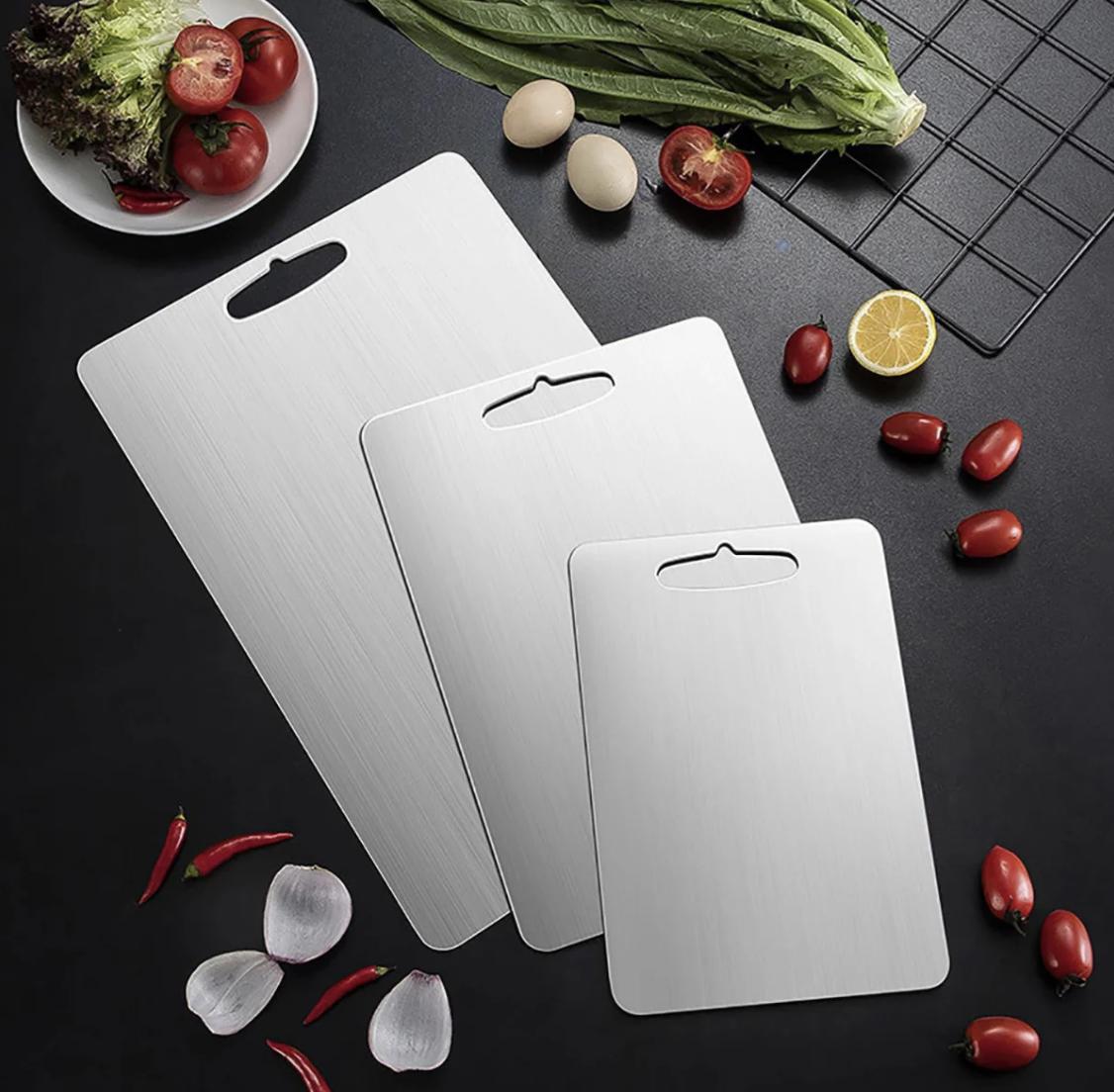
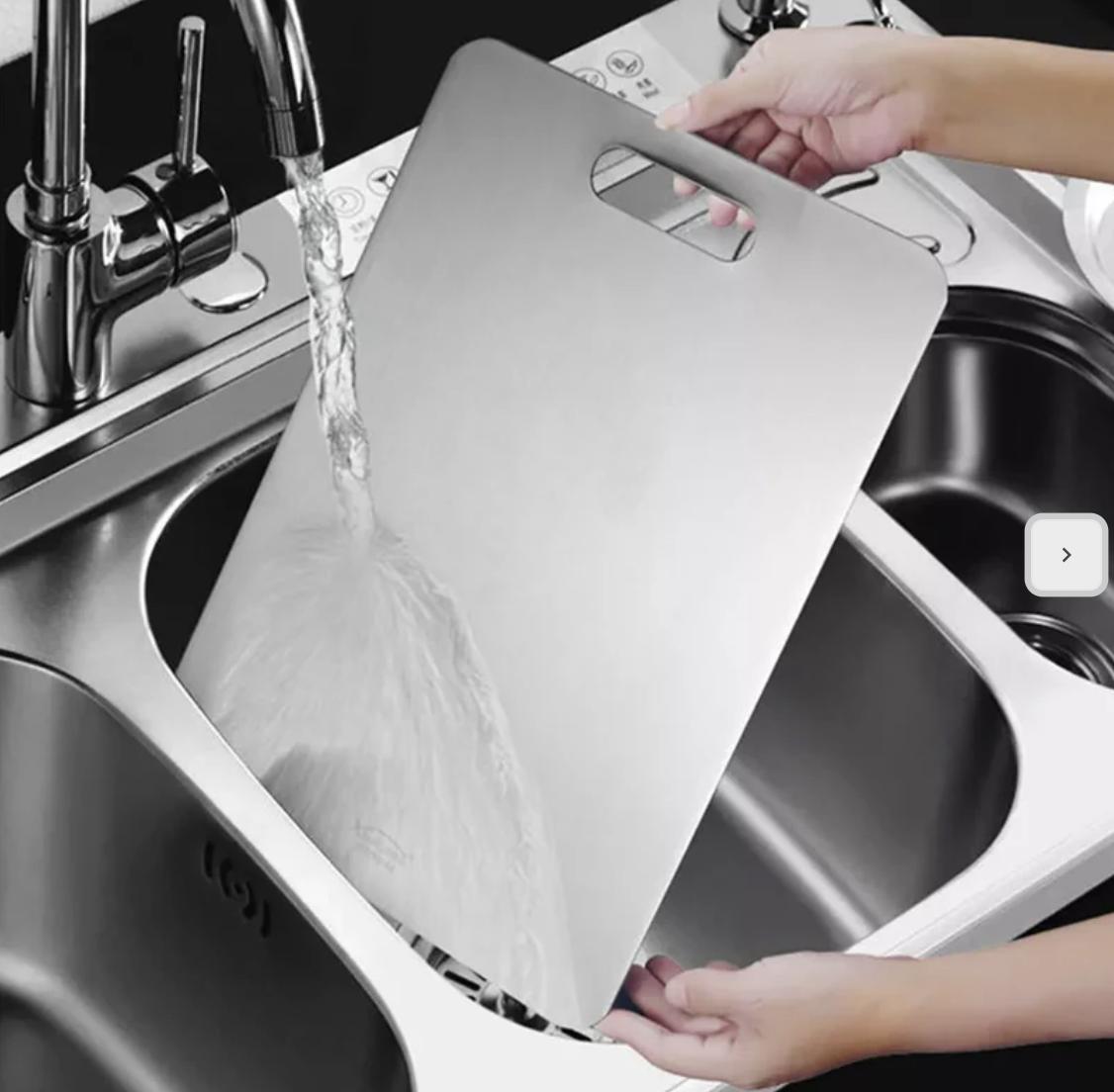
Terra Wellness currently offers a Titanium Cutting Board, rather than pots or pans. The board is marketed as a non-porous, easy-to-clean preparation surface. Because it is hard, knife edges may need more frequent honing or sharpening than they would on softer wood or plastic.
Choosing and Caring for Kitchenware
Choose for the task
For home cookware, consider cooktop compatibility, base construction, oven limits, handles and warranty. For preparation surfaces, consider size, stability, cleaning and knife care. A lighter product may be useful for travel or easier handling, while a heavier clad pan may suit searing and everyday stovetop work.
Cleaning and maintenance
Use the instructions supplied with the product. Allow hot cookware to cool before washing, avoid prolonged contact with salty residue and use non-abrasive cleaners where recommended. Coated products may require silicone or wooden utensils even when the underlying item contains titanium.
Making an informed comparison
Titanium can reduce weight, while stainless steel offers familiar durability and is available in many layered constructions. Compare the entire product, not just the headline metal, and match it to the way you cook, clean and store kitchenware. Neither material eliminates the need for sensible care.