






Why Titanium Cookware Is the Preferred Choice for Australian Home Cooks
Titanium has attracted attention in Australian kitchens because it is light, corrosion-resistant and durable. However, “titanium cookware” is a broad label: a product may be made from titanium, use titanium as one layer, or use a titanium-reinforced coating. Those constructions can perform very differently, so the material name alone does not guarantee even heating, non-stick performance or suitability for every cooktop.
Benefits of Titanium Cookware
Light weight and corrosion resistance
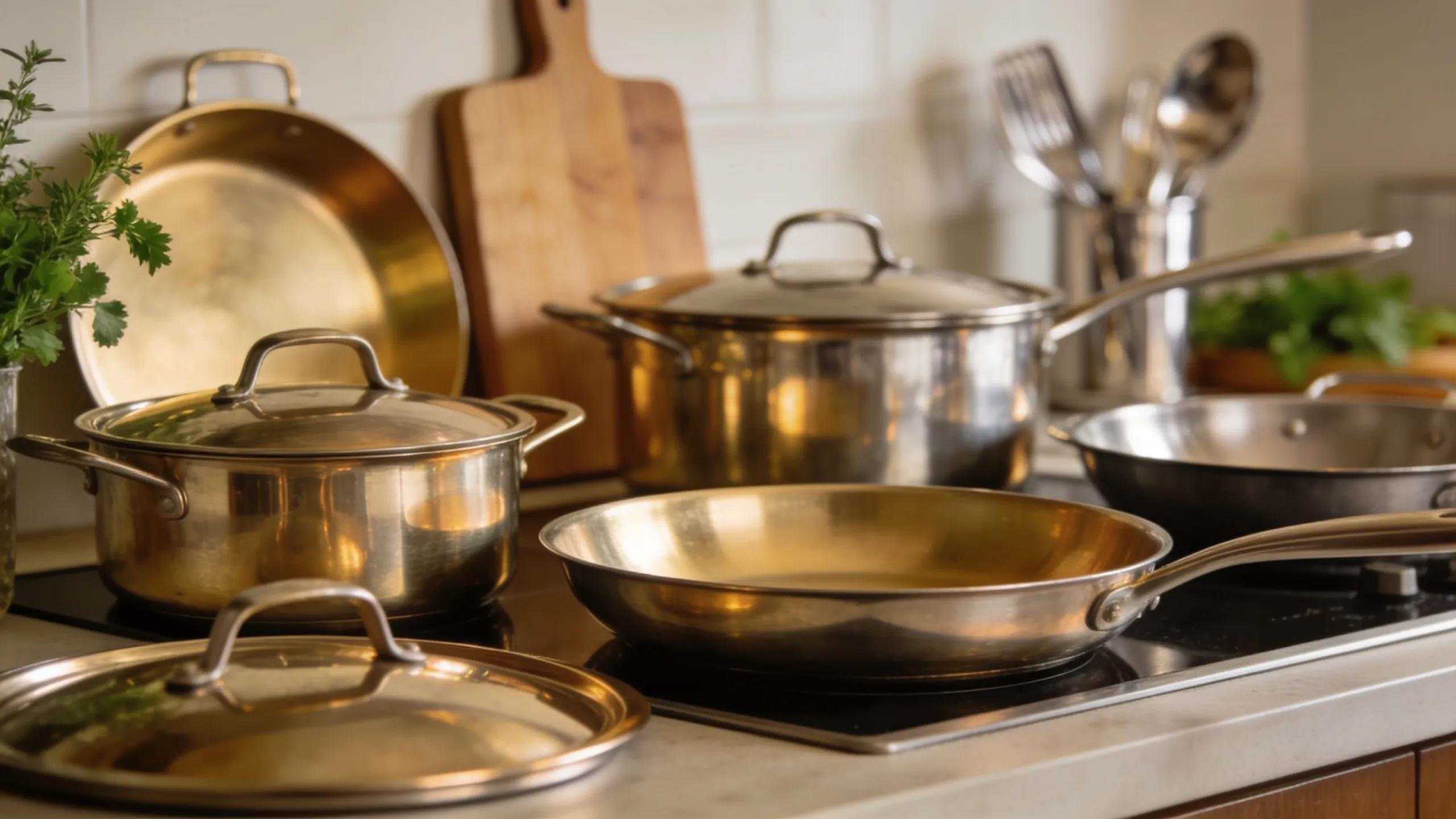
Titanium is valued for its strength-to-weight ratio and resistance to corrosion. Pure titanium pots are often chosen for camping or travel, where low weight matters. In a home kitchen, lighter cookware can also be easier to lift, wash and store.
Food-contact considerations
Titanium is generally regarded as a stable, non-reactive material. That makes it useful for food-contact surfaces, although the safety and performance of a finished pan also depend on its coatings, bonding layers, handles and manufacturing quality. Follow the maker’s instructions and replace cookware if a coating is peeling or the pan is badly damaged.
Benefits that depend on construction
Not every titanium-labelled pan is solid titanium. Some products use an aluminium body with a titanium-reinforced non-stick coating; others combine titanium with additional metals. Check the product specification rather than assuming all items share the same heat response, utensil compatibility or cleaning method.
Features to Check Before Buying
Pure titanium, clad metal or reinforced coating
Pure titanium is light but does not distribute heat as evenly as aluminium or copper. Multi-layer cookware may pair titanium’s durability with a more conductive core. Coated cookware can be easy to release food from, but it may require lower heat and non-metal utensils to protect the surface.
Heat distribution and cooktop compatibility
Check whether the base is suitable for gas, electric, ceramic or induction cooking. Titanium itself is not automatically induction-compatible, and thin cookware can develop hot spots. A well-designed base and appropriate cooking temperature matter more than a single material claim.
Titanium Compared with Stainless Steel
Weight and durability
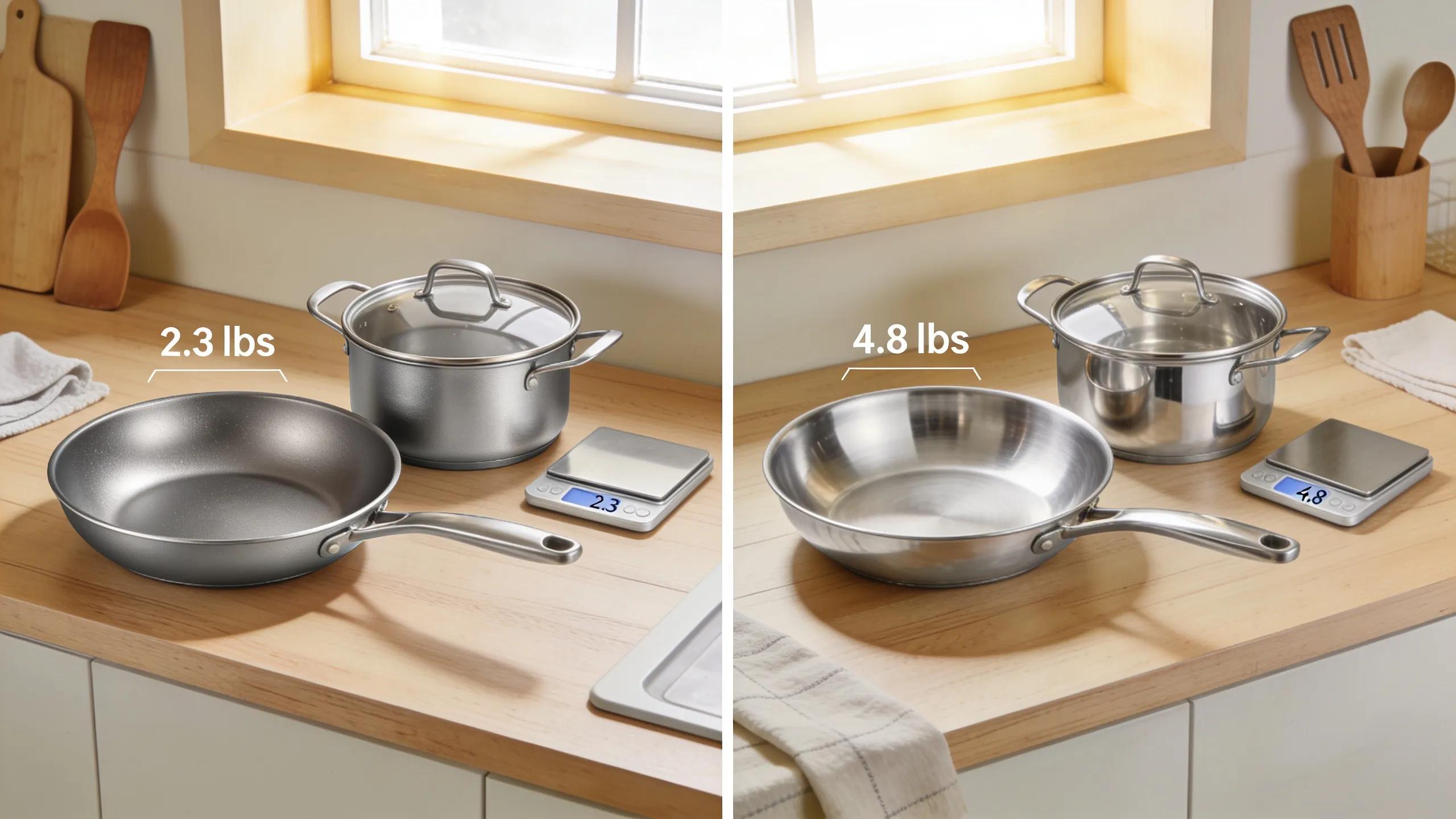
Titanium is generally lighter than stainless steel of a comparable size. Both materials can be corrosion-resistant and long-lasting when properly manufactured and maintained. Stainless-steel cookware is widely available in clad constructions that improve heat distribution.
Cooking performance
Neither material is universally better. Stainless steel can brown food well and tolerate robust use, while lightweight titanium may suit cooks who prioritise easy handling. Coatings and core materials can change performance substantially, so compare the complete product specification.
Suitability for Australian kitchens
Choose cookware around the meals you prepare, your cooktop and your maintenance preferences. For stir-frying, searing or slow cooking, base thickness and heat control are important. For compact kitchens, camping or limited storage, lower weight may be especially useful.
Titanium Kitchenware from Terra Wellness
What Terra Wellness currently offers
Terra Wellness currently offers a Titanium Cutting Board, rather than a range of pots and pans. The board is marketed as a non-porous, easy-to-clean preparation surface and is available in S (29 × 20 cm), M (34 × 23 cm), L (39 × 28 cm) and XL (46 × 30 cm).
Cleaning and care. For any titanium-labelled kitchen product, use the manufacturer’s care instructions. Avoid abrasive tools on coated surfaces, allow hot cookware to cool before washing and check dishwasher guidance for the specific item. For a hard cutting surface, maintain knife edges with regular honing and sharpening as needed.
Making an informed choice. Titanium can be an appealing kitchen material, but the best choice depends on how the finished product is built and how you plan to use it. Compare construction, cooktop compatibility, warranty and care requirements, and do not rely on the word “titanium” alone as a promise of cooking performance.